Cozy Living Room Ideas and 2026 Trends for a Modern, Relaxed Home Style

There’s something almost magical about walking into a living room that just feels right. The lighting is soft. The sofa looks like it wants to swallow you whole. A candle flickers somewhere nearby and the whole space smells like warm amber and cedar. That deep exhale of comfort doesn’t happen by accident. It’s the result of intentional design choices layered thoughtfully on top of each other. And in 2026, American homeowners are chasing that feeling harder than ever.
The design world has officially shifted. Gone are the days of cold, clinical minimalism with stark white walls and furniture that looked beautiful but felt deeply uncomfortable. Today’s most coveted living rooms lean into Cozy Living Room ideas, tactile richness, and genuine personality. Think earthy tones, plush seating, layered textures, and lighting that makes every evening feel like a retreat. This is the era of the cosy living room and it’s not going anywhere.
Whether you’re working with a sprawling open-plan space or a compact apartment lounge in need of a serious glow-up, this guide covers every angle. From bold color palettes to hygge style lighting, from velvet sofa choices to thermal curtains and beyond everything you need to create a warm and inviting living room in 2026 is right here. Let’s get into it.
Planning Your Living Room Design

Great rooms start with great planning. Before you buy a single throw pillow or repaint a wall, you need a clear vision of what you want your space to feel like, not just look like. The best cosy living room ideas aren’t random. They’re cohesive. Every choice, from the color on the walls to the texture of the rug underfoot, should serve the same overarching mood.
Start by asking yourself one honest question: how do you actually use your living room? Is it a space for solo unwinding after work, a family gathering hub, a spot for entertaining friends, or some mix of all three? Your answer shapes everything. A comfortable living room setup for a couple who streams movies every night looks completely different from one designed for a lively dinner party spillover. Know your lifestyle first and let the design follow.
Read More About: Living Room Layout Ideas for Minimalist Small Spaces That Maximize Style and Function
Create a Bold Palette Lean into a Color Scheme That Works for You
Color is the single most powerful tool in your design arsenal, especially when designing a Cozy Living Room, and it costs far less than replacing furniture. The right shade can completely transform a Cozy Living Room, making it feel intimate, expansive, dramatic, or serene.
In 2026, Cozy Living Room trends are moving away from cold, forgettable neutrals and embracing warm, personality-filled palettes that instantly make your home feel welcoming. A thoughtfully designed Cozy Living Room should create an emotional connection the moment you walk through the door, and color is what makes that happen.
Stick to a defined color palette if you want your Cozy Living Room to feel polished instead of chaotic. One of the easiest ways to achieve a balanced Cozy Living Room is by following the classic 60-30-10 rule. Use a dominant shade like warm taupe or charcoal grey across 60% of the room to establish the foundation of your Cozy Living Room.
Introduce a secondary tone through sofas, rugs, or curtains for another 30%, then finish the look with accent shades like mustard yellow or burnt orange decor in cushions, throws, and artwork. This layered approach gives your Cozy Living Room warmth, structure, and visual harmony.
Bring in bold color if you want your Cozy Living Room to feel modern and full of character because 2026 design trends fully embrace richer shades. Deep terracotta, dusty sage, and rich burgundy are becoming staples in the modern Cozy Living Room thanks to their grounded, comforting feel.
These shades instantly make a Cozy Living Room feel warmer and more inviting compared to the stark palettes that dominated previous years. If painting the entire room feels overwhelming, start with a feature wall or introduce bold tones through soft furnishings to gradually build your ideal Cozy Living Room atmosphere.
White walls can also work beautifully in a Cozy Living Room when styled correctly. Instead of feeling plain, white creates an airy backdrop that allows textures and layered decor to shine. A Cozy Living Room with white walls paired with warm LED lighting, natural wood furniture, chunky knit throws, and faux fur cushions creates a relaxed Scandi-inspired aesthetic that feels soft, calm, and effortlessly welcoming. Texture becomes the secret ingredient that turns a simple white space into a truly Cozy Living Room.
Color-drenching is one of the biggest Cozy Living Room trends of 2026 and interior designers are fully embracing it. This technique involves painting the walls, ceiling, trim, and built-ins in the same shade to create an immersive, cocoon-like effect.
A color-drenched Cozy Living Room feels intentional, dramatic, and incredibly comforting. Navy blue living room color-drenching has become especially popular for creating a luxurious Cozy Living Room aesthetic that feels both elegant and relaxing.
| Mood | Wall Color | Accent Colors | Best For |
| Warm & Cozy | Terracotta | Cream, burnt orange | Bohemian/Traditional |
| Modern Relaxed | Dusty Sage | Warm white, tan | Contemporary |
| Bold & Rich | Deep Navy | Gold, mustard | Maximalist |
| Airy & Light | Soft White | Blush, natural wood | Scandi/Minimalist |
| Earthy & Grounded | Warm Taupe | Rust, forest green | Organic Modern |
Smart Layout and Space Optimization Ideas
Here’s a truth most people learn the hard way: a cramped living room is almost never a size problem. It’s a layout problem. Furniture pushed flat against every wall, a sofa that’s two inches too wide, a coffee table that eats up all the walking space are fixable mistakes. And fixing them costs nothing except a free afternoon and a willingness to experiment.
The foundation of any great comfortable living room setup is traffic flow. You should be able to move through the space naturally without squeezing past the armchair or stubbing your toe on the corner of the coffee table. Think about how people enter the room, where they naturally gravitate, and where the focal point is whether that’s a fireplace, a TV, or a stunning window view. Build your layout around those anchors.
Get creative with the layout based on your room’s actual shape. Square rooms love a U-shaped seating arrangement. Long, narrow spaces benefit from two distinct zones: a seating area at one end and perhaps a reading corner or bar setup at the other. Open-plan spaces need area rugs to define boundaries and prevent that cavernous, echo-y feeling that’s the enemy of a cosy atmosphere.
Add a sectional if you have the footprint for it. The right sectional low-profile, generous in depth, upholstered in a tactile fabric like boucle or performance velvet can anchor an entire room and immediately signal “this is a place to relax.” Contrary to popular belief, a well-chosen sectional can actually make a small room feel more purposeful and less scattered than four mismatched pieces fighting for space.
Anchor the space with a built-in bar, the hottest living room trend sweeping American homes in 2026. A dedicated drinks station, whether it’s a proper built-in cabinet or a beautifully styled bar cart tucked into an alcove, adds both function and unmistakable personality. It signals that this is a room for living, for entertaining, for enjoying. Style it with glassware, a trailing plant, and a small table lamp and it becomes a vignette in its own right.
| Room Shape | Best Layout Strategy | What to Avoid |
| Square | U-shape seating arrangement | All furniture pushed to walls |
| Rectangular | Two distinct functional zones | Single sofa against far wall |
| Open Plan | Area rug zone definition | No visual boundaries at all |
| Small/Narrow | Chaise plus one accent chair | Oversized sectionals |
Furniture Ideas for Small Living Rooms
Small living rooms demand smarter decisions not smaller ambitions. The instinct to go tiny with everything is understandable but often counterproductive. A room full of small, forgettable pieces just looks cluttered. Sometimes one confident, well-proportioned sofa does more for a compact space than five miniature alternatives ever could.
The golden rule of cosy lounge inspiration for small spaces is this: every piece must earn its place. If it’s not beautiful, functional, or ideally both it doesn’t belong. This isn’t about deprivation. It’s about editing with intention so that what remains genuinely shines.
Living room sofas, sectionals, and chair ideas for small spaces hinge on proportion above everything else. A sofa with exposed legs reads as lighter and less visually heavy than one with a skirt to the floor. A low-profile sectional with clean lines fits a modern apartment far better than a deep, rolled-arm traditional piece. Measuring your space obsessively before buying the number of people who’ve ordered a sofa only to find it won’t clear the doorframe is genuinely staggering.
Choose comfortable furniture without apology. This sounds obvious but it’s worth saying clearly: the most stylish sofa in the world is a failure if you don’t want to sit on it. Depth matters (you want to be able to sit back with your feet up), seat height matters (too low and getting up becomes a workout), and cushion firmness matters. Sit before you buy whenever possible. Read reviews obsessively when you can’t.
Living room coffee table ideas for 2026 center around natural materials and interesting shapes. Travertine stone tables with warm beige veining are enormously popular and pair beautifully with both modern and traditional schemes. Rattan and cane styles bring organic texture. Mixed-material tables, a marble top on brass legs, for instance add sophistication without formality. For truly small spaces, a set of nesting tables gives you flexibility without the permanent footprint.
Rugs, Textiles and Layering Techniques

Nothing else in a living room does as much heavy lifting as a great rug. It grounds the furniture, defines the zone, adds warmth underfoot, and introduces color and texture all at once. Get the rug right and the rest of the room clicks into place around it. Get it wrong or worse, skip it entirely and even the most beautifully furnished space feels unfinished and cold.
The single most common rug mistake in American living rooms is going too small. A rug that only the coffee table sits on, with the sofa legs floating on the bare floor, looks like an afterthought. As a rule, add rugs to hard flooring in a size that allows at least the front legs of all major seating to rest on it. Better yet, go large enough for all four legs of everything. It feels generous and intentional which is exactly what a snug living room should feel like.
Living room rug ideas in 2026 lean heavily into natural fibers and rich texture. Wool rugs are the gold standard warm, durable, naturally stain-resistant, and only improving with age. Jute and sisal bring that natural materials with coastal or Bohemian energy. For pure sensory luxury, a high-pile shag rug in a warm cream or caramel shades is practically irresistible underfoot on a cold morning. Textured rugs in general are having a major 2026 moment as homeowners move away from flat, printed styles toward pieces with genuine dimensional interest.
Opt for deeper shades in your carpet if you’re going wall-to-wall rather than area rug. The grey carpet era is definitively over. In its place, forest green decor inspired deep carpets, rich charcoal tones, and warm chocolate browns are creating the kind of snug home design foundation that actually feels luxurious rather than merely functional.
| Room Size | Recommended Rug Size |
| Small (under 150 sq ft) | 5×8 ft |
| Medium (150–250 sq ft) | 8×10 ft |
| Large (250+ sq ft) | 9×12 ft or larger |
| Open Plan | Layer two rugs or 10×14 ft |
Beyond the rug itself, layering textures in living room spaces is what separates a truly cosy living room from one that merely looks the part in photographs. Think chunky knit throws folded over the back of a sofa, faux fur cushions piled generously at each end, a linen curtain catching afternoon light, a woven basket holding extra blankets nearby. Each layer adds warmth both literal and visual and creates the kind of luxurious soft furnishings experience that makes guests sink into your sofa and visibly relax.
Lighting Ideas for a Warm Atmosphere
Bad lighting is the silent killer of living room ambience. You can have the most beautiful furniture, the most carefully chosen color palette, the most enviable rug and one harsh overhead bulb will flatten all of it into something clinical and unwelcoming. Lighting isn’t a finishing touch. It’s a foundational design decision that deserves just as much thought as everything else.
The principle every designer preaches and that every homeowner should internalize is layering. Ambient home lighting ideas built around a single overhead source leave you with flat, shadowless light that feels more like a waiting room than a relaxing atmosphere. Instead, build from the ground up with three distinct layers working together.
Employ a warm light by paying attention to color temperature, measured in Kelvin (K). The sweet spot for a cosy atmosphere is 2700K to 3000K. This produces that golden, honey-toned glow that makes skin look beautiful and rooms feel warm. Anything above 4000K starts reading as cool and clinical. Check your existing bulbs swapping cool white for warm white costs under $15 and can completely transform how a room feels in the evening.
Wall Decor, Art and Visual Styling
Color is the single most powerful tool in your design arsenal, especially when creating a Cozy Living Room, and it costs far less than replacing furniture. The right shade can completely transform a Cozy Living Room, making it feel intimate, expansive, dramatic, or serene. In 2026, Cozy Living Room trends are shifting away from cold, forgettable neutrals and embracing warm, personality-filled palettes that instantly make a home feel more inviting. A thoughtfully designed Cozy Living Room should create an emotional connection the moment you walk through the door, and color is what makes that possible.
Stick to a defined color palette if you want your Cozy Living Room to feel polished instead of chaotic. One of the easiest ways to create a balanced Cozy Living Room is by following the classic 60-30-10 rule. Use a dominant shade like warm taupe or charcoal grey across 60% of the room to establish the foundation of your Cozy Living Room. Introduce a secondary tone through sofas, rugs, or curtains for another 30%, then finish the space with accent shades like mustard yellow or burnt orange decor in cushions, throws, and artwork. This layered approach gives a Cozy Living Room warmth, structure, and visual harmony.
Bring in bold color if you want your Cozy Living Room to feel modern and full of character because 2026 design trends fully embrace richer shades. Deep terracotta, dusty sage, and rich burgundy are becoming staples in the modern Cozy Living Room thanks to their grounded and comforting feel.
These shades instantly make a Cozy Living Room feel warmer and more welcoming compared to the stark palettes that dominated previous years. If painting the entire room feels overwhelming, start with a feature wall or introduce bold tones through soft furnishings to gradually build your ideal Cozy Living Room atmosphere.
White walls can also work beautifully in a Cozy Living Room when styled correctly. Instead of feeling plain, white creates an airy backdrop that allows textures and layered decor to stand out. A Cozy Living Room with white walls paired with warm LED lighting, natural wood furniture, chunky knit throws, and faux fur cushions creates a relaxed Scandi-inspired aesthetic that feels soft, calm, and effortlessly welcoming. Texture becomes the secret ingredient that transforms a simple white space into a truly inviting Cozy Living Room.
Color-drenching is one of the biggest Cozy Living Room trends of 2026, and interior designers are fully embracing it. This technique involves painting the walls, ceiling, trim, and built-ins in the same shade to create an immersive, cocoon-like effect.
A color-drenched Cozy Living Room feels intentional, dramatic, and incredibly comforting. Navy blue living room color-drenching has become especially popular for creating a luxurious Cozy Living Room aesthetic that feels both elegant and relaxing.
Storage, Built-ins and Functional Design

A cosy living room can’t breathe under the weight of clutter. Piles of mail on the coffee table, a tangle of charging cables behind the sofa, toys migrating in from the hallway these things erode the atmosphere even in a beautifully designed room. Smart, well-considered storage is what keeps the magic intact on a Tuesday night, not just in the photos you took after a three-hour styling session.
The best storage solutions are the ones you barely notice. They work quietly in the background, keeping the visual noise low so the room’s carefully chosen design elements can do their job. And in 2026, the trend is firmly toward storage that earns its visual keep pieces that look intentional and beautiful even while doing the unglamorous work of hiding your remote controls.
Bank on bookshelves as both storage and styling opportunity. A well-arranged bookshelf is one of the most powerful design elements in a living room. It adds color, texture, personality, and intellectual atmosphere all at once. The rule of thirds approach works brilliantly: divide each shelf visually into thirds and mix books, objects, and empty space. Add a small plant, a candle for the living room cluster, or a framed photo. Vary the orientation of books, some upright, some horizontal to create visual rhythm.
Cozy Styling, Accessories and Seasonal Touches
Here’s where the soul of a living room lives. Furniture provides the bones. Color provides the skin. But the accessories, the candles, the throws, the books left open on the coffee table, the small ceramic vase holding three stems of dried grass, these are the details that make a space feel genuinely inhabited and deeply personal.
The best cosy living room ideas always come back to this: layer your accessories the way you’d layer clothing on a cold day. Start with the essentials and build from there, adding warmth and personality at every level until the room feels complete. And like clothing, seasonal updates keep things feeling fresh without requiring a full redesign every three months.
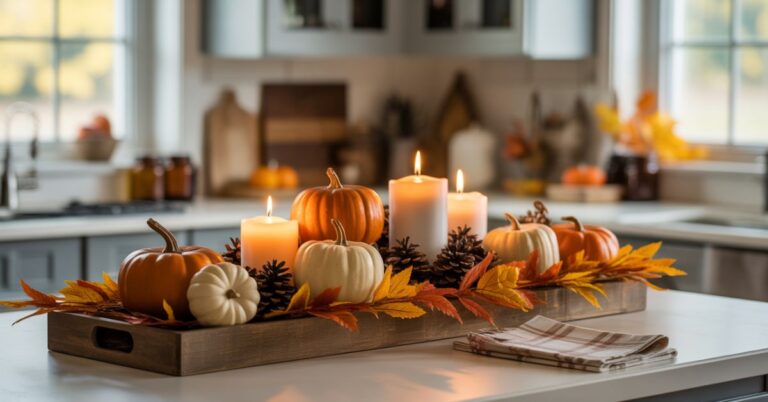
Set the mood with candles because few things shift the atmosphere of a room as quickly and inexpensively as candlelight. Group candles in odd numbers for a more natural, organic look three pillar candles of varying heights on a coffee table, or five votives clustered on a mantelpiece. Candles for living room use should be chosen for both scent and visual impact. Amber, terracotta, and cream colored candles warm a space visually even before you light them.
Use home fragrance to engage the one sense that most interior design guides criminally ignore. Scent is processed directly by the emotional center of the brain which means the right fragrance can trigger feelings of warmth, comfort, and safety more immediately than any paint color or cushion. Home fragrance for living room purposes works through multiple delivery systems: reed diffusers for constant background scent, room sprays for an instant hit, wax melts for a gentler, more diffuse effect.
Go over-the-top with decor if your instinct pulls you toward richness and abundance rather than restraint. The 2026 “warm maximalism” trend gives full permission to layer more than you think is sensible: more cushions, more throws, more candles, more plants, more art. The key is maintaining a cohesive color story so the abundance feels intentional rather than chaotic. Think of it like a hygge living room inspiration taken to its most generous conclusion.
| Season | Colors | Key Accessories |
| Winter | Deep red, cream, gold | Thick throws, candles, pine accents |
| Spring | Sage, blush, sky blue | Fresh flowers, lighter cushions |
| Summer | Warm white, terracotta | Woven baskets, linen throws |
| Fall | Burnt orange, rust, brown | Pumpkins, warm textiles, earthy tones |
Plants, Natural Elements and Organic Styling
Biophilic design, the practice of incorporating natural elements into interior spaces to support human wellbeing isn’t a trend. It’s a response to something hardwired in human psychology. Studies consistently show that exposure to plants and natural materials reduces stress, lowers blood pressure, and improves mood. In other words, indoor plants decor isn’t just aesthetically pleasing. It’s genuinely good for you.
In 2026, the organic modern aesthetic is everywhere and it makes complete sense. After years of synthetic materials and industrial aesthetics, people are craving warmth, texture, and the quiet beauty of natural imperfection. Natural cosy home decor built around stone, rattan, jute, terracotta, and living plants feels like a deeply human response to an increasingly digital world.
Window Treatments and Natural Light

Windows are the most underappreciated feature in most living rooms. They’re free light sources and light is the most powerful design element that exists. But most people treat windows as an afterthought, covering them with whatever was there when they moved in and never giving the matter another thought. This is a significant mistake with easy solutions.
The goal is a dynamic, responsive approach to natural light, maximizing it during the day when it adds warmth and life to the room, and controlling it in the evening to create that intimate, enclosed feeling that defines a truly cosy atmosphere. Winter living room design in particular depends on this balance, making the most of every hour of available daylight while ensuring the room transforms into a warm cocoon once the sun goes down.
Let the sunshine in by keeping window treatments as unobtrusive as possible during daylight hours. Blinds that stack neatly at the top of the frame, curtains that draw fully clear of the glass, sheer panels that filter rather than block all of these strategies preserve maximum light penetration. In north-facing rooms or spaces that naturally receive less light, using mirrors on opposite walls to bounce daylight around is a genuinely effective trick that costs very little.
Layer window treatments the way an interior designer would combine two different types of covering for both practical function and visual richness. A Roman blind or roller blind handles light control during the day. Full-length curtains drawn in the evening add drama, warmth, and insulation. The combination also gives you far more flexibility than either treatment alone; you can achieve partial privacy, full blackout, or purely decorative softness depending on which layer you engage.
Read More About: Living Room Layout Ideas for Minimalist Small Spaces That Maximize Style and Function
Advanced Styling Ideas and Creative Concepts
Once your foundations are solid the color, the furniture, the lighting, the rugs, the storage this is where you get to have genuine fun. Advanced styling is about creating moments within the room. Distinct micro-environments that each serve a specific mood or function. Little theatrical set pieces that make people stop and notice. A room full of these deliberate moments feels alive in a way that a merely well-furnished space never does.
Think of it as the difference between a hotel room and a home. A hotel room has everything you need but nothing that surprises you. A home has personality, unexpected details, personal history, creative choices that couldn’t have been made by anyone else. Cosy home styling trends in 2026 are all about reclaiming that personality and building it intentionally.
Frequently Asked Questions
What’s the best furniture layout for a small living room?
Float your furniture away from the walls rather than pushing everything to the perimeter. Anchor the arrangement with a well-sized area rug. Choose a sofa plus one chair over multiple competing pieces. Keep pathways clear at least 30 inches of walking space between major furniture pieces. Face seating toward the room’s focal point, whether that’s a fireplace, a TV, or a view.
How to style a small living room that has lots of furniture?
Edit before you style. Remove anything that isn’t earning its place either functionally or aesthetically then work with what remains. Create defined zones so the furniture serves multiple clear purposes rather than competing chaotically for the same space.
How to decorate a small living room on a budget?
Paint is your highest-impact, lowest-cost tool. A single gallon covers most living rooms and completely transforms the mood. Rearranging what you already own costs nothing and is often more powerful than buying new.
What are some design tricks to make the most out of a small living room?
Mirrors placed opposite windows double your light and create the illusion of additional space. A consistent, neutral colour scheme used throughout walls, larger furniture, rugs makes the space read as more expansive than varied colors would.
What paint colors work for small living rooms?
Soft whites, warm taupes, and pale sages are the conventional wisdom and they work because they reflect light and keep the eye from stopping at the walls. But don’t dismiss deeper colors out of hand.
Conclusion
Creating a cosy living room in 2026 isn’t about following a rigid set of rules or spending a fortune on the trendiest pieces. It’s about understanding what makes you feel at home genuinely, deeply at home and then building those elements into your space with intention and care.
The ideas in this guide range from the foundational (color, layout, lighting) to the deeply personal (vignettes, fragrance, seasonal touches) and the best rooms incorporate elements from every level. Start with one change. Maybe it’s swapping your cool white bulbs for warm ones and adding a floor lamp. Maybe it’s rearranging your furniture so it no longer hugs the walls. Maybe it’s finally committing to that velvet sofa in the shade you’ve been dreaming about. Start small and let momentum carry you forward.