25+ Genius DIY Garden Rock Art Ideas

You walk past the same patch of dirt and mulch every day, seeing potential but lacking the inspiration or budget to transform it into something memorable. Professional garden art costs hundreds, elaborate hardscaping requires contractors, and maintaining flower beds feels like a second job you didn’t apply for. Meanwhile, rocks sit everywhere in your driveway, creek beds, garden centers selling them by the pound waiting to become something more interesting than landscape filler. Here’s the opportunity you’re missing: diy garden rock art ideas turn free or cheap materials into conversation pieces that withstand weather, require zero maintenance, and let you express creativity without art school credentials.
From whimsical painted garden rocks that make children smile to sophisticated stone art projects that elevate your landscape’s aesthetic, rock art delivers immediate impact with minimal investment. This guide walks you through genius techniques, clever design approaches, and practical methods that transform plain stones into garden decor worthy of Pinterest while being achievable this weekend with supplies from your craft drawer.
Why Choose Rocks for Garden Art?
Rock art projects offer permanence that other outdoor crafts can’t match. Unlike wood signs that rot, metal pieces that rust, or resin statues that fade and crack, properly sealed painted rocks withstand years of sun, rain, snow, and temperature swings without deteriorating. This weather resistance means your creative efforts compound over time rather than requiring constant replacement. Rocks also cost nothing if you source them from your property or public lands where collection is permitted, making them accessible creative ideas regardless of budget constraints.
The natural variation in rock shapes, sizes, and colors provides built-in character that uniform craft supplies lack. River rocks offer smooth surfaces perfect for detailed painting, while rough fieldstones suit rustic designs where texture enhances rather than fights your vision. This diversity means diy garden rock art ideas accommodate every skill level beginners paint simple patterns on small stones while experienced crafters tackle elaborate murals across boulder surfaces. Unlike forced creativity with prescribed craft kits, rocks let you respond to what each stone suggests, making every project unique and impossible to replicate exactly.
What Supplies Do You Need for Rock Painting?
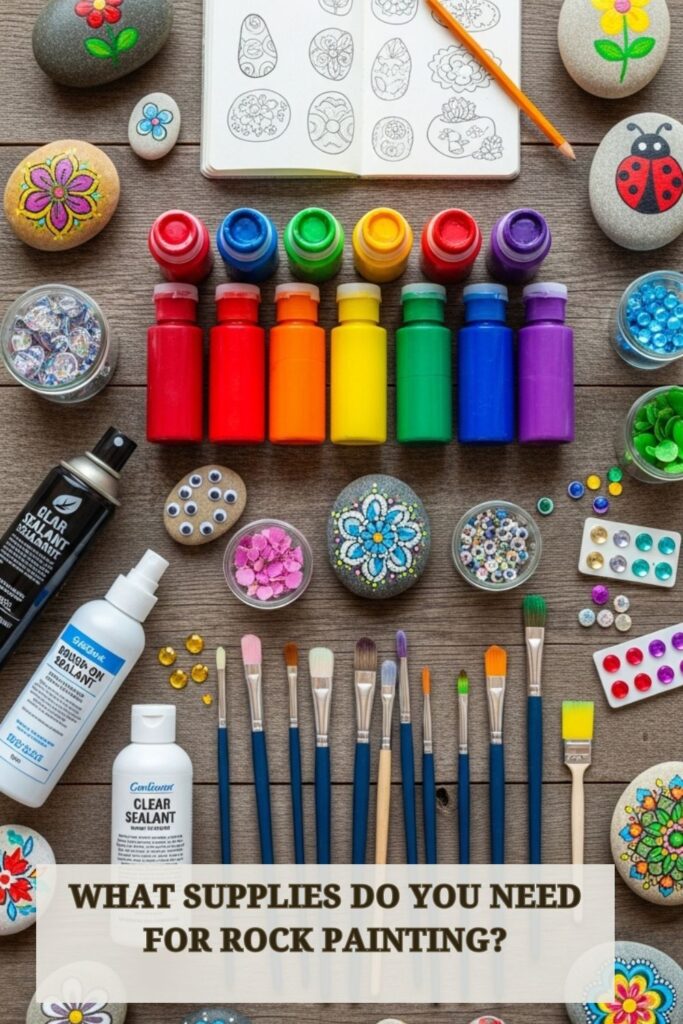
Acrylic paint forms the foundation of most painted garden rocks because it adheres well to stone surfaces, offers vibrant colors, and remains flexible after drying to prevent cracking. Purchase artist-quality acrylics rather than craft-grade options the pigment concentration is higher, requiring fewer coats while delivering more saturated colors. Basic color sets covering primaries plus black and white let you mix virtually any hue, though pre-mixed specialty colors save time for popular shades you’ll use repeatedly.
Sealing techniques determine whether your rock art lasts one season or ten years. Outdoor polyurethane or clear acrylic sealers protect painted surfaces from moisture, UV radiation, and physical wear. Apply 2-3 thin coats rather than one heavy application to prevent cloudiness or drips. Spray sealers deliver smoother finishes than brush-on versions but require proper ventilation and dry weather for application. Beyond paint and sealer, gather foam brushes for base coats, fine-tipped brushes for details, pencils for sketching designs, and painter’s tape for creating crisp edges. A palette for mixing colors and containers of water for rinsing brushes complete your essential toolkit, costing under $30 total if starting from zero supplies.
How Do You Select and Prepare Rocks?
Rock selection prioritizes smooth surfaces over rough textures unless rustic character suits your design vision. River rocks, lake stones, and beach pebbles offer naturally polished surfaces that accept paint readily while showcasing finished designs cleanly. Avoid porous rocks like sandstone or pumice that absorb paint unevenly, creating blotchy coverage that requires excessive coats. Test unknown rocks by dropping water on surfaces if it beads rather than soaking in immediately, the stone suits painting. Sizes from golf balls to footballs handle most projects, with flat bottoms providing stability for standing displays.
Cleaning rocks before painting prevents adhesion failures that ruin finished pieces. Scrub stones with dish soap and a stiff brush to remove dirt, organic matter, and mineral deposits that interfere with paint bonding. Rinse thoroughly and allow complete drying typically 24 hours in warm conditions or several days during humidity. For particularly dirty or algae-covered stones, soak in a diluted bleach solution (1 part bleach to 10 parts water) for 30 minutes before scrubbing. Some artists prime rocks with white acrylic or gesso before adding design patterns, creating uniform backgrounds that make colors pop while requiring fewer coats of colored paint to achieve opacity.
Read More About: 37+ Colorful Backyard Ideas to Brighten Your Outdoor Space
What Are the Best Beginner Rock Art Designs?
Ladybugs rank among the easiest and most charming rock painting ideas for beginners. Paint entire rocks red, add a black stripe down the center, dot with black spots, and finish with white eyes on one end. These cheerful insects scatter throughout garden beds as delightful surprises that children adore discovering. The simple design builds confidence while teaching basic techniques base coating, detail work, and dot placement that apply to more complex projects.
Mandala patterns create sophisticated decorative garden rocks through repetitive dot work requiring patience rather than artistic talent. Start with a center dot, then build concentric circles of dots in alternating colors, gradually expanding outward. Use pencil erasers, cotton swabs, or specialized dotting tools to create uniform circles. This meditative process yields stunning results that look far more difficult than they actually are, making mandalas perfect for beginners wanting impressive outcomes. Simple word rocks featuring inspirational messages, family names, or garden labels add personality to landscapes while demanding only steady lettering rather than drawing skills. Choose bold, sans-serif fonts for maximum readability and visual impact.
How Do You Create Realistic Stone Animal Art?
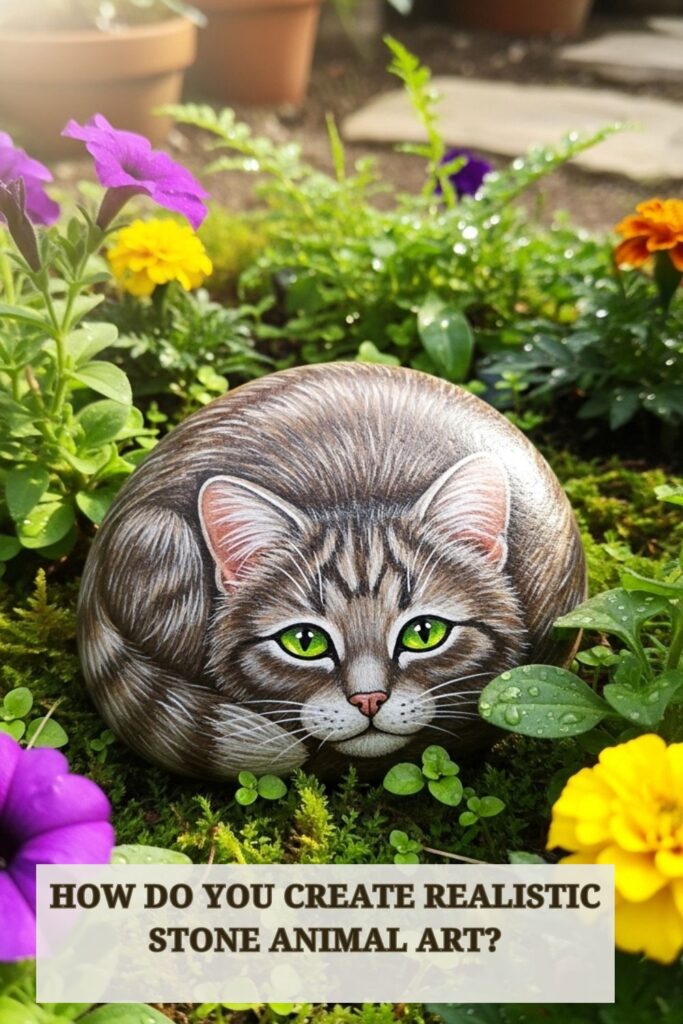
Realistic animal stone art projects begin with choosing rocks whose natural shapes suggest specific creatures. Oval river rocks become turtles, round stones with small protrusions suggest owls, and elongated rocks naturally morph into fish or lizards. This approach of working with rather than against stone shapes yields more convincing results than trying to impose forms onto incompatible rocks. Study reference photos extensively before painting, noting how light, shadow, and color variation create dimension rather than flat representations.
Build depth through layering rather than expecting single paint applications to create realistic effects. Start with base colors, add mid-tones, then highlights a brown owl gets darker brown shadows in feather recesses, lighter brown highlights on feather edges, and white accents where light strikes most directly. Artistic techniques like dry-brushing (dragging nearly dry brushes across surfaces to deposit subtle color) and stippling (applying paint through repeated small dots) create texture suggesting fur, feathers, or scales. For particularly detailed work, fine-liner pens add crisp details like whiskers, eyes, or individual feathers after paint dries. Seal thoroughly to protect the multiple paint layers that realistic designs require.
What Garden Story Rocks Can You Create?
Story rocks transform ordinary stones into narrative elements that unfold across landscapes. Fairy tale diy garden rock art ideas scatter Hansel and Gretel breadcrumb rocks small white-painted pebbles along paths, or position rocks painted as mushroom houses creating miniature fairy villages beneath hostas. These whimsical installations delight children while adding imaginative layers to utilitarian garden features like paths or border edges.
Seasonal story sequences update gardens throughout the year without replanting. Paint rock collections for each season: spring butterflies and baby birds, summer bees and sunflowers, fall pumpkins and leaves, winter snowmen and cardinals. Swap displays quarterly, storing off-season rocks in garage bins. This rotation keeps garden decor fresh while spreading creative work across months rather than requiring marathon crafting sessions. Geocaching-inspired rock collections encourage interaction and paint rocks with messages like “Take me on an adventure” or “Share where you find me on [social media hashtag],” then hide them throughout your neighborhood. This modern treasure hunt spreads joy beyond your property while making your rock art projects family projects that engage communities rather than just your household.
How Do You Paint Garden Markers and Labels?
Functional garden stone crafts combine utility with beauty through labeled plant markers. Paint rocks in colors coordinating with your garden’s palette, then add plant names in contrasting hues for readability. Position these markers at row ends or within beds, creating permanent labels that outlast plastic stakes or wooden signs. Use stencils if freehand lettering intimidates you, or print text in desired fonts, trace onto rocks using transfer paper, then paint within traced outlines for professional-looking results.
Address number rocks solve identification problems with artistic flair. Choose rocks large enough to display 4-6 inch tall numbers visible from streets, paint backgrounds in colors complementing your home’s exterior, then add house numbers in contrasting shades. Mount these custom numbers beside entries or atop mailbox posts, replacing generic metal numbers with personalized creative ideas that welcome visitors. For additional guidance, paint directional rocks marking garden paths arrows indicating “to the patio” or “secret garden this way” transforming functional wayfinding into playful elements that encourage exploration rather than straightforward navigation.
What Abstract and Geometric Designs Work Best?
Abstract rock art designs liberate you from representational accuracy, letting colors and shapes create impact without depicting specific objects. Pour painting techniques adapted for rocks create marbled effects through layered paint that flows and mixes organically. Thin acrylic paint with pouring medium, pour multiple colors onto rocks simultaneously, then tilt stones to guide paint flow. Each piece emerges uniquely from this process, producing one-of-a-kind decorative garden rocks impossible to replicate exactly.
Geometric patterns deliver modern sophistication through precise shapes and limited color palettes. Paint rocks with triangles, hexagons, or chevrons in two or three coordinating colors, using painter’s tape to create crisp edges. These contemporary designs suit minimalist landscapes where bold graphics replace traditional floral motifs. Ombre effects gradual color transitions from light to dark create depth through subtle shifting rather than abrupt changes. Paint rocks with lightest shades at tops, gradually darkening toward bottoms, or reverse the gradient for different effects. This technique adds dimension to simple spherical or oval rocks, transforming basic shapes into dynamic objects through color manipulation alone.
How Do You Create Rock Art for Different Garden Zones?
Painted garden rocks in vegetable gardens serve practical purposes while adding color. Paint rocks as different vegetables: red tomatoes, orange carrots, purple eggplants positioning them near corresponding plants as visual markers and cheerful accents. Children’s vegetable aversion sometimes softens when whimsical rock art makes garden plots feel playful rather than strictly utilitarian. These markers help kids learn plant identification while they grow, turning garden maintenance into scavenger hunts where finding the matching rock becomes as exciting as harvesting actual vegetables.
Shade garden rocks embrace cooler palettes reflecting the environments they inhabit. Paint stones in blues, purples, silvers, and deep greens that complement hosta, fern, and astilbe plantings common in low-light areas. Mushroom rocks painted to resemble toadstools with red caps and white spots nestle naturally among shade-loving plants, enhancing woodland garden aesthetics. In full-sun zones, vibrant rock painting ideas featuring yellows, oranges, and reds echo blooming perennials while maintaining color during gaps in flower production. Position these bright accents among grasses or drought-tolerant plantings, creating focal points that persist when seasonal plants rest.
What Sealing and Weather Protection Methods Work Best?
Sealing techniques separate rock art lasting one season from pieces surviving years of exposure. Apply sealers only after paint fully cures typically 24-72 hours depending on humidity and paint thickness. Spray polyurethane delivers the most durable protection, forming hard shells that resist moisture penetration, UV damage, and physical abrasion. Apply 3-4 thin coats rather than fewer thick applications, allowing proper drying between layers according to product instructions. Spray in well-ventilated areas or outdoors on calm days to prevent fume buildup and airborne overspray settling on unintended surfaces.
Brush-on sealers work better for beginners uncomfortable with spray techniques or crafting indoors where sprays aren’t practical. Choose sealers specifically labeled for outdoor use interior formulations lack UV inhibitors that prevent yellowing and chalking from sun exposure. Extend protection by resealing rocks every 2-3 years, particularly pieces in full sun or high-traffic areas receiving more wear. For additional weather resistance, position finished rocks in locations receiving some shelter beneath shrubs, near building foundations, or under trees rather than in fully exposed locations. This placement extends longevity while maintaining visibility and decorative impact throughout your landscape.
How Do You Create Rock Art with Children?

Family projects centered on rock art build memories while developing creativity and fine motor skills. Choose age-appropriate designs toddlers enjoy blobbing paint onto rocks in abstract patterns, elementary kids handle simple creatures like caterpillars or bees, while teenagers tackle detailed portraits or landscapes. Set up outdoor crafting stations with washable tablecloths, individual palettes, and plenty of water containers for rinsing brushes. This preparation contains messes while signaling that creativity matters enough to merit special setups rather than being crammed into reluctant corners.
Theme-based rock painting creates educational opportunities disguised as fun. Paint alphabet rocks together, decorating each stone with a letter plus corresponding image A with an apple, B with a butterfly creating learning tools that entertain while teaching. Number rocks follow similar principles, helping preschoolers learn counting through crafts rather than flashcards. Pet rocks revive the classic concept through personalized designs where children paint faces with unique expressions, then name their creations and create stories about their rock characters. These creative ideas extend beyond initial painting, fostering imaginative play that lasts long after paint dries.
What Advanced Techniques Elevate Rock Art?
Layering techniques create dimensional effects impossible with single paint applications. Paint backgrounds first, let dry completely, then add foreground elements. A sunset rock starts with a gradient sky, then receives silhouetted trees or buildings painted overtop after the background cures. This approach builds depth, making simple objects appear to exist in specific settings rather than floating in abstract space. Dimensional paint thick acrylics or specialty relief paints adds actual texture, creating raised elements like flower petals or butterfly wings that cast shadows and catch light differently than flat surfaces.
Transfer methods let you reproduce complex images without freehand drawing skills. Print desired images, cover backs with pencil graphite, place graphite-side-down onto rocks, then trace image outlines graphite transfers to rock surfaces creating guides you paint within. This technique allows stone art projects featuring intricate patterns, portraits, or recognizable characters that seem beyond amateur capabilities. Negative space painting intentionally leaves portions of rocks unpainted, letting natural stone color become part of your design. A white owl against natural gray rock uses less paint while creating striking contrast, with the stone’s inherent color doing half your artistic work.
How Do You Display Rock Art Effectively?
Strategic placement maximizes diy garden rock art ideas impact while protecting your work. Position rocks at natural pause points, path intersections, garden bench vicinities, pond edges where visitors naturally slow and notice surroundings. Cluster multiple smaller rocks in odd-numbered groups rather than scattering individually for stronger visual statements. Three ladybug rocks together create an impact that one lonely ladybug cannot, while five story rocks telling a sequential tale draw viewers along paths to discover entire narratives.
Elevation adds prominence to special pieces. Place rocks on tree stumps, within planted containers, or atop decorative pedestals rather than directly on ground where they disappear among mulch and foliage. Low walls, boulder tops, or even outdoor shelving showcases decorative garden rocks as intentional art rather than random stones that happened into your yard. Rotate displays seasonally to prevent visual fatigue even brilliant rock art becomes invisible when occupying the same location year-round. Moving pieces to new contexts refreshes their impact while making gardens feel dynamic rather than static, encouraging you to continue creating because previous work maintains relevance through thoughtful curation.
What Are Creative Rock Art Gift Ideas?
Painted garden rocks make thoughtful gifts combining personalization with practicality. Paint rocks with recipients’ house numbers, family names, or significant dates, creating custom garden decor unavailable in stores. Anniversary rocks featuring couple names and wedding dates, or new baby rocks displaying birth information provide sentimental keepsakes that beautify while commemorating milestones. These pieces cost only time and minimal supplies but deliver emotional value exceeding their material investment.
Memorial rocks honor departed loved ones or pets through images, names, or meaningful quotes. These stones become permanent garden residents marking special spots where people can reflect and remember. Unlike flowers requiring replacement or ornaments weathering poorly, rock memorials endure with dignity, making them comfort-providing creative ideas during difficult times. Teacher gifts featuring personalized messages, classroom themes, or subject-specific artwork (painted pencils, books, or apples) show appreciation through handmade efforts rather than generic store purchases. Garden club members exchange painted rocks at meetings, building collections representing shared experiences and creative community rather than mass-produced merchandise that lacks personal connection.
How Do You Maintain Painted Rock Art?
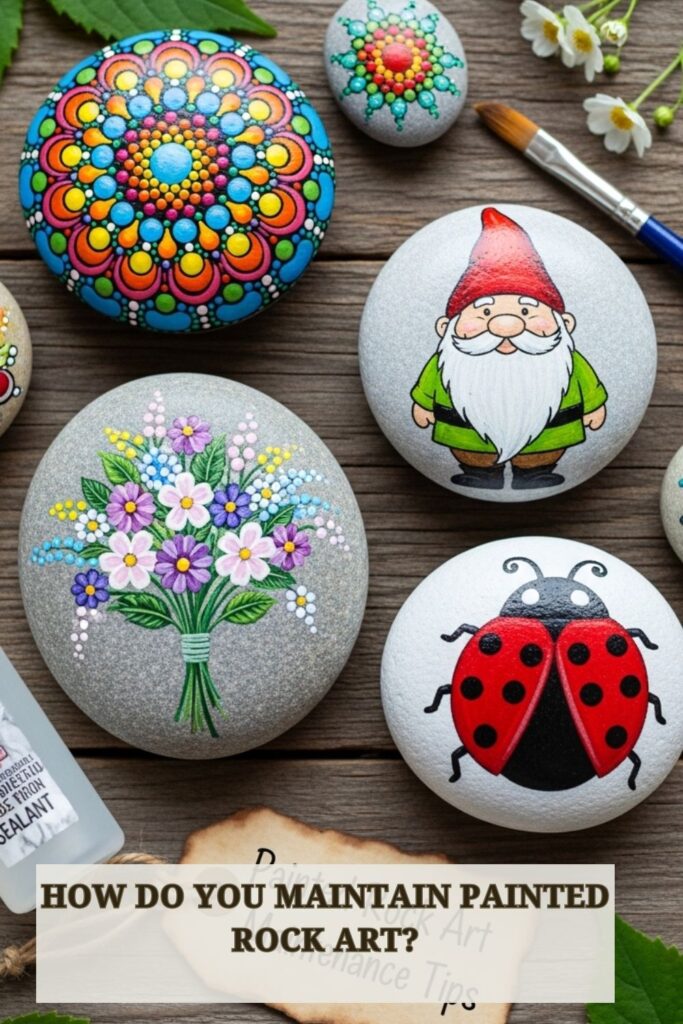
Maintenance begins with proper initial sealing techniques but continues through basic care extending rock art lifespan. Rinse rocks annually with gentle water spray removing accumulated dust, pollen, and organic debris that can harbor moisture and promote algae growth. Avoid pressure washing, which damages paint layers and sealers regardless of how well-applied. For rocks in high-traffic areas, check monthly for chips or scratches, touching up damage promptly prevents minor issues from spreading.
Resealing every 2-3 years refreshes protection as initial sealer coats gradually degrade from UV exposure and temperature cycling. Clean rocks thoroughly, let dry completely, then apply fresh sealer following original techniques. This maintenance requires only hours every few years while preserving work that took significantly longer to create. Bring delicate or particularly precious pieces indoors during harsh winter weather if you live in freeze-thaw climates, repeated freezing and thawing challenges even well-sealed rock art, and temporary indoor storage preserves heirloom-quality pieces for decades. Display these seasonal rocks on windowsills or shelves where they brighten indoor spaces during months when outdoor appreciation is limited by weather.
What Mistakes Should You Avoid in Rock Painting?
Rushing through preparation causes most rock painting failures. Inadequately cleaned rocks reject paint adhesion, resulting in flaking or peeling shortly after completion. Take time scrubbing and fully drying stones before applying any paint. This foundation work determines whether your rock art projects last seasons or years. Similarly, skipping primer on porous or dark rocks leads to uneven coverage requiring excessive paint layers, wasting materials while producing inferior results compared to properly primed surfaces.
Using cheap painting supplies sabotages even excellent technique. Dollar-store acrylics contain minimal pigment, demanding six coats to achieve coverage that quality paints deliver in two. This false economy wastes more time and paint than investing in decent supplies from art stores or online retailers. Inadequate sealing represents the costliest mistake rock art exposed to weather without proper protection degrades rapidly, requiring complete repainting rather than simple touch-ups. Apply sufficient sealer coats and allow proper curing time between layers, even when impatience tempts you to rush finished pieces into gardens. Remember that weather resistance comes from patience during finishing steps, not from luck or hoping poorly sealed pieces somehow survive exposure.
Read More About: 20+ Modern Outdoor Flooring Ideas for Redefine Outdoor Living
Frequently Asked Questions
What type of paint works best for outdoor rock art?
Acrylic paint specifically formulated for outdoor use delivers best results, though quality indoor acrylics also work when properly sealed. Choose paints with high pigment concentrations that provide coverage in 2-3 coats rather than cheap alternatives requiring six-plus applications. Always seal finished rocks with outdoor polyurethane or acrylic sealer to protect paint from weather resistance challenges.
Where can I find rocks for painting projects?
Rock selection happens anywhere stones naturally occur on your property, creek beds, beaches, or gravel pits. Garden centers and landscaping suppliers sell river rocks by the pound, typically $0.50-2.00 per rock depending on size. Ensure you have permission before collecting from public lands, and choose stones with relatively smooth surfaces unless texture suits your design vision.
How long does painted rock art last outdoors?
Properly sealed painted garden rocks endure 5-10 years with minimal maintenance, while poorly sealed pieces may degrade within a single season. Sealing techniques determine longevity more than painting quality; multiple thin sealer coats applied after paint fully cures protect against moisture, UV radiation, and temperature swings that cause premature failure. Resealing every 2-3 years extends lifespan indefinitely.
Can children safely participate in rock painting?
Rock painting makes excellent family projects for children ages 3 and up with appropriate supervision. Use non-toxic acrylic paint and establish clear rules about keeping paint away from mouths and eyes. Younger children enjoy simple blob painting and abstract designs, while older kids tackle detailed creatures and patterns. Outdoor work spaces simplify cleanup and contain messes effectively.
Do I need artistic talent to create beautiful rock art?
DIY garden rock art ideas accommodate all skill levels through design choices matching abilities. Beginners achieve success with simple patterns like polka dots, stripes, or solid colors, while dots-only mandala designs create impressive results without drawing skills. Stencils, transfers, and geometric patterns using painter’s tape produce professional-looking pieces regardless of freehand ability. Start simple, build confidence, then tackle more complex projects as skills develop.
Conclusion
DIY garden rock art ideas prove that spectacular garden decor doesn’t require professional artists or significant budgets just rocks, paint, sealer, and willingness to experiment. The projects you’ve explored transform ordinary stones into personality-filled accents that make gardens memorable rather than forgettable, with creative ideas spanning from whimsical ladybugs to sophisticated geometric patterns. Unlike temporary decorations requiring seasonal replacement, properly sealed painted garden rocks endure for years, making initial time investments pay dividends through lasting beauty and zero maintenance.
Start this weekend with whatever rocks you find and whatever paint you own, perfection paralyzes while experimentation teaches. Your first attempts may not rival Pinterest highlights, but each rock improves your technique while adding character to your landscape immediately. The beauty of stone art projects lies in their forgiving nature: rocks you dislike later get repainted or hidden behind shrubs, while successes multiply as confidence grows. Transform your garden from ordinary to extraordinary one stone at a time, discovering that genius sometimes means simply painting dots on rocks and watching how much joy such simple artistic techniques bring to everyone who discovers them hiding among your hostas.