DIY Outdoor Fireplace Ideas for the Perfect Backyard Gathering
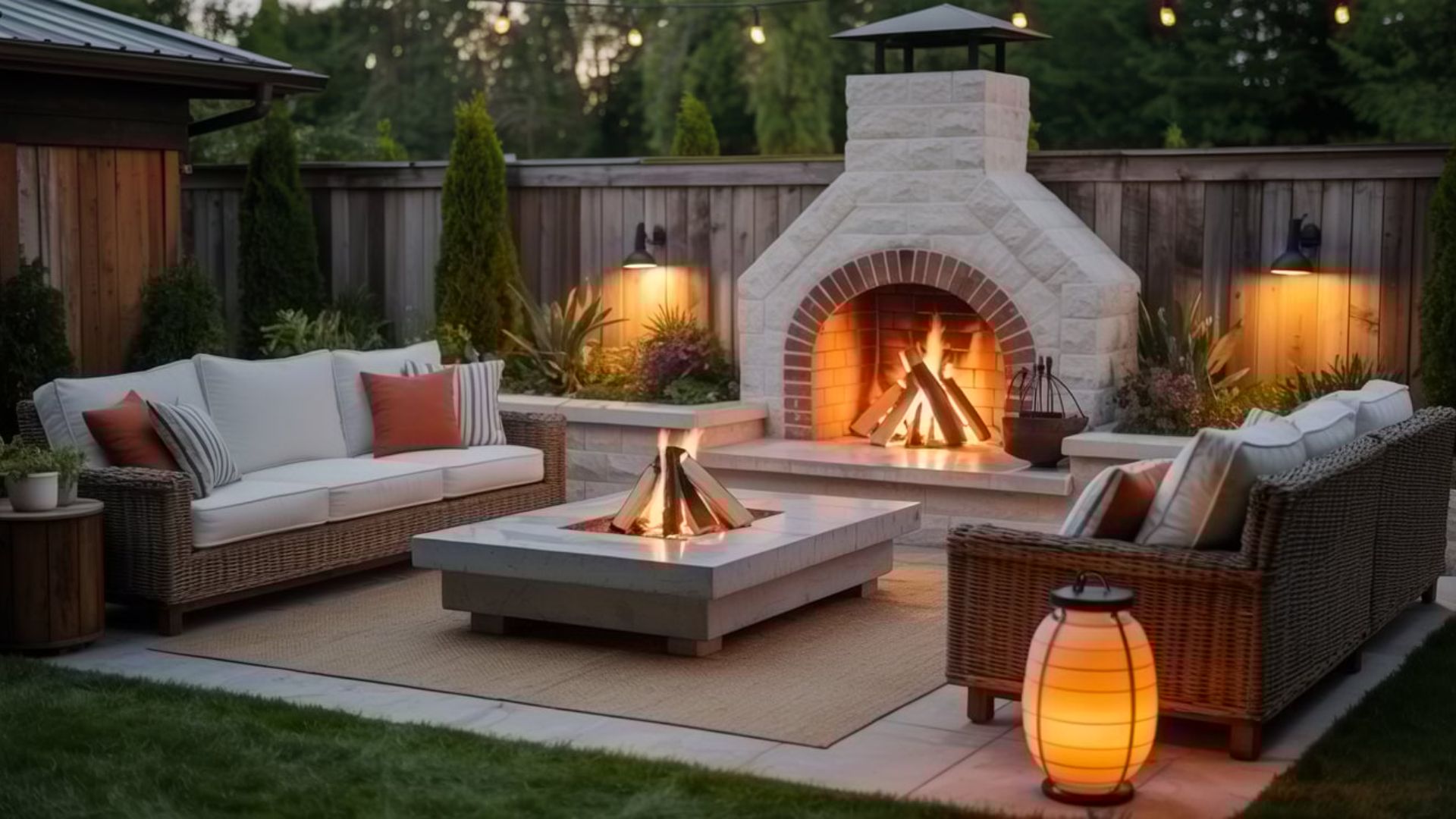
Your backyard sits empty most evenings while neighbors gather around their glowing outdoor fireplace, creating memories under the stars. You’ve priced professional installations only to face quotes exceeding $5,000-$15,000 that strain your budget. The frustration mounts as another summer passes without that magical fire feature you’ve envisioned as the centerpiece of your outdoor living space.
Building a DIY outdoor fireplace isn’t reserved for master masons or contractors with decades of experience. With proper planning, quality materials, and weekend dedication, you can construct a stunning backyard fireplace that becomes your property’s focal point for a fraction of professional costs. Whether you’re considering a classic stone outdoor fireplace, rustic brick design, or modern concrete structure, the process follows logical steps that any motivated homeowner can master. This comprehensive guide walks you through planning, material selection, construction phases, and finishing touches that transform your patio fireplace design dreams into crackling reality.
What Are the Benefits of a DIY Outdoor Fireplace?
A DIY outdoor fireplace delivers substantial value beyond the obvious cost savings compared to professional installation. Building it yourself creates deep satisfaction and customization opportunities impossible with pre-fab units.
The financial advantage alone justifies consideration materials typically cost $1,500-$3,500 depending on design complexity, while professional labor adds $3,500-$11,500 to that baseline. You control quality by selecting premium materials within your budget rather than accepting contractor shortcuts. Customization reaches new levels when you’re not constrained by standard dimensions or limited style options from fireplace companies. Your DIY outdoor fireplace can incorporate specific dimensions that fit your patio fireplace design perfectly, integrate built-in seating, or include unique artistic touches reflecting your personal aesthetic. The construction process itself teaches valuable masonry skills applicable to future projects. Perhaps most importantly, every evening spent beside flames you built with your own hands brings pride that purchased installations simply cannot match.
How Do You Choose the Right Location?
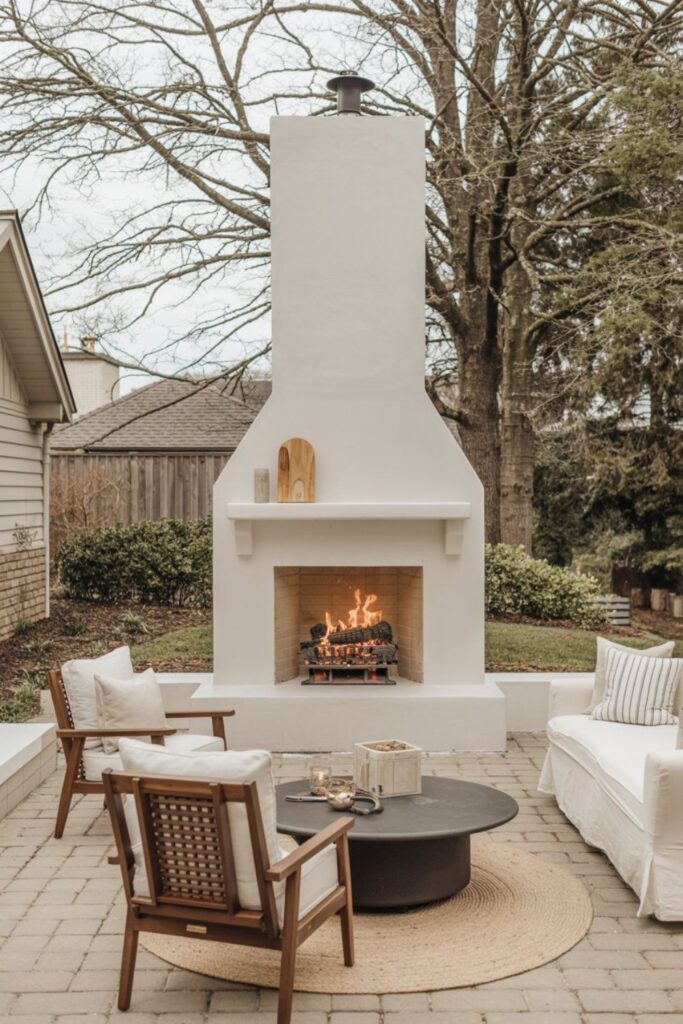
Location determines your DIY outdoor fireplace success more than any other single factor. Strategic placement balances aesthetics, functionality, safety, and local regulations.
Start by checking building codes and HOA restrictions most municipalities require fire features to sit at least 10-25 feet from structures, property lines, and overhanging tree branches. Verify whether permits are mandatory in your area before breaking ground. Consider prevailing wind patterns to avoid smoke blowing directly into your home or seating area. Evaluate sun exposure throughout the day; positioning your fireplace where afternoon shade naturally occurs extends comfortable gathering time. Assess drainage to prevent water pooling around your structure’s base. Factor in access to utilities if you’re considering gas lines for easier ignition. The ideal spot provides safety clearance, integrates with existing landscaping, offers proximity to your home for convenience, and creates an intimate zone without feeling cramped. Walk your yard during different times and weather conditions before committing the perfect location reveals itself through observation rather than hasty decisions.
What Materials Do You Need for Construction?
Quality construction materials form the foundation of a durable, safe outdoor fireplace that withstands decades of use. Your shopping list varies slightly based on design but includes these core components.
For the foundation, you’ll need gravel base material, rebar, and concrete rated for exterior use. The structure requires fire pit bricks or heat resistant mortar rated to 2000°F minimum regular masonry mortar crumbles under intense heat. Standard bricks or stone veneer create the exterior while firebricks line the firebox interior. A flue liner (typically stainless steel or clay tile) ensures proper smoke ventilation through the chimney design. You’ll need metal angle iron for lintel support above the firebox opening. Additional supplies include masonry sand, Portland cement, waterproofing sealant, and capstones for finishing. Tools required include a level, trowel, masonry saw or wet saw, wheelbarrow, shovel, tape measure, and safety equipment like gloves and goggles. Budget an extra 10-15% beyond your calculated material needs to account for cuts, mistakes, and design adjustments during construction. Investing in quality fireproof materials costs more initially but prevents dangerous failures and expensive repairs down the road.
Read More About: 30+Cozy Fireplace Ideas for a Warm and Inviting Space
How Do You Design Your Outdoor Fireplace Plans?
Detailed outdoor fireplace plans prevent mid-construction confusion and material waste. Thorough planning transforms vague ideas into buildable blueprints.
Begin by sketching your vision on graph paper, noting dimensions for the firebox opening (typically 30-36 inches wide by 28-32 inches tall), overall height (6-8 feet common), and depth (24-30 inches). Research pre-made plans online or purchase detailed blueprints if you prefer professional guidance; many excellent designs cost $50-$150 and include material lists with precise quantities. Your design must include a proper chimney that extends at least 2 feet above the highest point within 10 feet to ensure adequate draft. Decide whether you want a straight chimney or one with a smoke chamber that improves draft efficiency. Plan for a hearth extension that projects 16-20 inches beyond the firebox opening for safety. Consider whether you want built-in brick veneer benches, storage for firewood, or decorative niches. Incorporate a damper if you want the ability to seal the chimney when not in use. Your backyard fireplace ideas should balance ambition with realistic assessment of your skill level starting with a simpler design ensures higher success rates than attempting elaborate features on your first build.
What Foundation Requirements Must You Meet?
A robust concrete foundation prevents settling, cracking, and structural failure that plague inadequately supported outdoor fireplaces. Cutting corners here guarantees future problems.
Excavate 12-18 inches deep and extend the foundation footprint 6 inches beyond your planned structure on all sides. For a typical 4-foot-wide fireplace, your foundation should measure approximately 5 feet wide. Fill the excavation base with 4-6 inches of compacted gravel for drainage and frost protection. Install a grid of rebar spaced 12 inches apart in both directions, supported 2-3 inches above the gravel using dobies or brick pieces. Mix and pour concrete rated at minimum 3,500 PSI, filling to ground level or slightly above. Use a screed board to level the surface and finish with a trowel for smoothness. Allow the foundation to cure for at least 3-5 days before beginning masonry work rushing this step compromises everything built above. In cold climates where frost heaving occurs, extend your foundation below the frost line (check local building codes for depth requirements in your area). This foundation investment seems tedious but represents the difference between a fireplace standing strong after 20 winters versus one developing dangerous cracks after three seasons.
How Do You Build the Firebox Safely?
The firebox endures extreme temperatures and requires specialized construction techniques. Proper execution here ensures both safety and longevity.
Line the entire interior with firebricks set in heat resistant mortar rated to withstand at least 2000°F. Standard mortar deteriorates rapidly under direct flame exposure. Lay firebricks in a running bond pattern, staggering joints for structural integrity. Create a slightly sloped floor that pitches forward toward the opening by about 1/4 inch per foot this prevents water pooling and improves ash removal. Install a steel angle iron lintel across the top of the firebox opening before continuing upward this horizontal support beam carries the weight of bricks above the opening. Maintain minimum 4-inch thickness on all firebox walls to provide adequate heat insulation protecting the exterior structure. Build the back wall at a slight forward angle (about 15-20 degrees from vertical) starting about 12-16 inches up this “smoke shelf” deflects downdrafts and reflects heat outward into your seating area. Leave no gaps in mortar joints where flames could reach standard masonry. Test the structure by burning newspaper before your first real fire to identify any smoke backdraft issues when corrections remain simple. A properly built firebox feels hot on the exterior during use but never threatens structural integrity or surrounding materials.
What Are the Steps for Chimney Construction?
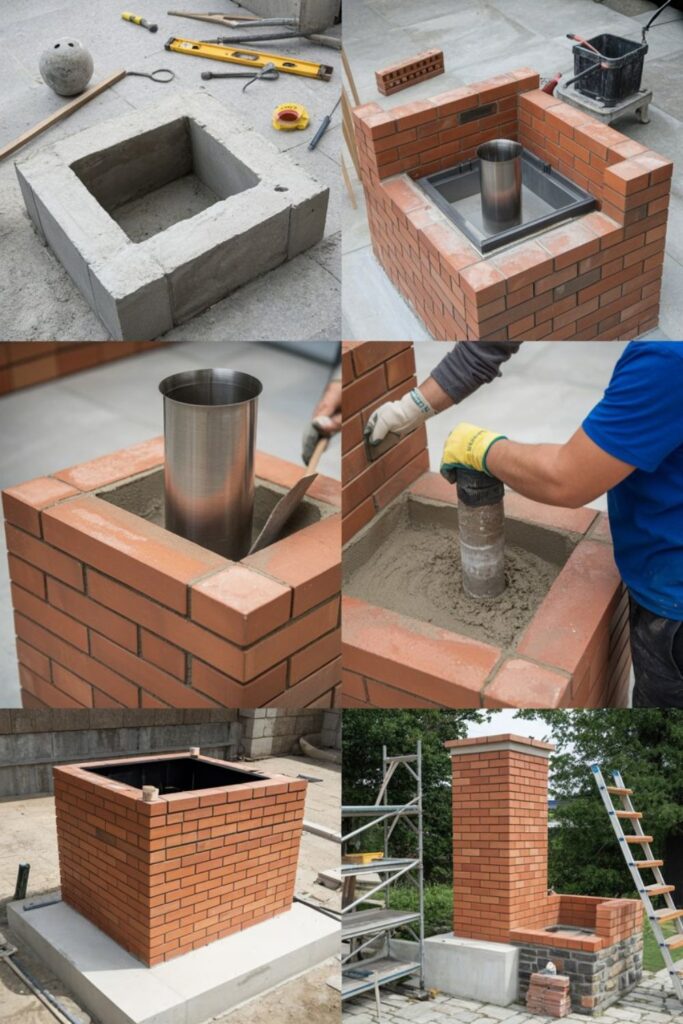
The chimney design determines how well your DIY outdoor fireplace drafts and whether smoke rises cleanly or drifts into gathering spaces. Methodical construction prevents frustrating smoke problems.
Begin immediately above the firebox by constructing a smoke chamber that gradually transitions from the wide firebox opening to the narrower flue liner diameter. This transition should slope at roughly 60 degrees to maintain proper draft velocity. Install your flue liner whether stainless steel pipe or clay tile sections ensuring each piece connects securely to the next with high-temperature sealant. Build masonry around the liner, maintaining at least 2 inches of clearance filled with insulation rated for high temperatures. Keep the chimney interior smooth without protrusions that create turbulence disrupting airflow. Maintain consistent inner dimensions throughout the vertical run to avoid constrictions that impede draft. Plan for a spark arrestor mesh screen at the top to prevent embers escaping while allowing smoke to exit freely. Cap the chimney with a concrete or stone cap that overhangs the structure by 2-3 inches, protecting mortar joints from weather. The entire chimney should rise at least 12 feet from the firebox floor for adequate draft in most situations. Taller chimneys draft more aggressively but require additional bracing and consideration of wind loads on the increased surface area.
How Do You Finish the Exterior Beautifully?
Exterior finishing transforms functional masonry into an attractive focal point that enhances your entire outdoor living space. Surface treatments and details make the difference between industrial and inviting.
Choose between leaving natural brick or stone exposed versus applying stucco or stone veneer over a standard brick core. Natural stone outdoor fireplace designs offer timeless appeal but require careful stone selection where each piece fits like a puzzle. Brick veneer provides classic charm with relatively straightforward installation just to maintain consistent mortar joint width (typically 3/8 to 1/2 inch) for professional appearance. Consider a contrasting color or material for accent bands, arched openings, or the area surrounding the firebox to add visual interest. Install a mantel from weather-resistant wood, stone slab, or concrete for displaying décor and defining the fireplace face. Seal all exterior masonry with breathable waterproofing products that prevent moisture penetration while allowing trapped moisture to escape this prevents freeze-thaw damage in cold climates. Add decorative elements like inset tile, wrought iron details, or custom metalwork that reflects your style. The finishing phase offers creative freedom where your unique vision separates your project from generic designs. Take time with these details because they’re what visitors notice first and remember longest.
What Safety Features Should You Include?
Safety considerations protect both property and people throughout your outdoor fireplace lifespan. Multiple protective elements work together preventing accidents and damage.
Install a spark arrestor screen across the firebox opening when burning to contain popping embers that could ignite nearby furniture, clothing, or landscaping. Establish a safety clearance zone extending at least 3 feet in all directions from the fireplace where no combustible materials reside. This includes cushions, umbrellas, wooden furniture, and plantings. Construct a substantial hearth extending 16-20 inches in front of the opening using non-combustible material like stone, tile, or concrete. Keep a fire extinguisher rated for wood fires within easy reach and mount it visibly near your seating area. Install proper lighting around the fireplace zone so people can safely navigate after dark when mesmerized by flames. Ensure the structure sits on stable, level ground that won’t shift or settle unevenly. Build adequate chimney height that vents smoke well above head level and roof lines. Never position your fireplace under or near a pergola, covered patio, or low-hanging tree branches, rising heat and sparks create fire hazards. Post visible reminders about proper fire management practices for guests unfamiliar with outdoor entertaining fire safety protocols.
How Much Does a DIY Project Actually Cost?
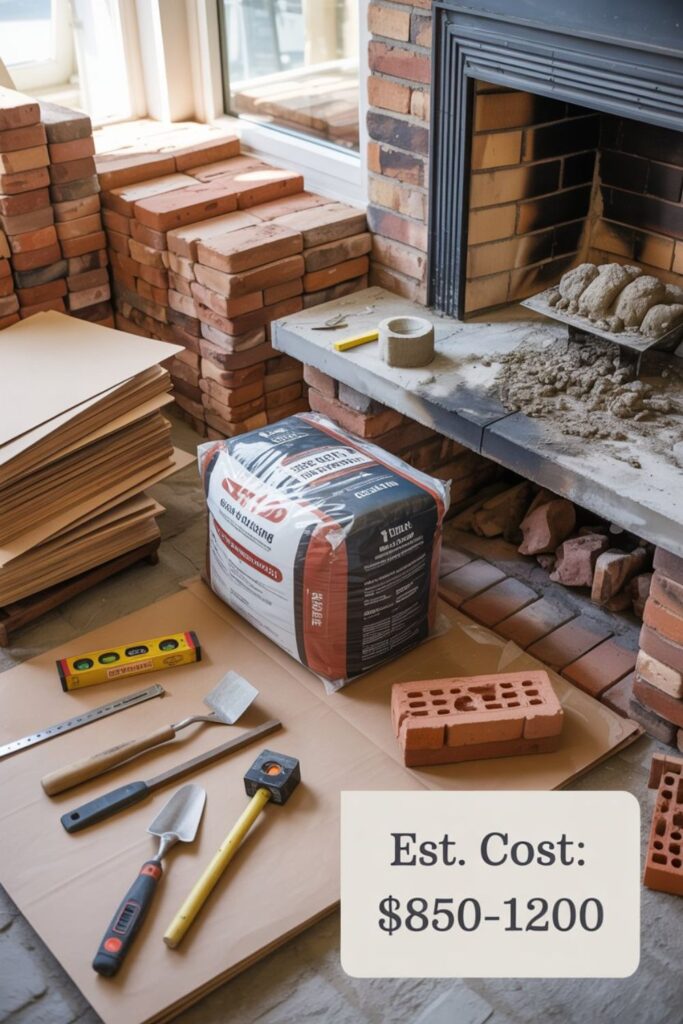
Budget planning prevents mid-project funding crises that leave half-finished fireplaces deteriorating in your yard. Realistic cost assessment guides feasible designs.
Basic designs using standard brick or concrete block with firebrick lining cost $1,500-$2,500 in materials. Mid-range projects incorporating natural stone veneer, decorative details, and quality chimney components run $2,500-$4,000. High-end custom designs with premium materials, large dimensions, and complex features reach $4,000-$5,500. These ranges assume you’re providing all labor and add $3,500-$11,500 for professional installation if you decide partway through that DIY isn’t feasible. Permits add $50-$500 depending on your municipality. Tool rental (concrete mixer, masonry saw) adds $100-$300 if you don’t own equipment. Factor delivery fees for heavy materials pallets of brick or stone often cost $50-$150 for shipping. Budget an additional 15% contingency for unexpected issues like hitting rock during excavation or needing additional materials when plans change. Your build outdoor fireplace investment still undercuts professional quotes by 50-70% while delivering a custom feature that immediately boosts property value. Most homeowners recoup 60-80% of material costs in increased home value while enjoying immediate lifestyle benefits that make the investment worthwhile regardless of resale considerations.
What Permits and Codes Must You Follow?
Navigating building codes and permits feels tedious but protects you from fines, insurance issues, and demolition orders. Compliance isn’t optional despite appearing bureaucratic.
Visit your local building department before purchasing materials to understand specific requirements in your jurisdiction. Most areas require permits for permanent structures exceeding certain heights or involving fire elements. Permit costs range from $50-$500 depending on project scope and location. Inspections typically occur at the foundation stage and upon completion schedule these appropriately to avoid construction delays. Common code requirements include minimum distances from property lines (typically 10-15 feet), setbacks from structures (15-25 feet common), maximum height limits without engineering approval, and specific chimney height relative to nearby rooflines. Some HOAs impose additional restrictions beyond municipal codes and review your neighborhood covenants thoroughly. Insurance companies may require documentation of permitted, code-compliant construction before covering fire damage claims. Gas line installations require licensed professional work and separate permitting in most jurisdictions. While unpermitted construction might seem easier initially, selling your home becomes complicated when disclosure laws require reporting unpermitted improvements. Future buyers’ lenders often refuse financing homes with unpermitted structures, severely limiting your buyer pool. Investing a few hundred dollars and several hours in proper permitting protects your investment and prevents catastrophically expensive problems later.
How Do You Integrate Seating and Entertaining Space?
Your outdoor fireplace reaches full potential when surrounded by thoughtfully planned gathering spaces. Furniture placement and amenities transform a fire feature into an outdoor entertaining destination.
Position seating in a U-shape or semi-circle facing the fireplace opening, keeping primary chairs 6-8 feet away for comfortable heat exposure without overwhelming warmth. Incorporate varied seating types built-in brick veneer benches, Adirondack chairs, cushioned sofas, and movable ottomans to accommodate different group sizes and preferences. Add side tables within arm’s reach of each seat for drinks and snacks. Define the zone with an outdoor living space rug that anchors furniture and softens hard paving. String overhead lights, lanterns, or install landscape lighting that illuminates pathways while maintaining the fireplace’s visual prominence. Create a serving station nearby with weatherproof storage for firewood, fire starters, and entertaining supplies. Consider traffic flow patterns ensuring people can access seating without walking between others and the fire. Incorporate planters, decorative screens, or low walls that create intimate enclosure without blocking heat circulation. Add weather-resistant throw pillows and blankets stored in a deck box for grabbing when temperatures drop. The goal is crafting a complete outdoor room where the fireplace anchors the experience but supporting elements ensure comfort extending gatherings well into cool evenings.
What Maintenance Does an Outdoor Fireplace Require?
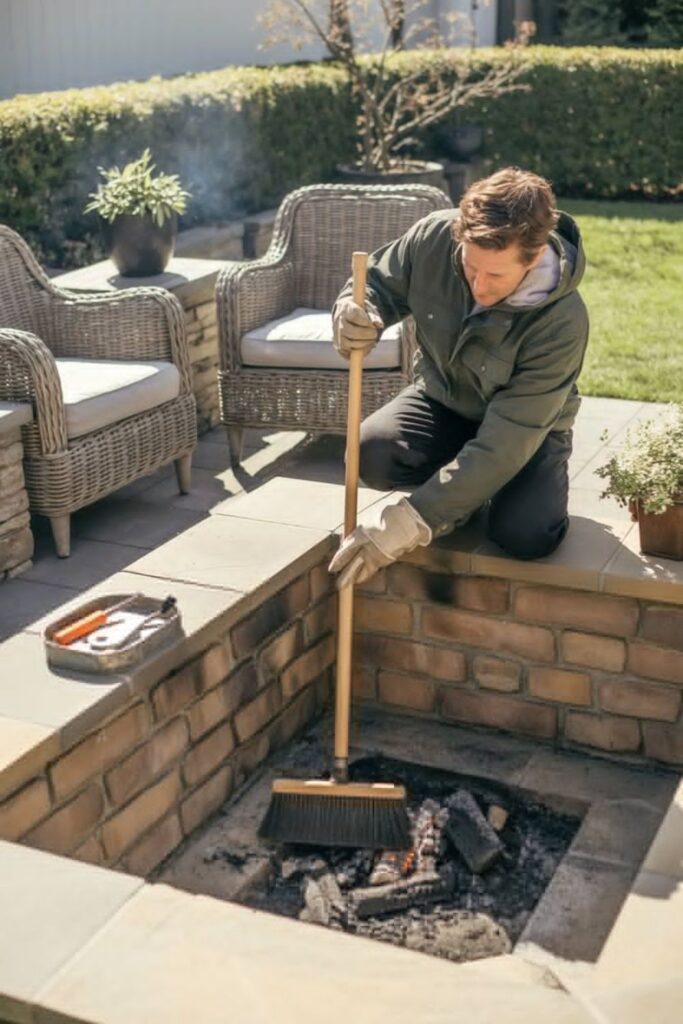
Regular maintenance preserves your DIY outdoor fireplace investment and prevents small issues escalating into expensive repairs. Seasonal attention keeps everything functioning beautifully.
Remove ashes after fires cool completely accumulated ash restricts airflow and retains moisture that damages the firebox. Inspect mortar joints annually for cracks or deterioration, repointing any problem areas with fresh mortar before water infiltration causes expansion damage. Sweep the chimney annually or after every cord of wood burned to remove creosote buildup that creates fire hazards. Check the flue liner for cracks, separation, or blockages from bird nests or debris. Clean the exterior stone or brick annually with appropriate masonry cleaner and a stiff brush, removing soot stains, efflorescence, or organic growth. Apply fresh waterproofing sealant every 2-3 years to protect against moisture damage and freeze-thaw cycles. Inspect the chimney cap for damage or deterioration, replacing it if cracks compromise weather protection. Trim back vegetation encroaching within the safety clearance zone as plants grow. Check that the spark arrestor screen remains securely attached and intact. Store fireplace tools and accessories under cover during winter if you live in harsh climates. Address repairs promptly rather than deferring them small cracks expand dramatically through freeze-thaw cycles, turning $50 repairs into $500 rebuilds. Consistent care over decades keeps your outdoor fireplace looking and functioning as well as the day you completed construction.
Can You Convert Your Fireplace to Gas?
Gas conversion offers convenience but requires professional installation and different construction considerations. Understanding the trade-offs guides informed decisions about your DIY outdoor fireplace fuel source.
Gas-fueled units eliminate smoke, ash cleanup, and constant fire tending while providing instant flames at the switch flip. However, they lack the crackling sounds, authentic fire smell, and primal satisfaction of wood-burning fires that many people cherish. Gas line installation requires licensed plumbers in most jurisdictions and adds $500-$2,000 to project costs depending on distance from your home’s gas supply. The firebox design differs significantly as units need gas log sets, lava rock beds, or fire glass rather than traditional grates, with specific burner placement ensuring proper flame patterns. Ventilation requirements remain but often allow shorter chimneys since gas produces fewer particulates than wood. Building codes often impose additional requirements for gas shutoff valve accessibility and leak detection. Consider installing a dual-fuel system with both wood-burning capability and a gas starter; this combination offers convenience for quick fires while preserving the option for traditional wood-burning ambiance. If you’re building from scratch and certain you want gas-only operation, research gas fireplace kits designed specifically for outdoor installation rather than adapting wood-burning designs. The construction process simplifies somewhat without needing the same extreme heat resistance throughout the firebox, but proper planning remains critical for safe, effective operation.
What Are Common DIY Mistakes to Avoid?
Learning from others’ errors saves time, money, and frustration on your build outdoor fireplace journey. These frequent mistakes derail projects or create long-term problems.
Skipping or rushing the foundation curing period causes settling and cracks that compromise structural integrity. Using standard mortar instead of heat resistant mortar in the firebox leads to rapid deterioration and safety hazards. Inadequate chimney height produces poor draft that sends smoke billowing into gathering areas rather than rising cleanly. Building too close to property lines, structures, or trees violates codes and creates fire risks. Neglecting waterproofing allows moisture infiltration that destroys masonry through freeze-thaw cycles. Incorrect smoke chamber geometry causes persistent draft problems impossible to fix without demolition. Underestimating material quantities results in mid-project trips that waste time and risk not matching materials from different lots. Attempting overly ambitious designs beyond your skill level leads to frustration and potentially unsafe construction. Ignoring permit requirements creates problems during home sales and insurance claims. Positioning the fireplace where prevailing winds blow smoke toward seating ruins the experience. Taking shortcuts on safety clearance distances jeopardizes property and people. These mistakes share a common thread: they’re preventable through proper planning, patience, and realistic self-assessment before breaking ground.
Read More About: Cozy Fireplace Aesthetic To Create a Warm Winter Retreat
How Long Does Construction Actually Take?
Timeline expectations prevent unrealistic pressure and help schedule your DIY outdoor fireplace project appropriately. Duration varies based on design complexity and your available work hours.
A straightforward design tackled by an experienced DIYer working full weekends might complete in 3-4 weekends spanning a month. Beginners should expect 6-8 weekends or more as you learn techniques and work more deliberately. Complex designs with significant height, decorative details, or large dimensions can stretch to 10-15 weekends over 3-4 months. These estimates assume favorable weather rain delays masonry work substantially since moisture prevents proper mortar curing. Factor in additional time for permit approval (1-3 weeks typical), material delivery scheduling, and required inspection appointments. Foundation curing alone consumes nearly a week before you can begin laying bricks. Break the project into phases: foundation (weekend 1), firebox and lower structure (weekends 2-4), chimney construction (weekends 5-7), and exterior finishing (weekends 8-9). This staged approach provides natural stopping points if life interrupts your construction schedule. Rushing compromises quality better to extend your timeline than accept subpar work. Many successful builders spread construction across an entire summer, working steadily without pressure. The finished outdoor fireplace serves you for decades, making a few extra weeks during construction meaningless in the grand scheme. Patience during building ensures you’ll love the result rather than tolerate flaws haunting every fire.
FAQs
Do I need a permit to build a DIY outdoor fireplace?
Most municipalities require permits for permanent outdoor fireplaces, though requirements vary by location and structure size. Contact your local building department before starting construction to understand specific regulations in your area. Permit costs typically range from $50-$500, and inspections ensure your fireplace meets safety codes regarding setback distances, height, and construction methods.
How much does it cost to build your own outdoor fireplace?
Material costs for a DIY outdoor fireplace typically range from $1,500-$5,500 depending on design complexity, size, and material quality. Basic brick designs cost less while natural stone outdoor fireplace projects with elaborate details cost more. This represents 50-70% savings compared to professional installation which adds $3,500-$11,500 in labor charges. Budget an additional 15% for unexpected expenses and tool rental.
What is the best material for an outdoor fireplace?
Firebrick lined with heat resistant mortar provides the safest, most durable firebox interior while the exterior can feature standard brick, natural stone, concrete block with veneer, or stucco over masonry. Each material offers different aesthetics and costs; brick provides classic appeal, stone delivers natural beauty, and concrete block offers affordable structure with customizable finishes. Choose based on your budget, skill level, and desired appearance.
Can I build an outdoor fireplace on a wooden deck?
Building a full masonry outdoor fireplace on a wooden deck is structurally unsound and dangerously unsafe due to extreme weight and fire risk. The foundation and structure require solid ground or a concrete pad capable of supporting several thousand pounds. If you want a fire feature on your deck, consider a pre-manufactured fire pit or chiminea specifically designed for deck use with proper protective barriers underneath.
How tall should an outdoor fireplace chimney be?
The chimney should extend at least 12 feet from the firebox floor and rise at least 2 feet above any structure or roofline within 10 feet horizontally. Taller chimneys generally draft better, pulling smoke upward more effectively. Local building codes may specify minimum heights and verify requirements in your jurisdiction. Inadequate chimney height creates persistent smoke problems that ruin the outdoor entertaining experience.
Conclusion
A DIY outdoor fireplace transforms ordinary backyards into enchanting gathering spaces where memories form under starlit skies. The construction journey demands dedication, careful planning, and willingness to learn new masonry skills, but rewards builders with substantial cost savings and deep satisfaction from creating something permanent with their own hands. Your finished outdoor fireplace becomes more than a fire feature; it evolves into the magnetic centerpiece drawing family and friends together season after season.
Success hinges on respecting critical elements like proper foundation work, heat resistant mortar in the firebox, adequate chimney height, and compliance with local building codes and permits. Whether you choose classic brick, natural stone outdoor fireplace styling, or modern concrete designs, quality materials and patient craftsmanship create structures lasting decades with minimal maintenance. Start with realistic outdoor fireplace plans matching your skill level, gather your construction materials thoroughly, and tackle the project in logical phases rather than rushing toward completion.