Inspiring Backyard Garden Design Ideas for Your Dream Outdoor Paradise

You stand in your backyard feeling uninspired by the bare lawn, scattered shrubs, and complete lack of cohesive design. The space has potential if you sense it but translating vague dreams into concrete plans feels impossible. Every time you browse garden magazines or scroll through social media, you see breathtaking outdoor spaces that seem to require unlimited budgets, professional designers, and botanical expertise you simply don’t possess.
This creative paralysis costs you more than just an unattractive yard. You’re missing opportunities to create memories in beautiful outdoor spaces, host gatherings in impressive settings, or simply unwind after stressful days in peaceful garden sanctuaries. Meanwhile, your underutilized backyard represents wasted square footage that could dramatically enhance your home’s value and your family’s quality of life if only you knew where to begin.
The truth is liberating: inspiring backyard garden design comes from understanding proven design principles, studying various styles until one resonates with your aesthetic sensibility, and implementing ideas in phases that match your budget and capabilities. The most memorable gardens blend personal expression with timeless techniques, creating spaces that feel both professionally designed and authentically yours. This guide reveals inspiring backyard garden across multiple styles and scales, providing the framework you need to transform confusion into clarity and blank yards into extraordinary outdoor rooms that reflect your vision while exceeding your expectations.
Essential Principles of Inspiring Garden Design
Design fundamentals separate exceptional gardens from merely adequate ones. Understanding these principles provides the foundation for creating spaces that feel intentionally composed rather than randomly assembled.
Unity and cohesion tie diverse elements into harmonious wholes. Achieve this through repeating colors, materials, or plant types throughout the space. If you use flagstone for the patio, echo it in pathway steppers or border edging. Plant drifts of the same ornamental grass in multiple locations rather than scattering singles randomly. Choose a color palette perhaps purples, silvers, and whites and repeat it consistently. Balance creates visual stability through symmetrical or asymmetrical arrangements. Formal gardens use mirror-image plantings flanking central axes, while naturalistic designs balance visual weight a large Japanese maple on one side counterbalanced by a cluster of medium shrubs opposite.
Scale and proportion ensure elements relate appropriately to each other and to your space. Tiny bistro furniture looks lost on vast patios, while oversized sectionals overwhelm small decks. Plant sizes should match their locations dwarf conifers suit foundation beds while full-sized shade trees anchor larger yards. Focal points draw attention and organize compositions. Every garden needs destinations a striking specimen tree, water feature, sculpture, or seating area that pulls the eye and provides visual rest stops. Position focal points at pathway intersections, in bed centers, or where sightlines naturally lead from primary viewing locations.
Rhythm and repetition guide eye movement through gardens. Repeat similar plants, hardscape materials, or design motifs at intervals creating visual rhythm like musical beats. Plant three groupings of purple coneflowers spaced along a border, or position identical planters on either end of a path. Contrast prevents monotony through variations in texture, form, color, or height. Pair fine-textured thread leaf coreopsis against bold host as leaves, or position spiky yucca beside rounded boxwood. These design principles work universally across all garden styles, providing the invisible structure that makes beautiful gardens feel “right” even when viewers can’t articulate why.
Read More About: Best Love Gardens Ideas for Romantic Outdoor Space
Modern Minimalist Backyard Designs
inspiring backyard garden emphasize clean lines, limited palettes, and architectural plants. These sophisticated spaces suit contemporary homes while requiring surprisingly low maintenance.
Geometric layouts feature rectangular planters, linear pathways, and defined edges creating strong structural bones. Use corten steel or concrete planters in perfect squares or rectangles, arranging them asymmetrically for interest while maintaining overall orderliness. Install porcelain pavers in large formats (24×24 inches or larger) with minimal grout lines, creating seamless surfaces. Concrete aggregate pathways provide textured interest within otherwise smooth hardscaping. Edge beds with steel or aluminum strips maintaining crisp boundaries between planting areas and gravel mulch.
Limited plant palette prevents visual clutter through restraint. Choose 5-7 plant species maximum, using multiples of each rather than single specimens. Ornamental grasses like Karl Foerster feather reed grass or maiden grass provide vertical elements and movement. Boxwood spheres or cubes add evergreen structure pruned into precise geometric forms. Agave, yucca, or phormium contribute architectural drama. Mass plantings create bold statements fifteen identical Black Mondo grass create more impact than scattered mixed groundcovers. Monochromatic color schemes using greens, whites, and silvers maintain sophisticated restraint.
Minimal ornamentation lets materials and plants shine without competing decorative elements. Choose one or two high-quality pieces a single stunning sculpture, water feature, or fire element rather than multiple small accessories. Negative space receives equal design consideration as planted areas. Large expanses of decomposed granite, white gravel, or concrete provide visual rest between plantings. Integrated lighting hidden within structures or plantings illuminates without visible fixtures cluttering views. These modern minimalist designs prove that “less is more” when executed with quality materials and careful attention to proportion and detail.
Lush Cottage Garden Style
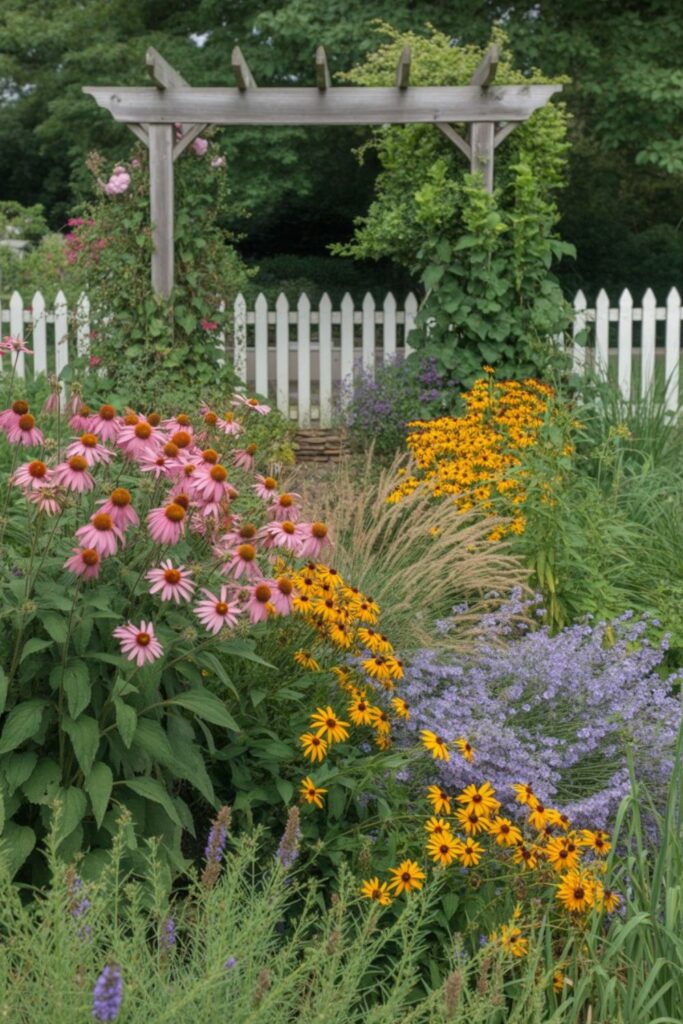
Cottage gardens embrace romantic abundance through densely packed plantings in seemingly casual arrangements. Despite appearing spontaneous, successful cottage gardens follow careful planning.
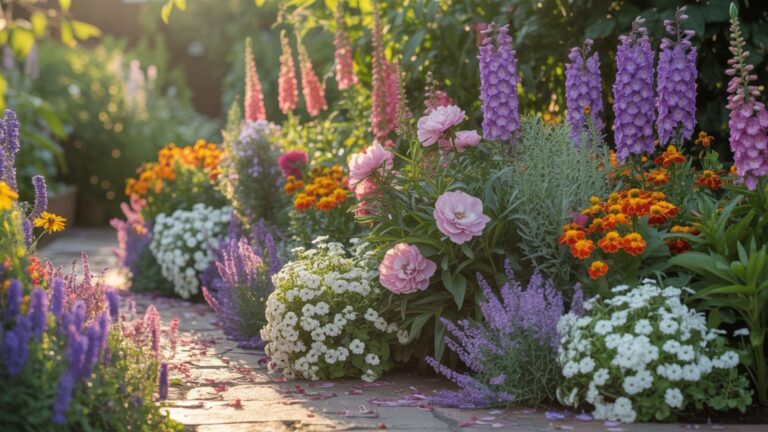
Informal mixed borders layer perennials, annuals, shrubs, and even vegetables in charming profusion. Plant roses as anchors, surrounding them with delphiniums, foxgloves, hollyhocks, and lupines providing vertical accents. Add mid-height catmint, salvia, coreopsis, and daisies filling middle zones. Edge with alyssum, dianthus, or creeping thyme spilling onto pathways. This layering creates depth while maximizing bloom time as one plant finishes, another peaks. Self-seeding annuals like cosmos, larkspur, love-in-a-mist, and calendula appear spontaneously year after year, enhancing the cottage aesthetic.
Pastel color palettes dominate traditional cottage styles soft pinks, lavenders, pale yellows, and whites creating dreamy romantic atmospheres. Plant pink roses with purple lavender, white peonies, and pale yellow daylilies. Add silver foliage plants like lamb’s ear or artemisia softening color transitions. Charming structures enhance cottage character. Install white picket fences, arbors draped with climbing roses or clematis, and simple wooden benches weathering to soft gray patinas. Use terra cotta or ceramic containers clustered near entries or along pathways.
Curved pathways meander through plantings rather than marching directly to destinations. Create gentle S-curves using brick, flagstone, or gravel, allowing plants to billow over edges. Kitchen garden integration blends vegetables and herbs seamlessly with ornamentals rosemary, sage, chard, and kale provide beauty plus harvests. Vintage accessories like old watering cans, wooden wheelbarrows, or antique garden tools add authentic cottage charm without feeling contrived. These cottage garden elements create spaces feeling established and loved over decades rather than newly installed.
Tropical Paradise Backyard Retreats
Tropical designs transport you to exotic destinations through bold foliage, vibrant colors, and lush abundance. These gardens work in warm climates or as seasonal displays elsewhere.
Bold-leafed plants dominate tropical aesthetics through dramatic scale and shapes. Elephant ear (Colocasia) produces massive leaves up to 3 feet long. Banana plants add instant tropical character with their paddle-shaped foliage Musa basjoo survives to Zone 5 with winter protection. Cannas offer large leaves in green or burgundy plus bright flowers. Bird of paradise creates architectural clumps in frost-free regions. Palms provide iconic tropical silhouettes windmill palms tolerate cold to Zone 7, while lady palms work indoors where winter protection is needed. Ferns including tree ferns or staghorn ferns add lush texture in shaded spots.
Vibrant color schemes embrace saturated hues rather than subtle pastels. Plant hot pink bougainvillea, red hibiscus, orange bird of paradise, and purple tibouchina. Use crotons with multicolored foliage, coleus in bold patterns, and caladiums with striking leaf colors. Tropical hardscaping features natural stone, bamboo fencing, teak furniture, and thatched or palm-frond roof elements on structures. Install colorful tile accents on risers, planters, or water features. Add hammocks strung between palms or posts for the ultimate tropical lounging.
Water features feel essential in tropical gardens. Install naturalistic ponds edged with lush plantings, cascading waterfalls over stacked rocks, or infinity-edge pools if budget allows. Add tropical fish or koi to ponds. Container groupings allow tropical displays in cold climates to grow tender plants in pots moved indoors before frost. Overwinter elephant ears, cannas, and banana plants as dormant bulbs or houseplants. Outdoor lighting using tiki torches, string lights, and uplighting on palms extends tropical ambiance into evening. These tropical paradise designs create vacation-worthy escapes in your own backyard.
Mediterranean-Inspired Garden Designs
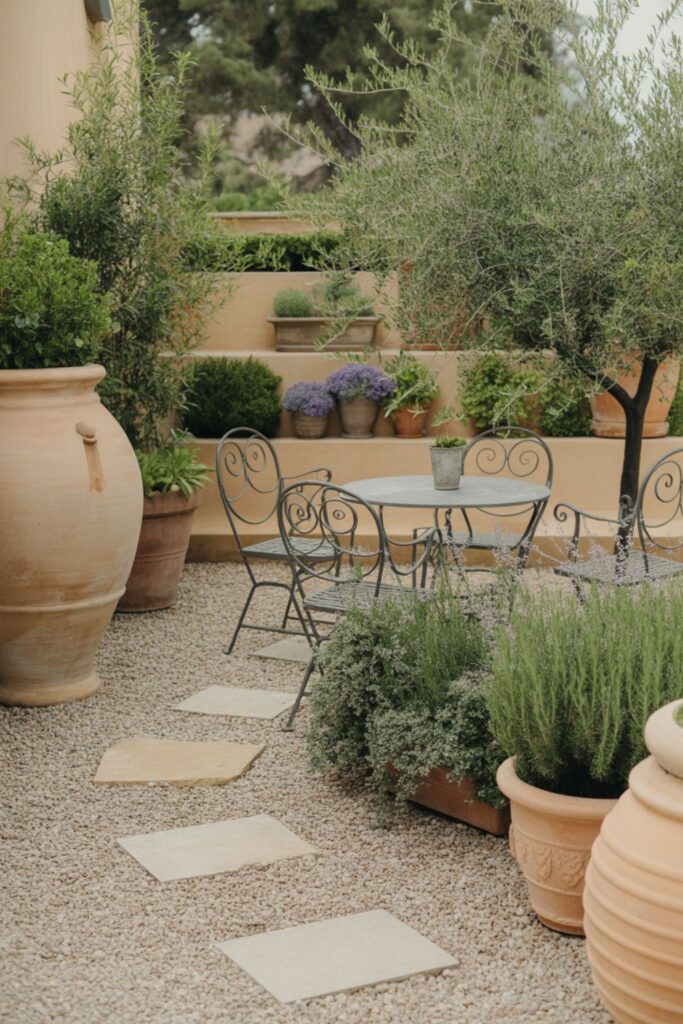
Mediterranean gardens evoke sun-drenched coastlines through drought-tolerant plants, earthy materials, and relaxed elegance. These designs suit hot, dry climates beautifully while requiring minimal water.
Drought-tolerant plantings emphasize species thriving with minimal irrigation. Lavender provides purple spikes and an intoxicating fragrance. Rosemary offers evergreen foliage and culinary uses. Olive trees create gnarled, sculptural forms and choose fruitless varieties to avoid messy drops. Italian cypress provide vertical exclamation points flanking entries or lining pathways. Santolina, artemisia, and germander contribute silver foliage. Bougainvillea cascades over walls with papery blooms in magenta, orange, or white. Ornamental grasses like Mexican feather grass add movement and texture.
Warm earthy materials dominate hardscaping. Use terracotta pavers or tiles for pathways and patios; their warm orange-red tones epitomize Mediterranean character. Install stucco or plaster-finished walls painted in warm whites, ochres, or terracottas. Add wrought iron gates, railings, or furniture contributing Old World authenticity. Gravel mulch in warm tan or honey tones replaces traditional bark mulch, providing excellent drainage while reflecting Mediterranean landscapes. Stone elements including limestone, travertine, or sandstone appear in walls, edging, or water features.
Outdoor living emphasis centers gardens around comfortable spaces for dining and relaxation. Build pergolas using heavy timber beams, training grapevines over tops for natural shade and edible harvests. Create courtyard patios enclosed on multiple sides with stucco walls or hedges, evoking Spanish or Italian villas. Add outdoor kitchens with pizza ovens or grills. Including fountain features using ceramic tiles and terracotta pots, Mediterranean fountains typically feature gentle trickling rather than dramatic cascades. Container gardens overflow with geraniums, petunias, and herbs in mismatched terracotta pots clustered near seating areas. These Mediterranean designs create timeless European elegance suited to modern lifestyles.
Woodland and Shade Garden Designs
Shade gardens transform challenging low-light areas into lush retreats through plants adapted to forest understories. These designs work beautifully in yards dominated by mature trees.
Layered forest structure mimics natural woodland ecosystems. Plant understory trees like Japanese maple, dogwood, or redbud beneath taller canopies, creating mid-height layers. Add shade shrubs including rhododendron, azalea, mountain laurel, or hydrangea as the next layer. Fill ground level with perennials and groundcovers hostas, ferns, astilbe, bleeding heart, Solomon’s seal, and wild ginger. This vertical layering creates depth while accommodating diverse plants at different light requirements.
Foliage over flowers becomes the design focus since shade reduces blooming. Choose plants with interesting leaf shapes, colors, and textures. Hostas offer incredible variety from miniature 4-inch mounds to giant 4-foot specimens in colors from blue-green to chartreuse to variegated. Japanese painted ferns contribute silvery burgundy fronds. Heucheras (coral bells) provide purple, lime, or coral foliage. Brunnera offers heart-shaped leaves with silver markings. Variegated Solomon’s seal adds arching stems with striped leaves. Caladiums bring tropical color through pink, white, or red patterned leaves in summer.
Natural pathways wind through shade gardens using bark mulch, wood chips, or flagstones set informally in moss. Avoid formal straight paths that feel inappropriate in woodland settings. Moss carpets thrive in consistently moist, acidic shade, creating soft green floors beneath trees. Encourage existing moss by removing competing vegetation and keeping areas moist. Fallen leaves left in place (or shredded and replaced) provide natural mulch and habitat. Rustic elements like log benches, natural stone, or weathered wood structures feel at home in woodland gardens where formal materials would clash. These shade garden designs prove that challenging conditions become assets when you work with nature rather than against it.
Edible Landscape Designs
Edible gardens integrate food production seamlessly with ornamental beauty. These designs prove that vegetable gardens needn’t be relegated to hidden back corners.
Potager-style gardens follow French kitchen garden traditions, combining vegetables, fruits, herbs, and flowers in attractive geometric patterns. Create symmetrical beds divided by pathways four square beds separated by gravel walks meeting at a central focal point like a birdbath or obelisk. Edge beds with boxwood, lavender, or strawberries. Grow climbing beans or peas on decorative tuteurs (tower supports) providing vertical accents. Interplant lettuce between roses, calendula among tomatoes, and nasturtiums trailing through beds. This integration creates beauty plus harvests.
Raised bed clusters organized near kitchens provide convenient access while maintaining tidy appearances. Build beds using cedar, composite materials, or galvanized metal in matching styles and heights. Arrange them with pathways between for easy access. Plant succession crops for continuous harvests lettuce followed by beans, then kale in single beds across seasons. Vertical growing maximizes production through trellises, arbors, or espalier systems. Train tomatoes, cucumbers, squash, and melons vertically, saving ground space while improving air circulation and easier harvesting.
Fruit trees provide structure, shade, and harvests. Choose dwarf varieties staying under 10 feet, or train standard trees using espalier techniques against walls or fences. Plant apple, pear, peach, cherry, or fig trees based on your climate. Underplant with herbs, flowers, or spring bulbs. Berry hedges replace ornamental shrubs with productive blueberries (requiring acidic soil), currants, or gooseberries. Edible flowers including nasturtiums, pansies, calendula, and borage contribute beauty plus salad ingredients. Herb spirals create vertical microclimates in small footprints, Mediterranean herbs at sunny tops, moisture-lovers at shaded bases. These edible landscape designs demonstrate that productive gardens rival purely ornamental spaces for beauty while providing bonus harvests.
Wildlife-Friendly Garden Designs
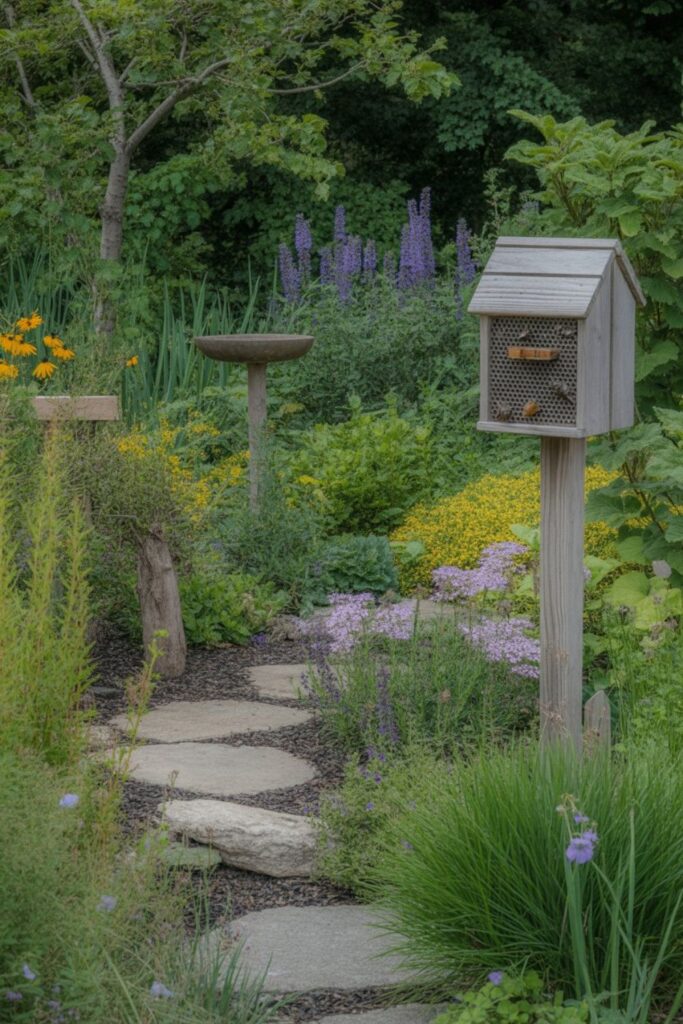
Habitat gardens support local ecosystems by providing food, water, and shelter for birds, butterflies, bees, and beneficial insects. These designs create living landscapes teeming with activity.
Native plant emphasis provides appropriate food sources for local wildlife evolved alongside these species. Research plants native to your specific region through university extensions or native plant societies. In the Northeast, include New England aster, black-eyed Susan, joe-pye weed, and switchgrass. In the Southwest, plant desert marigold, penstemon, brittlebush, and agave. In the Pacific Northwest, choose salal, Oregon grape, red-flowering currant, and Douglas aster. Native trees like oak, willow, or cherry support hundreds of caterpillar species (bird food) that exotics can’t match.
Layered plantings create diverse habitats. Include canopy trees for nesting sites, understory shrubs for cover and berries, perennial meadows for nectar and seeds, and groundcover layers for ground-nesting insects. Leave some areas wilder brush piles shelter rabbits and birds, standing dead trees provide woodpecker feeding and cavity nesting sites, and leaf litter harbors beneficial insects. Water sources prove essential for wildlife. Install birdbaths with shallow edges (1-2 inches deep) changed frequently. Create small ponds supporting frogs, dragonflies, and birds. Add puddling stations (shallow dishes with sand and water) where butterflies gather minerals.
Chemical-free maintenance protects wildlife from pesticides and herbicides. Accept some plant damage as the cost of healthy ecosystems insects feeding on plants support birds feeding nestlings. Seed heads left standing through winter feed finches and sparrows. Native bunchgrasses provide winter cover. Caterpillar host plants are essential milkweed for monarchs, parsley for swallowtails, violets for fritillaries. Nectar plants in succession bloom spring through fall crocuses earliest, asters latest. Choose flower shapes diverse insects can access simple single flowers work better than complex doubles. These wildlife garden designs transform yards into conservation areas supporting biodiversity while providing endless entertainment observing nature’s interactions.
Read More About: Best Garden Yard Ideas for a Stunning Outdoor Retreat
Outdoor Entertainment Spaces
Party-ready gardens prioritize guest comfort and social flow over purely aesthetic concerns. These designs accommodate gatherings ranging from intimate dinners to large celebrations.
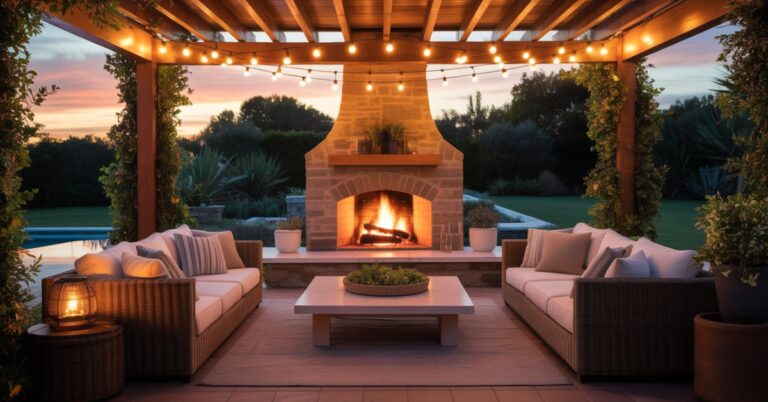
Large patios or decks provide foundations for entertaining, sized to accommodate furniture plus comfortable circulation. Calculate space allowing 25-30 square feet per seated guest a party for 20 needs 500-600 square feet minimum. Use durable materials withstanding heavy traffic and spills concrete pavers, natural stone, composite decking, or stamped concrete. Define zones within large patios dining area with table and chairs, lounge area with sectionals around fire features, and bar or serving area near house access. Pergolas or pavilions add architectural definition while providing partial shade and supporting lighting or heaters.
Outdoor kitchens range from simple grill stations to fully equipped cooking centers. Include built-in grills, refrigerators, sinks with hot and cold water, storage cabinets, and prep counters using granite, concrete, or tile. Position kitchens near indoor kitchens for convenient access to supplies while keeping cooking separate from seating areas. Add bars or counters with barstools creating casual gathering spots. Fire features extend outdoor season while creating natural gathering points. Install fire pits with surrounding seating 3-4 feet away, or fireplaces with adjacent furniture groupings. Pizza ovens add both function and focal point.
Lighting schemes layer ambient, task, and accent lighting for after-dark events. Hang string lights overhead in zigzag patterns or cafe lights around perimeters. Install downlighting from pergolas for dining areas, uplighting on trees and architectural features, and path lighting guiding movement safely. Add dimmers or smart controls adjusting brightness for different occasions. Sound systems with outdoor-rated speakers provide music without blasting neighbors. Comfortable furniture using all-weather cushions encourages guests to linger. Include shade solutions through umbrellas, pergolas, or shade sails for daytime events. These entertainment garden designs transform backyards into destination spaces where memorable moments unfold naturally.
Meditation and Wellness Gardens
Contemplative gardens prioritize tranquility, stress reduction, and mindfulness through intentional design choices. These spaces serve as antidotes to modern life’s relentless pace.
Simplified layouts reduce visual noise through restraint and negative space. Create a single focal point Buddha statue, water basin, or specimen tree rather than multiple competing elements. Use a limited plant palette emphasizing evergreens and foliage over colorful blooms. Japanese-inspired aesthetics work beautifully raked gravel representing water, carefully placed rocks, bamboo screening, and moss carpets under trees. Enclosed spaces using hedges, fences, or walls create sanctuary separated from external distractions. Even 8×10 feet suffices for effective meditation areas when properly enclosed.
Sensory engagement promotes mindfulness through plants and features appealing to multiple senses. Include fragrant plants like lavender, jasmine, daphne, or sweet alyssum triggering olfactory awareness. Add textural plants inviting touch lamb’s ear, ornamental grasses, or moss. Water features provide soothing sounds masking traffic noise bamboo fountains, stone basins, or small ponds. Wind chimes in lower registers contribute without dominating. Avoid bright colors and busy patterns favoring calming greens, blues, and neutrals.
Meditation seating provides comfortable positions for practice. Install simple wooden benches without backs, stone seats, or create platforms for zabuton cushions. Position seating facing focal points or garden views that don’t overstimulate. Walking meditation paths using stepping stones spaced at natural stride force deliberate, mindful movement. Make paths circular for continuous walking without destinations. Yoga spaces need flat, level surfaces decks, patios, or lawn areas work well. Ensure morning sun exposure for sunrise practice. These wellness garden designs support mental health through dedicated spaces promoting presence, reducing anxiety, and fostering connection with nature’s rhythms.
Small Backyard Design Solutions
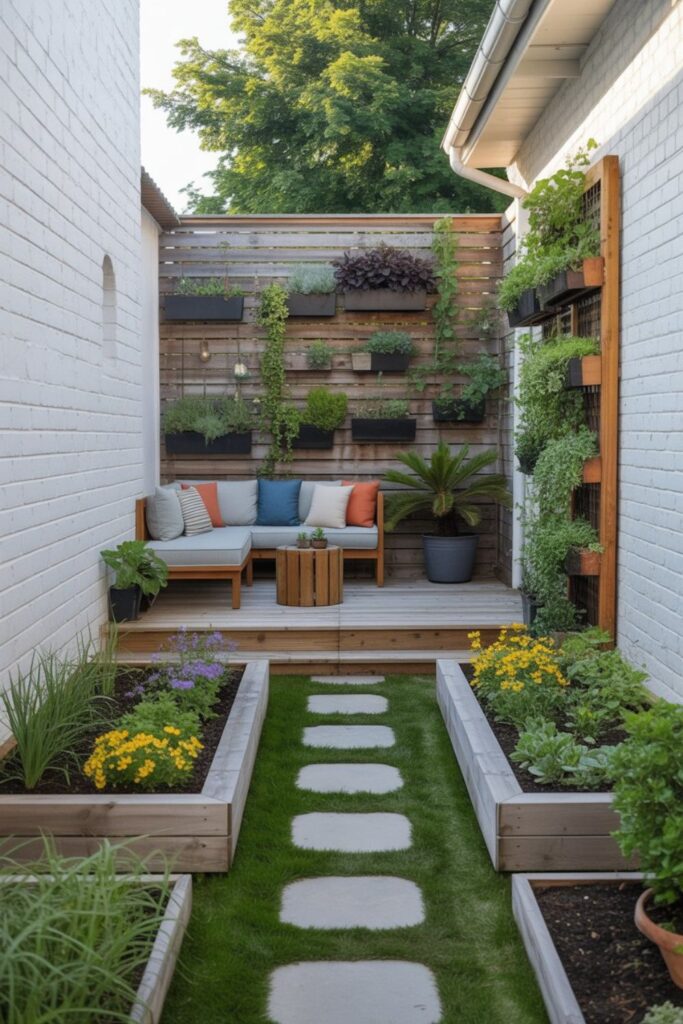
Compact gardens overcome size limitations through vertical thinking, multi-functionality, and strategic design. These solutions prove that square footage doesn’t determine beauty or utility.
Vertical gardening multiplies planting area by utilizing walls, fences, and structures. Install trellis systems supporting climbing roses, clematis, or jasmine. Create living walls using modular pocket systems filled with herbs, succulents, or flowers. Grow vegetables like cucumbers, beans, and tomatoes vertically rather than sprawling horizontally. Espalier fruit trees against fences occupy minimal depth while producing full harvests. Hanging baskets suspended from pergola beams or brackets utilize overhead space for trailing plants or cherry tomatoes.
Multi-functional elements serve dual purposes conserving space. Build raised bed edges wide enough for seating. Use storage benches hiding cushions, tools, or toys while providing furniture. Install folding furniture stored when not in use, allowing flexible space allocation. Create living privacy screens using bamboo or evergreen hedges that enclose while providing visual interest. Mirror installations on walls or fences create illusions of expanded space through reflection. Light colors in hardscaping and containers make small areas feel larger and brighter.
Strategic focal points draw attention away from boundaries. Position water features, sculpture, or specimen plants centrally, keeping perimeter plantings lower to avoid boxing in the space. Diagonal layouts angle pathways or beds at 45 degrees to corners, creating perception of greater distance than parallel arrangements. Container gardens offer ultimate flexibility, rearrange seasonally, replace spent plants easily, and move to follow the sun. Use matching containers in graduated sizes for cohesive appearance. Illusion of depth develops through placing larger leaves and warmer colors foreground, fine textures and cool colors background. These small garden solutions demonstrate that creative design matters infinitely more than actual dimensions.
FAQs
How much does professional backyard garden design cost?
Design consultation fees range from $500-2,000 for plans without installation. Design-build services combining design and installation cost $10,000-50,000+ depending on scope, materials, and region. Many landscapers offer free basic consultations hoping to secure installation contracts. DIY design using online tools, books, or this guide costs nothing but time and research.
What’s the best garden style for low maintenance?
Modern minimalist gardens using limited plant palette, quality hardscaping, and architectural plants require least upkeep. Native plant gardens adapted to your region need minimal supplemental water or fertilizing once established. Xeriscaping with drought-tolerant species and rock mulch reduces watering and weeding dramatically.
How long does a backyard transformation typically take?
Phased installations over 2-3 years allow manageable budgets and workload. Single-season transformations taking 2-6 months suit those preferring immediate completion. Professional installation completes faster than DIY contractors might finish in weeks what takes homeowners months. Start spring for establishment before winter, though fall planting works well for trees and perennials.
Can I mix different garden styles in one backyard?
Yes, but carefully. Transition zones between styles prevent jarring contrasts. Use neutral elements like green hedges or fencing separating distinct areas. Maintain unifying elements throughout consistent pathway materials, repeated colors, or similar furniture styles. Treat different areas as “rooms” each with cohesive style internally while connecting through shared language externally.
What are the most impactful first steps for redesigning a backyard?
Define your goals clearly: entertainment, relaxation, food production, or mixed uses. Create a base plan measuring accurately and sketching layouts. Install quality hardscaping first patios, pathways, structures form bones that plantings flesh out. Plant key anchors trees and large shrubs establish structure. Layer in details through perennials, lighting, accessories over subsequent seasons as budget allows.
Conclusion
Inspiring backyard garden design emerges when you combine clear personal vision with proven design principles, implementing ideas in thoughtful phases that match your resources and capabilities. The most memorable gardens reflect their owners’ personalities, lifestyles, and aesthetic sensibilities rather than simply copying trendy styles or following rigid formulas. Your backyard’s transformation begins by identifying which design approach resonates most deeply whether modern minimalism’s clean sophistication, cottage garden’s romantic abundance, tropical paradise’s bold exuberance, or contemplative meditation space’s peaceful restraint speaks to your soul and serves your practical needs.
Success comes through patient, strategic implementation rather than rushed, haphazard projects. Begin by completing thorough site analysis understanding sun patterns, soil conditions, drainage, and existing features. Develop comprehensive plans on paper before breaking ground, allowing you to visualize spatial relationships, test plant combinations, and estimate costs accurately. Then implement in phases year one might establish major hardscaping and anchor trees, year two adds perennial borders and structures, year three layers in lighting and finishing details. This approach prevents overwhelming debt and burnout while allowing you to learn from each phase, adjusting plans based on experience with your specific conditions.