Mosquito Repelling Plants: The Complete Guide to a Bite-Free Yard
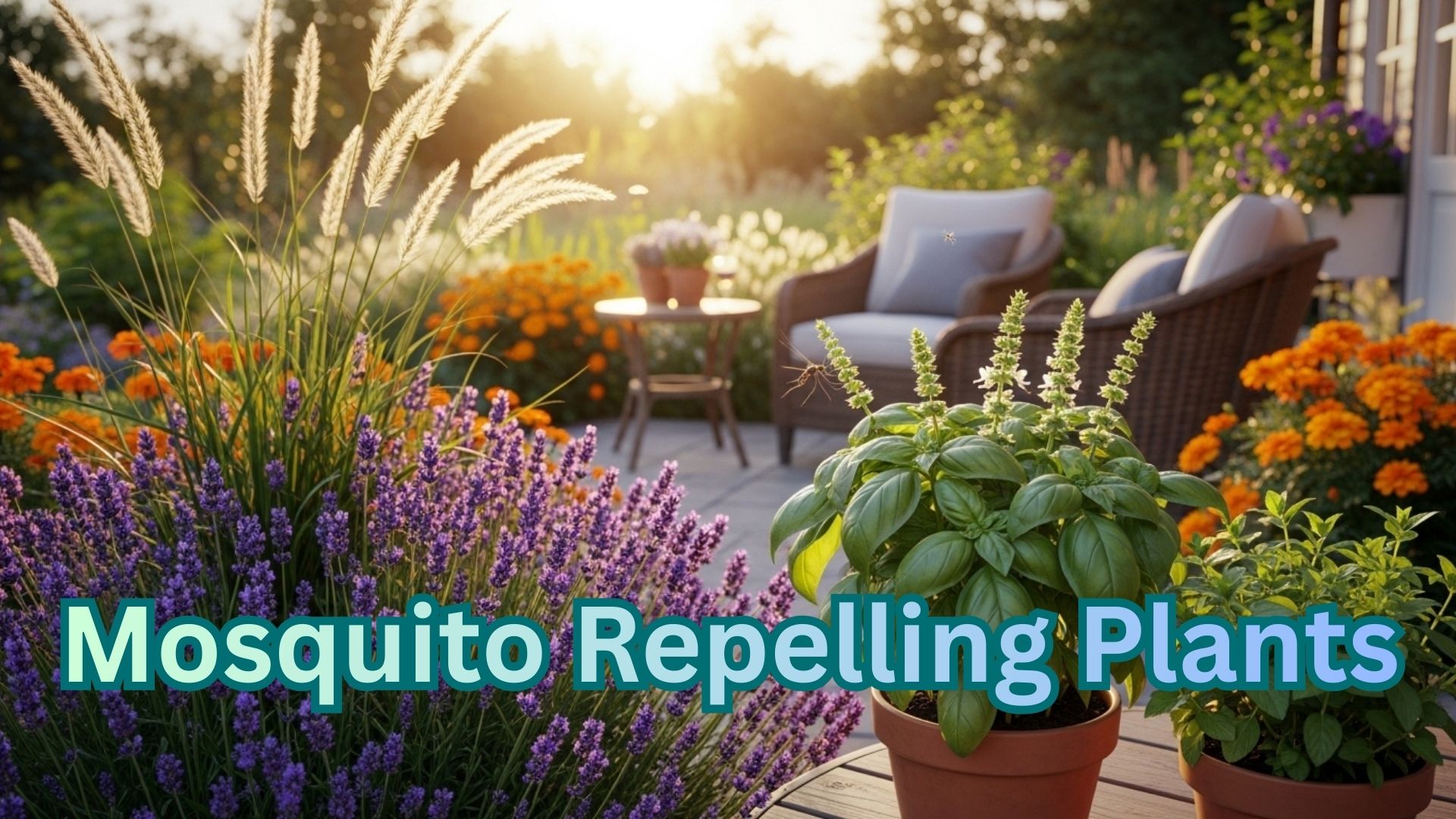
Every summer, the same battle plays out across millions of American yards. You want to enjoy your patio, your garden, your evening barbecue but the mosquitoes have other plans. Bug spray works, sure, but a lot of people are done slathering themselves in DEET every time they step outside. They want something cleaner, something greener, something that doesn’t leave a chemical residue on their skin or in their soil.
That’s where mosquito repelling plants enter the conversation. The idea is beautifully simple: grow the right plants, and nature does the rest. No sprays. No candles. No toxic mist systems. Just smart gardening. But here’s the thing: a lot of what you’ve heard about these plants is only half the story. Some of it is flat-out wrong. The so-called “mosquito plant” that nurseries have been selling for decades? Science says it doesn’t actually repel mosquitoes at all.
This guide cuts through the noise. We’re breaking down which plants that repel Mosquito Repelling Plants actually have science behind them, how to use them effectively, and how to design your yard so these mosquito repelling plants work as hard as possible. By the end, you’ll know exactly what to plant, where to plant it, and just as importantly what you can’t expect these plants to do on their own.
Do Mosquito Repelling Plants Actually Work?
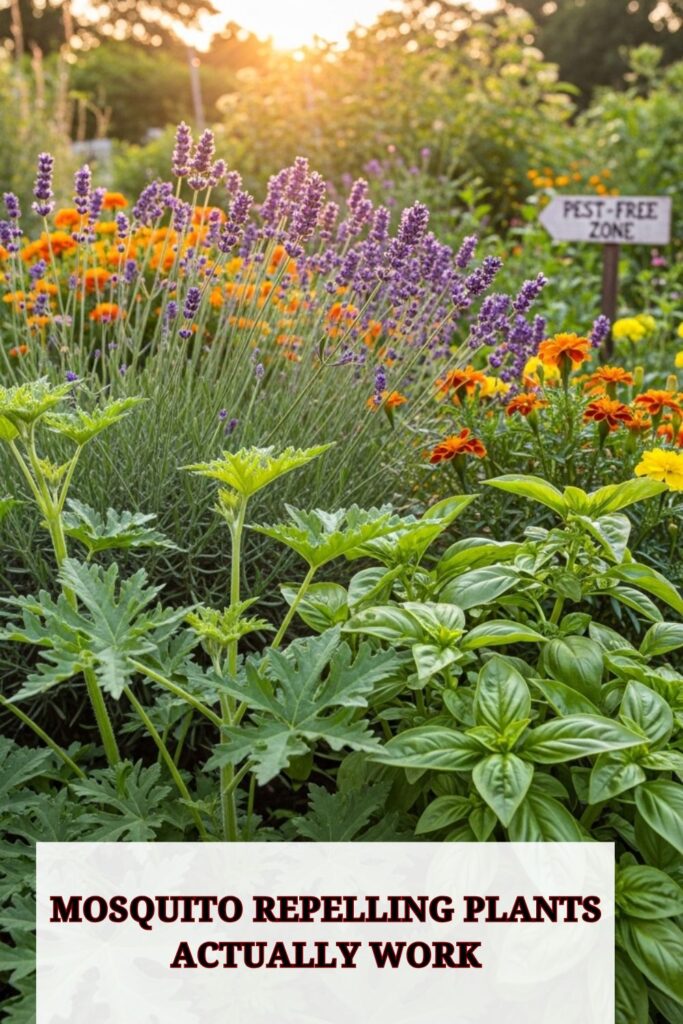
This is the question every gardener asks and the answer is more nuanced than most articles will tell you. The short version: the plants themselves, just sitting in your garden, will not create a mosquito-free zone. But that doesn’t mean they’re useless. It means you need to understand how they work before you can use them well.
Here’s the science. Mosquitoes locate humans primarily by detecting carbon dioxide; they can pick it up from as far as 150 feet away. Certain plants produce volatile oils that can confuse or irritate mosquitoes’ olfactory receptors, making it harder for them to zero in on you. The catch? Those oils are released in meaningful quantities only when the plant is crushed, burned, or otherwise agitated. A lavender bush sitting peacefully in a flower bed doesn’t pump enough scent into the air to bother a mosquito. University of Georgia entomologist Elmer Gray has been straightforward about this: the scientific community doesn’t recognize any plants that effectively repel mosquitoes when simply growing in a landscape. The repellent power lives in the essential oils, not the living plant passively doing its thing.
Read More About: Genius Railroad Tie Landscaping Ideas That Will Transform Your Yard
The Real Role These Plants Play
That said, dismissing mosquito repellent plants entirely would be a mistake. They’re one layer in a multi-strategy approach. When you crush the leaves and release their oils or when you burn them they deliver real, short-term repellency. To activate their repellent properties, regularly trim the plants, or crush or rub the leaves between your fingers, which releases the oils that keep mosquitoes at bay. Think of them as a bonus, not a silver bullet. Pair them with standing water elimination, good yard maintenance, and strategic landscaping, and you’ve built a genuinely effective natural mosquito control system.
The Top Mosquito Repelling Plants That Science Actually Backs
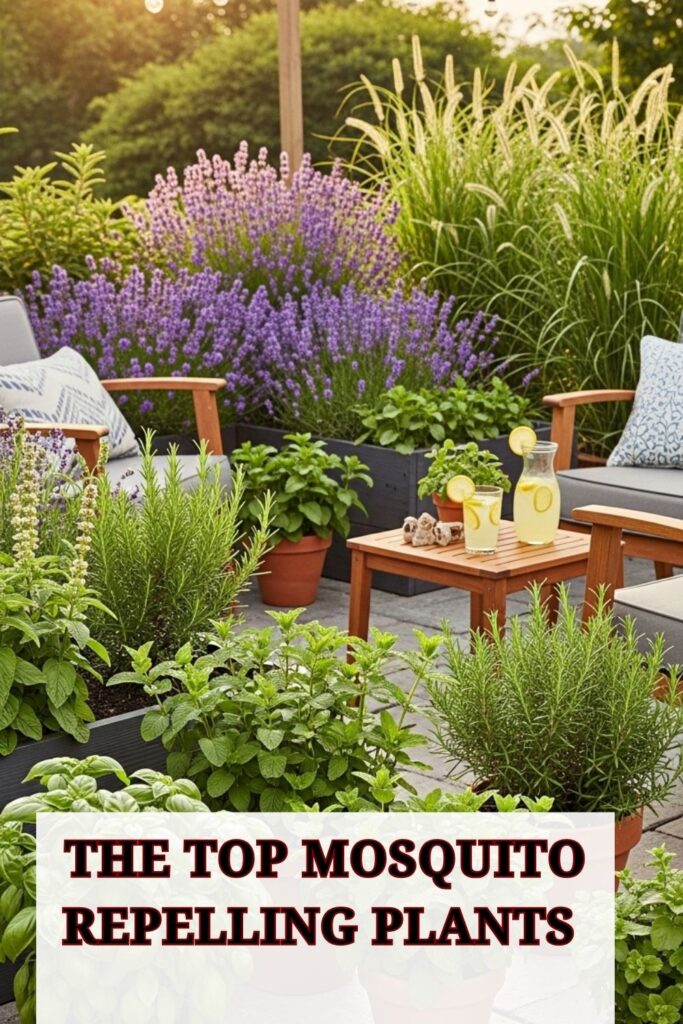
Citronella Grass and Lemongrass
If you’re going to pick just one plant for mosquito repellency, citronella grass is the gold standard. It’s the most commonly used natural ingredient in commercial mosquito repellents, and for good reason. Lemongrass and citronella grass have proven mosquito-repelling abilities thanks to the citronella oil contained within their leaves. Both grasses contain citronella oil, a compound with a long and well-documented history of deterring mosquitoes.
Citronella grass grows as a tall, clump-forming tropical grass with bright green foliage. It can reach up to 6 feet in height, making it a striking addition to any yard. The problem? It’s frost-tender. Citronella grass is typically grown in USDA hardiness zones 10-12 and will not tolerate temperatures below 32°F. If you live anywhere with a real winter, you’ll need to grow it in a large container and bring it indoors when temperatures drop. For warmer climates, plant it directly in a sunny spot with well-drained soil and let it do its thing all season long.
Catnip: The Underdog With Real Firepower
Catnip might be the most scientifically promising mosquito repellent plant on the entire list and most people have no idea. The active compound in catnip, called nepetalactone, has shown remarkable results in laboratory testing. Researchers at Iowa State University found that nepetalactone is about ten times more effective at repelling mosquitoes than DEET at comparable concentrations. That’s not a small claim. That’s a game-changer at least on paper.
Here’s where it gets interesting, though. The repellent power of nepetalactone is strongest as a spatial repellent meaning it works best when released into the air around you, not just sitting on the plant. Concentrations as low as 2% were effective at repelling over 70% of mosquitoes for between one and four hours after application. The practical takeaway? Crush catnip leaves and tuck them into your clothing, burn a few sprigs near your seating area, or make a simple oil infusion to apply to your skin. Catnip is incredibly easy to grow; it thrives in USDA zones 3 through 9, tolerates almost any soil, and practically grows itself. The one downside is that it spreads aggressively. Keep it in containers or a designated garden bed to stop it from taking over your yard.
Lavender
Lavender is one of the few plants on this list that ticks every box: it looks stunning, smells incredible to humans, and genuinely irritates mosquitoes. Its strong floral fragrance contains compounds like linalool and geraniol that mosquitoes find unpleasant. Unlike many so-called repellent plants, lavender actually releases a noticeable amount of scent passively which gives it an edge over plants that only work when crushed.
Lavender thrives in full sun and well-drained, slightly alkaline soil. It’s hardy in USDA zones 5 through 8, making it a solid choice for much of the country. Plant it along walkways, near doorways, or around outdoor seating areas where its fragrance will be strongest. It’s also drought-tolerant once established, which means less maintenance and less water a win on every front.
Rosemary
Rosemary is the ultimate double-duty plant for the mosquito-conscious gardener. It repels mosquitoes with its woody, piney fragrance, and you can harvest it for the kitchen at the same time. Rosemary adds pretty purple flowers to your garden, is a versatile herb in the kitchen, and is among the best plants to repel mosquitoes with its potent fragrance. Other insects, flies, spiders, even some moths steer clear of it too.
Rosemary does best in hot, dry conditions with sandy, well-drained soil. It’s hardy as an evergreen in zones 8 and 9, and can be grown as an annual in colder regions. Container gardening works beautifully for rosemary, especially if you want to move it around your patio or bring it inside during winter. Let it grow tall and full near your main entertaining areas, and you’ll get both the scent and the visual payoff.
Basil
Basil is the “set it and forget it” option among mosquito repellent herbs and that makes it especially appealing for gardeners who don’t want to fuss. Basil is one of the most pungent herbs and even gives off a strong scent without its leaves being crushed. Most repellent plants require physical agitation to release their oils. Basil does it naturally, just by existing in your garden. That passive scent release puts it a step ahead of many competitors.
Plant basil in containers on your patio, tuck it into raised beds near your vegetable garden, or line it along a sunny border. It loves warmth, needs well-drained soil, and rewards you with a constant supply of fresh leaves for cooking. Pinch back flower buds as they appear to keep the plant producing flavorful, fragrant foliage all season.
Marigolds
Marigolds deserve a spot in every natural mosquito control garden not just for their repellent properties, but for what they do for the rest of your yard. These cheerful, sun-loving annuals emit a scent that deters mosquitoes and a wide range of other garden pests. According to the New York Botanical Garden, marigolds can keep away not only mosquitoes but also aphids, thrips, whiteflies, Mexican bean beetles, squash bugs, and tomato hornworms. That’s a serious amount of pest protection wrapped up in a bright orange and yellow flower.
Marigolds are annuals, so they need to be replanted each year. But they’re incredibly easy to grow from seed, bloom prolifically from late spring through frost, and thrive in full sun with average soil. Scatter them around your patio, line them along pathways, or cluster them in containers near your front door. They’re one of the most cost-effective ways to add both color and chemical-free pest management to your landscape.
Mint
Mint is a powerhouse repellent but it comes with a caveat that every gardener needs to hear first. Its sharp, fresh fragrance is genuinely unpleasant to mosquitoes, and it releases scent relatively easily even without being crushed. The problem? Mint spreads like wildfire. Growing mint is relatively easy, and it is a fast-spreading plant, so it is important to contain it in a pot or in a designated area of your garden to prevent it from spreading too much.
The solution is simple: always grow mint in containers. A pot on the patio, a planter by the door, a hanging basket near the grill any of these work perfectly. You get the mosquito-deterring benefits without the risk of your mint colonizing half your garden. Bonus: you’ll have a constant supply of fresh mint for drinks, cooking, and tea all summer long.
Sage
Sage offers one of the most satisfying mosquito repellent experiences you can have in your yard especially if you have a fire pit or chiminea. You can use fresh sage as a mosquito repellent by crushing leaves and rubbing them on your skin or clothing, or tie a bundle of sage stems and toss them into your fire pit to create a cloud of mosquito-repelling smoke. That smoky sage aroma doesn’t just smell amazing it creates a legitimate barrier that mosquitoes actively avoid.
Sage grows beautifully in full sun with well-drained soil, and it’s hardy in most US climates. Plant it in garden beds or grow it in pots that you can position near your outdoor entertaining areas. In the evening, when mosquitoes are most active, toss a few sprigs into the fire and let the smoke do the heavy lifting.
The Plant That Does NOT Work (Despite What Nurseries Say)
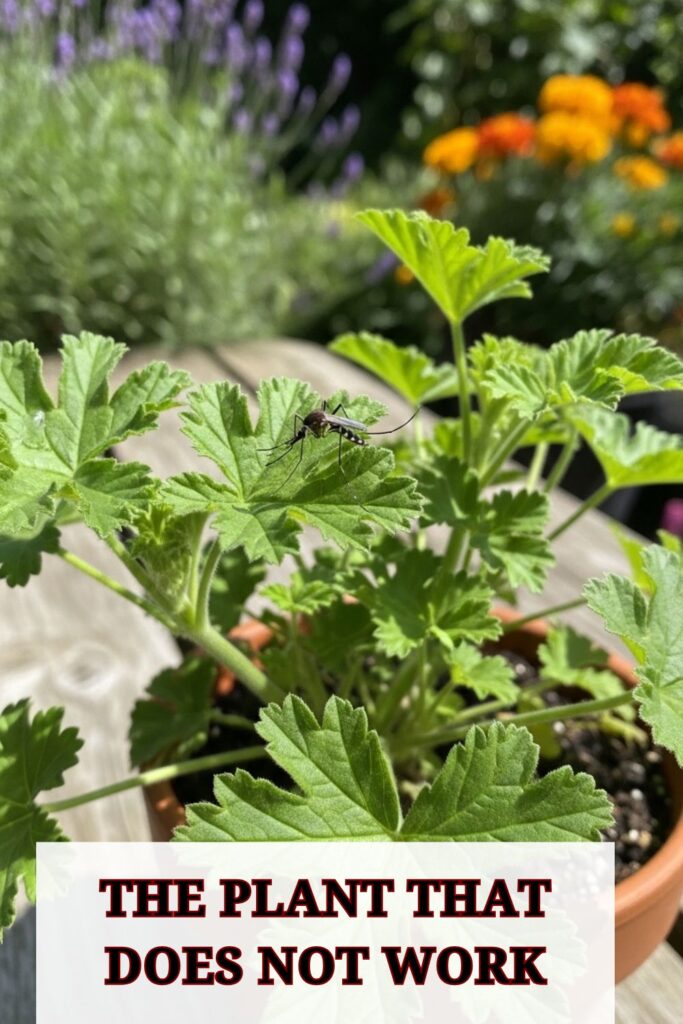
Before you spend money on the plant marketed as the “Mosquito Plant,” you need to know this. The so-called “mosquito plant,” Pelargonium citrosum, has shown little to no evidence of repelling mosquitoes despite its name and pleasantly lemon-scented leaves. Studies from the University of Guelph confirmed what many researchers suspected: this plant does not contain citronella oil, and it does not repel mosquitoes in any meaningful way. It smells nice. It looks pretty. But it will not protect you from bites. Save your money and invest in the plants on this list instead.
How to Design a Mosquito Repellent Garden That Actually Works
Planting the right species is only half the equation. Where you put them and what else you do in your yard determines whether your garden becomes a real mosquito deterrent or just a nice-looking collection of herbs.
Strategic Placement Is Everything
Position your mosquito repellent plants where people actually spend time. That means around patios, near doorways, along walkways, and beside outdoor seating areas. A citronella grass plant tucked in the back corner of your property where nobody goes does almost nothing for you. Scented plants confuse and deter mosquitoes, making it harder for them to find human hosts. The more strategic your plant placement, the greater your defense. Cluster several repellent varieties together in one container or bed that concentration amplifies the combined scent and creates a stronger deterrent zone than scattered individual plants.
Use Containers for Flexibility
Not every repellent plant thrives in the ground year-round, especially in colder climates. Containers give you the ability to move plants into the sun, reposition them around your yard as needed, and bring tender species indoors when frost threatens. Potted mosquito-repellent plants are a versatile tool in the fight against mosquito invasion. You can move these containers around as needed, concentrating them around high-traffic outdoor areas or placing them near water features where mosquitoes may congregate. A row of fragrant pots along a patio railing is both functional and visually appealing.
Read More About: Outdoor Patio Addition for More Living Space
Layer Your Approach
Plants alone won’t solve your mosquito problem. But plants combined with a few other smart moves will make a dramatic difference. Eliminate all standing water in your yard; this is the single most impactful thing you can do. Female mosquitoes lay their eggs in stagnant water, and even small amounts in buckets, saucers, clogged gutters, or low spots in the lawn become breeding grounds. Keep your grass trimmed short, prune back overgrown shrubs, and ensure good air circulation across your property. Mosquitoes rest in dense, shady vegetation during the day, remove that shelter, and you remove their daytime hiding spots. Consider using cedar mulch around your garden beds and entertaining areas, as the natural oils in cedar wood have long been associated with insect deterrence.
A Quick-Reference Plant Comparison
| Plant | USDA Zones | Sun Needs | Best Use | Scent Release |
| Citronella Grass | 10–12 | Full sun | Yard borders, containers | Crushed or burned |
| Catnip | 3–9 | Full sun to part shade | Containers, garden beds | Crushed or burned |
| Lavender | 5–8 | Full sun | Walkways, borders | Passive + crushed |
| Rosemary | 8–9 (evergreen) | Full sun | Patios, containers | Passive + crushed |
| Basil | 10–11 (annual) | Full sun | Patio pots, veggie garden | Passive |
| Marigolds | Annual | Full sun | Borders, containers | Passive |
| Mint | 5–11 | Part shade to full sun | Containers only | Passive + crushed |
| Sage | 4–9 | Full sun | Garden beds, fire pit use | Crushed or burned |
These plants work best when you embrace their differences. Basil and lavender give you passive, always-on fragrance. Catnip and citronella deliver a serious punch when you crush or burn them. Marigolds and sage round out the garden with color and versatility. A mix of all of them gives you coverage from morning through evening.
Frequently Asked Questions
Do mosquito repelling plants actually keep mosquitoes away?
The plants themselves just growing in your garden won’t create a mosquito-free zone. Their repellent power comes from the essential oils inside their leaves, which are released when the plants are crushed, burned, or disturbed. Used that way, they provide short-term repellency that works best as part of a broader mosquito control strategy that includes eliminating standing water and maintaining a tidy yard.
What is the strongest natural mosquito repellent plant?
Based on current research, catnip is one of the most potent options available. Iowa State University studies found that its active compound, nepetalactone, repels mosquitoes significantly more effectively than DEET at equivalent concentrations. Citronella grass is the most widely used and commercially proven natural repellent, with a long track record in the industry. Both work best when their oils are actively released through crushing or burning.
Can I grow mosquito repelling plants in containers?
Absolutely and for many of these species, containers are actually the recommended approach. Mint and catnip spread aggressively in the ground, so pots keep them under control. Citronella grass and lemongrass are frost-tender and need to be brought indoors in colder climates. Containers also give you the freedom to reposition plants around your yard for maximum effect near seating and entertaining areas.
What is the “Mosquito Plant” and does it work?
The “Mosquito Plant” refers to Pelargonium citrosum, a scented geranium that nurseries have marketed for decades as a mosquito deterrent. Despite its name, multiple studies including research from the University of Guelph have found no evidence that it repels mosquitoes. It does not contain citronella oil. It’s a pleasant-smelling ornamental, but it won’t protect you from bites.
How do I eliminate standing water to reduce mosquitoes in my yard?
Walk your property after every rainstorm and look for anywhere water collects. Empty buckets, flower pot saucers, kiddie pools, and bird baths regularly. Clean out gutters and downspouts to prevent pooling. For low spots in your lawn, consider regrading or installing a French drain. If you have a pond or water feature, keep the water moving with a pump or fountain. Mosquitoes can only lay eggs in stagnant water.
Conclusion
Mosquito repelling plants are a smart, sustainable addition to any yard but they work best when you understand exactly what they can and can’t do. The science is clear: plants like catnip, citronella grass, lavender, and rosemary contain essential oils that genuinely irritate and deter mosquitoes. The key is activating those oils through crushing, burning, or strategic placement in high-traffic areas. No single plant will turn your yard into a mosquito-free paradise, but a well-designed garden filled with the right species comes remarkably close.
Combine your mosquito repelling plants with the basics, eliminate standing water, keep your lawn trimmed, improve air circulation, and use cedar mulch and you have a layered defense system that reduces mosquito pressure without a single drop of harsh chemicals. Start with a few containers of the plants on this list, position them where you spend the most time outdoors, and watch the difference. Your yard, your skin, and your family will all be better for it.