25+ Cozy Outdoor Covered Patio with Fireplace Ideas

Your outdoor covered patio sits empty most of the year. Rain keeps you inside during spring. Summer heat drives you back to air conditioning. Fall evenings feel too chilly for comfort. Winter renders the space completely useless. You spent thousands creating an extension of your home that barely gets used six weeks annually.
The frustration compounds when you realize neighbors with covered patios and fireplaces gather outside year-round. They host cozy autumn dinners, winter cocktail parties, and rainy Sunday brunches while you stare through windows. That unused square footage represents wasted investment and missed opportunities for connection.
Here’s your solution: an outdoor covered patio with fireplace transforms seasonal spaces into year-round living rooms. The roof shields you from weather while the fireplace provides warmth, ambiance, and a natural gathering point. This guide reveals everything you need from fireplace types and roof structures to design layouts and building codes to create the ultimate outdoor living retreat. Let’s build something extraordinary.
Why Add a Fireplace to Your Covered Patio
Outdoor fireplaces extend usable months dramatically in any climate. A properly sized fireplace heats 300-500 square feet comfortably, making October through March evenings enjoyable rather than endurable. You’ll actually use that covered patio instead of admiring it from inside. Spring thunderstorms become entertainment rather than inconvenience when you’re warm and dry beneath your roof.
The investment returns compound beyond comfort. Outdoor covered patios with fireplaces increase home values 10-20% according to recent real estate data. They create distinct lifestyle appeal that helps homes sell faster in competitive markets. Buyers visualize themselves entertaining, which emotional connection drives offers. Your outdoor living room becomes a selling feature rather than just square footage.
Creating a Natural Gathering Space
Fireplaces draw people magnetically in ways fire pits cannot match. The vertical hearth provides architectural presence while framing the mantel for seasonal décor. Flames dancing behind a firebox create hypnotic focal points that anchor conversation areas naturally. Unlike portable heaters that feel utilitarian, masonry fireplaces become permanent features integrated into your home’s design language.
Covered patios with fireplaces function as true outdoor rooms rather than transitional spaces. Position seating in conversation arrangements facing the fireplace, just like indoor living rooms. Add ceiling fans for air circulation during summer months. Install lighting that creates ambiance after sunset. The roof structure defines the space psychologically, making it feel protected and intimate rather than exposed.
Types of Outdoor Fireplaces for Covered Patios
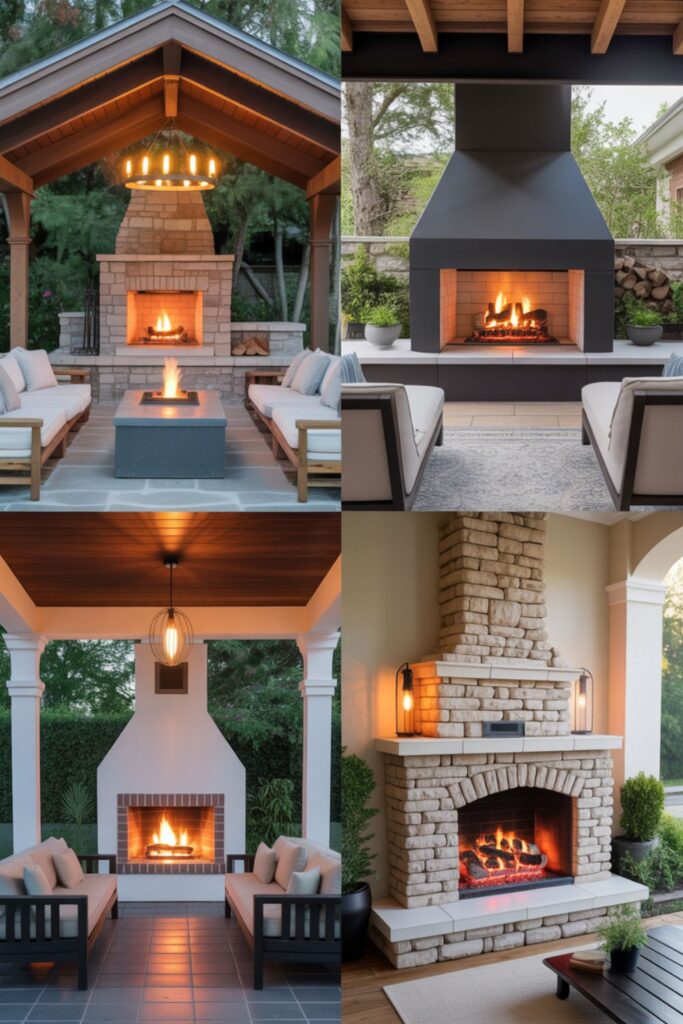
Wood-burning fireplaces deliver authentic crackle, aroma, and visual drama that gas alternatives cannot replicate. Masonry construction using brick or stone veneer creates permanent structures that last generations. Traditional designs include full chimneys extending above the roofline, proper hearths for ash collection, and fireboxes sized for standard logs. Expect 36-48 inch firebox openings for covered patio installations.
Building wood-burning fireplaces requires significant investment $3,000-$10,000 depending on materials and complexity. You’ll need proper foundations supporting the weight, chimney flashing integrated with roof systems, and ventilation designed by professionals. Check local building codes before starting. Many municipalities restrict wood-burning appliances due to air quality concerns. The payoff comes in authentic experience and architectural presence that elevates any outdoor living space.
Gas Fireplace Options and Benefits
Gas fireplaces offer convenience that wood-burning models never match. Press a button or flip a switch for instant flames without hauling logs, cleaning ash, or managing smoke. Remote controls and smart home integration allow adjustments from your phone. BTU ratings of 30,000-60,000 provide ample heat for covered patios while maintaining clean-burning efficiency.
Installation costs run $2,500-$6,000 for quality units with stone or brick surrounds. Gas fireplaces require natural gas lines or propane tanks positioned safely outside living areas. Vented models need chimneys or direct-vent systems running through walls. Ventless options exist but face restrictions in many jurisdictions due to moisture and air quality concerns. Gas alternatives work particularly well for screened porches where smoke would become problematic.
Read More About: 20+ Concrete Patio Designs to Elevate Your Backyard
Prefabricated vs Custom Masonry Fireplaces
Prefabricated fireplace inserts streamline installation dramatically. Metal fireboxes arrive ready to frame with stone veneer, brick, or stucco finishes matching your home’s aesthetic. Professional installation takes 2-3 days versus weeks for custom masonry. Costs stay $1,000-$3,000 lower than site-built alternatives while meeting all safety standards and building codes.
Custom masonry fireplaces deliver unmatched character through handcrafted details. Stonemasons create unique patterns using natural stone, reclaimed brick, or specialized tile. Arched openings, decorative mantels, and integrated seating become possible. These fireplaces make architectural statements that prefab units cannot achieve. The investment makes sense for high-end outdoor living rooms where customization justifies premium pricing.
Designing the Perfect Covered Patio Layout
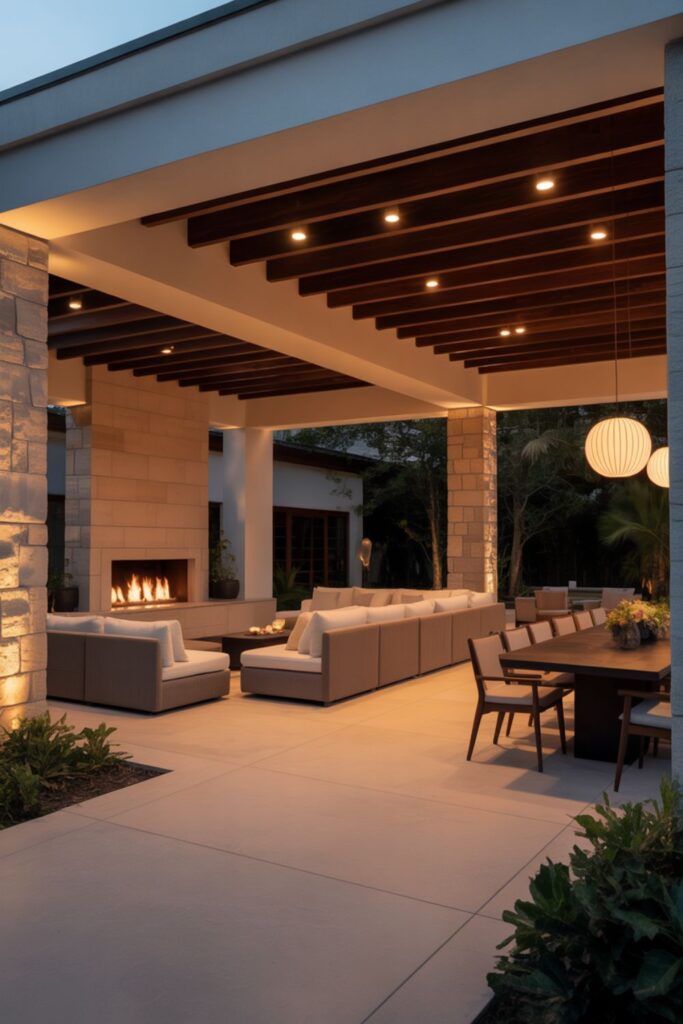
Covered patio dimensions should accommodate your fireplace plus comfortable seating with proper circulation. Minimum sizes start at 12×16 feet for basic functionality enough space for a sectional, coffee table, and fireplace wall. Ideal proportions run 16×20 feet or larger, allowing distinct zones for seating, dining, and traffic flow without crowding.
Fireplace placement typically anchors one end wall, creating a focal point visible from main seating areas and often from indoor spaces through windows or doors. Side-wall installations work when patio length exceeds width significantly. Corner fireplaces maximize space efficiency while creating interesting sightlines. Avoid centering fireplaces on long walls offset placement feels more organic and allows better furniture arrangements.
Roof Structure Considerations
Patio roof design impacts both aesthetics and functionality significantly. Gable roofs with pitched angles shed rain and snow effectively while providing maximum headroom. Hip roofs offer 360-degree protection from wind-driven weather. Shed roofs attach to existing home structures economically, sloping away from the house for drainage. Match roof pitch and materials to your home’s existing architecture for cohesive appearance.
Minimum ceiling heights of 8 feet prevent claustrophobic feelings, but 9-10 feet creates more gracious proportions. Higher ceilings accommodate ceiling fans and decorative lighting while improving smoke management near fireplaces. Exposed beam construction adds rustic character while painted ceilings brighten spaces that might feel dark under solid roofs. Consider skylights or clerestory windows for natural light if your covered patio faces north or gets shaded by trees.
What Building Codes Apply to Covered Patio Fireplaces
Fireplace installations must comply with International Residential Code (IRC) and local amendments governing combustion appliances. Chimney heights must extend 3 feet above roof penetration points and 2 feet higher than any structure within 10 feet. Hearth extensions project 16-20 inches from firebox openings depending on opening size. Non-combustible materials must surround fireboxes typically 12 inches minimum.
Building codes mandate proper ventilation even for covered patios. Open-sided structures need minimum openings equal to 25% of wall area. Screened porches require engineered ventilation systems preventing carbon monoxide accumulation. Clearances between fireplaces and combustible materials vary by jurisdiction but typically require 36 inches to wooden roof framing unless using approved heat shields.
Permit Requirements and Inspections
Most municipalities require building permits for covered patios exceeding 200 square feet or any structure containing fireplaces. Permit applications include engineered drawings showing roof structures, foundation details, and fireplace specifications. Gas line installations need separate plumbing permits. Electrical work for lighting and ceiling fans requires electrical permits from licensed contractors.
Expect multiple inspections throughout construction foundation, framing, chimney, gas lines, electrical, and final occupancy. Schedule inspections promptly to avoid project delays. Failed inspections require corrections before proceeding. Working without permits risks fines, mandatory demolition, and insurance claim denials if fires or injuries occur. Hire licensed contractors familiar with local building codes rather than attempting unpermitted DIY installations.
Choosing Fireplace Materials and Finishes
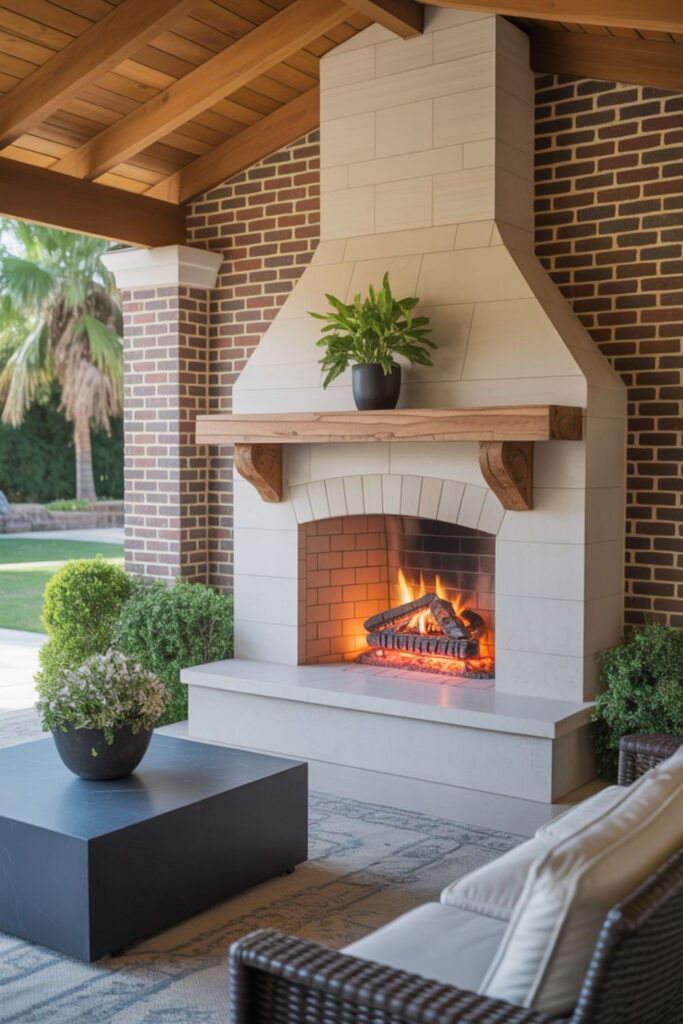
Stone veneer dominates outdoor fireplace finishes for good reason it withstands weather, resists heat, and delivers timeless appeal. Manufactured stone costs $6-$12 per square foot installed versus $15-$30 for natural varieties like limestone or bluestone. Ledgestone patterns create texture and depth. Stacked stone offers modern clean lines. River rock provides organic Southwest aesthetics.
Brick fireplaces pair beautifully with traditional home styles through warm earth tones and classic craftsmanship. Red clay brick develops rich patinas over decades. Whitewashed or painted brick suits coastal and farmhouse designs. Thin brick veneer installs over concrete board substrates more economically than full-thickness masonry. Expect $8-$15 per square foot for quality brick installations including hearth and chimney work.
Mantel and Hearth Design Options
Mantels serve functional and decorative purposes in outdoor fireplaces. Rustic wood beams create warmth and provide ledges for candles, seasonal décor, or electronics. Stone slabs deliver sleek modern lines matching contemporary architecture. Cast concrete mantels offer customization through integral colors and textured finishes. Position mantels 54-60 inches above hearth level for proper proportions and code compliance.
Hearth materials must withstand heat and weather simultaneously. Bluestone, granite, and slate excel in outdoor applications through durability and slip resistance. Extend hearths 16-20 inches beyond firebox openings and 8 inches beyond sides. Raised hearths at seating height (16-18 inches) provide extra seating during gatherings, a practical feature for entertainment spaces.
How to Size Your Outdoor Fireplace Properly
Fireplace scale must match covered patio proportions for visual balance and functional heating. Small patios (12×14 feet) need compact fireplaces with 30-36 inch fireboxes. Medium spaces (16×20 feet) accommodate 36-42 inch openings comfortably. Large outdoor living rooms (20×24+ feet) support dramatic 48-60 inch fireplaces without overwhelming the space.
BTU requirements depend on climate and patio size. Calculate 30-50 BTUs per square foot for moderate climates. Cold regions need 50-70 BTUs per square foot for adequate warmth. A 300 square foot covered patio requires 9,000-15,000 BTUs minimum. Gas fireplaces list BTU ratings clearly while wood-burning models vary based on fire size and wood type.
Ventilation and Smoke Management
Proper ventilation prevents smoke accumulation that ruins outdoor living experiences. Wood-burning fireplaces need chimneys at least 15 feet tall from hearth to cap for adequate draft. Shorter chimneys struggle with backdrafts during windy conditions. Chimney caps prevent rain entry and animal nests while improving draw through updraft effects.
Covered patios with solid roofs require careful smoke consideration. Position fireplaces on walls perpendicular to prevailing winds rather than directly downwind. Open sides opposite fireplaces allow smoke dissipation naturally. Ceiling fans operating in reverse (updraft mode) help push smoke upward toward chimneys. Some homeowners install glass doors on fireboxes, closing them partially during downdraft conditions to reduce smoke spillage.
Integrating Seating and Furniture Layouts
Outdoor living room furniture arrangements mirror indoor principles and create conversation groupings focused on the fireplace. Sectionals work beautifully in L-shapes flanking fireplaces, with additional chairs across to complete the circle. Maintain 30-36 inch walkways between furniture pieces for comfortable movement. Position coffee tables within arm’s reach of all seating, typically 14-18 inches from sofa fronts.
Weather-resistant furniture has evolved dramatically beyond plastic resin. Aluminum frames with Sunbrella cushions withstand rain and sun while maintaining comfort. All-weather wicker delivers traditional aesthetics with modern durability. Teak naturally resists rot and insects, developing silver patinas that many homeowners love. Budget-friendly options include powder-coated steel and high-density polyethylene that mimics wood convincingly.
Built-In Seating Solutions
Permanent benches flanking fireplaces maximize seating capacity while anchoring the design. Masonry benches using matching stone or brick create cohesive looks. Top benches with cushions during entertaining, removing them between uses to protect fabrics. Built-in benches typically measure 16-18 inches high and 18-24 inches deep for comfortable sitting.
Storage benches serve double duty by housing cushions, firewood, or entertaining supplies inside weather-tight compartments. Hinged lids provide easy access while maintaining clean lines. Position storage benches away from direct fireplace heat to protect contents. Some homeowners integrate firewood storage directly into fireplace surrounds through alcoves built 18-24 inches from fireboxes, practical features that become design elements.
Adding Lighting to Your Covered Patio
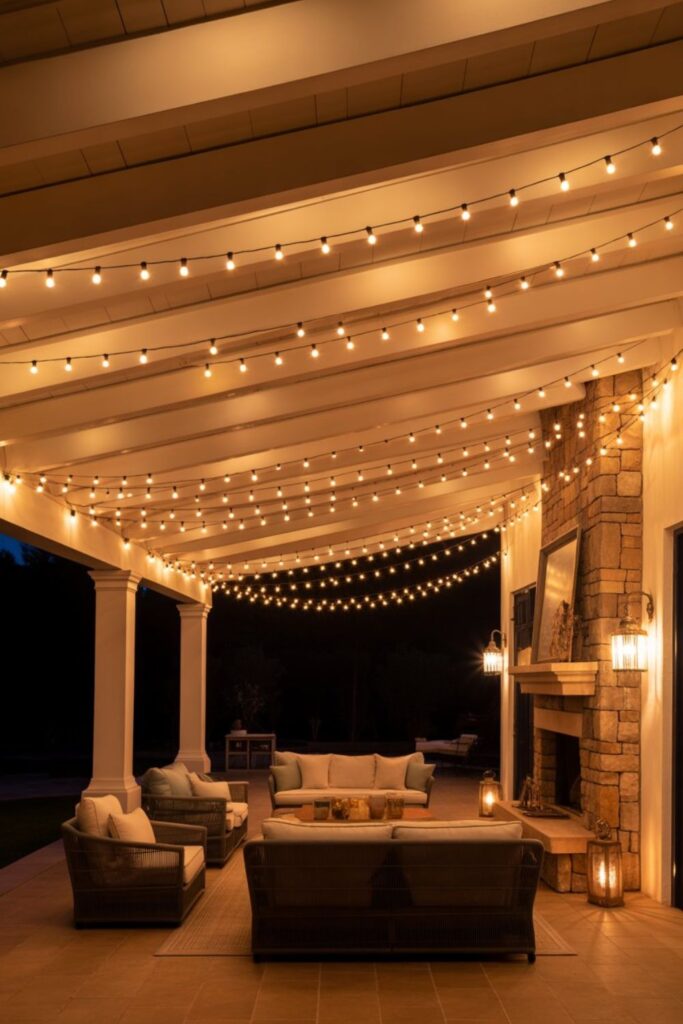
Layered lighting transforms covered patios from single-use daytime spaces into round-the-clock entertainment areas. Recessed can lights in roof soffits provide general illumination without visual clutter. Space fixtures 6-8 feet apart for even coverage. Dimmable LED bulbs allow ambiance adjustments from bright task lighting to romantic glow.
Accent lighting highlights fireplace architecture beautifully after dark. Uplights positioned at hearth level wash stone or brick surfaces, emphasizing texture. Sconces flanking mantels provide decorative elements doubling as functional light sources. String lights draped between beams create festive atmospheres perfect for gatherings. Choose warm 2700K color temperatures that complement fireplace flames rather than competing with cooler tones.
Ceiling Fans and Climate Control
Ceiling fans extend comfortable temperatures during shoulder seasons when neither heating nor cooling dominates. Summer operation pushes hot air up and away from seating areas. Winter mode pulls warm fireplace air down for better circulation. Choose outdoor-rated fans with wet or damp ratings depending on exposure levels. Blade spans should match patio sizes 52-inch fans suit 12×16 spaces while 60-inch models work better for 16×20+ areas.
Infrared heaters supplement fireplace warmth on particularly cold evenings or heat zones away from direct firebox influence. Wall-mounted units avoid taking valuable ceiling space while providing targeted heat. Some homeowners install retractable screens or clear vinyl panels that enclose covered patios during winter, creating three-season rooms protected from wind while maintaining views.
What Are the Best Flooring Options
Outdoor flooring must withstand weather, foot traffic, and temperature swings while complementing your fireplace design. Stamped concrete mimics natural stone or tile at $8-$15 per square foot installed. Patterns and integral colors create custom looks. Sealing prevents moisture penetration and staining. Concrete works particularly well under covered areas where freeze-thaw cycles pose less risk.
Natural stone like bluestone, flagstone, or slate delivers authentic beauty through unique color variations and textures. Costs run $15-$30 per square foot installed but these materials last lifetimes with minimal maintenance. Stone stays naturally cool during summer a benefit in hot climates. Slightly irregular surfaces add character though perfectly smooth finishes suit formal designs better.
Pavers and Alternative Flooring
Concrete pavers balance affordability ($10-$18 per square foot) with durability and design flexibility. Interlocking systems create stable surfaces that resist cracking. Permeable pavers improve drainage even under covered areas where runoff still occurs. Herringbone and basket-weave patterns add visual interest. Pavers near fireplaces should be non-combustible materials rated for high-heat exposure.
Porcelain tile designed for outdoor use resists moisture absorption that destroys indoor varieties. Large-format tiles (12×24 or larger) minimize grout lines while creating sleek contemporary looks. Wood-look porcelain delivers warmth without maintenance headaches real wood requires. Expect $12-$25 per square foot installed. Ensure proper slope for water drainage standing water damages grout and creates slip hazards.
Incorporating Cooking and Dining Areas
Outdoor covered patios with fireplaces naturally accommodate full kitchens creating seamless entertainment spaces. Position grills and prep areas perpendicular to fireplaces rather than adjacent keep smoke and cooking heat separate from seating zones. Built-in grills start at $1,500 for basic models, ranging to $8,000+ for professional-grade equipment with multiple burners and rotisseries.
Include minimum 3 feet of counter space beside grills for safe food handling. Add sinks 6-8 feet from cooking areas for cleanup convenience. Under-counter refrigerators keep beverages and ingredients cold without indoor trips. Match counter materials to fireplace finishes for cohesive design granite, concrete, or tile surfaces all withstand weather and heat exposure.
Dining Space Planning
Dining areas need 10×12 feet minimum for six-person tables with chair clearance. Allow 36 inches between table edges and walls or fireplaces for comfortable seating and serving. Position dining zones to enjoy fireplace views without being so close that smoke or heat becomes problematic 8-10 feet works ideally.
Permanent dining tables built from weather-resistant materials eliminate storage hassles. Teak, concrete, or powder-coated metal frames paired with stone tops last decades. Some homeowners create multi-functional spaces using pub-height tables serving as both prep surfaces and casual dining spots. Retractable awnings over dining areas provide extra weather protection during storms while maintaining open feelings during fair weather.
What Privacy Features Work Best
Privacy walls extending from covered patio edges create intimate outdoor living rooms without feeling enclosed. Stone or brick walls matching fireplace materials establish visual continuity. Height matters 42-48 inch walls provide privacy from seating positions while maintaining views when standing. Integrate built-in planters atop walls, filling them with evergreen shrubs or seasonal flowers.
Lattice panels offer affordable privacy that doesn’t block breezes completely. Paint or stain lattice matching roof trim colors for polished appearances. Train climbing vines like jasmine, clematis, or climbing hydrangea through openings. Living walls develop over 1-2 seasons, creating natural screens that change with seasons. Position lattice panels on sides facing neighbors or streets while leaving other directions open.
Screen and Curtain Options
Retractable screens mounted in roof tracks drop down when needed, disappearing completely when not in use. Motorized versions operate via remote or smartphone apps. Screens provide insect protection during warm months critical for evening entertaining when mosquitoes peak. Mesh options range from nearly transparent to privacy-enhancing densities that obscure views while maintaining airflow.
Outdoor curtains soften hard edges while adding flexibility. Weather-resistant fabrics in neutral tones complement any fireplace design. Install curtain rods on posts or ceiling tracks, allowing panels to slide closed for privacy or wind protection. Tie-backs keep curtains open during calm weather. Some homeowners use curtains seasonally, hanging them October through March for extra warmth retention, then storing them during summer.
Read More About: Stunning Backyard Patio designs to Transform Your Space
Managing Costs and Budgeting
Basic outdoor covered patio with fireplace projects start around $15,000-$25,000 for modest 12×16 foot spaces with prefabricated gas fireplaces and simple gable roofs. Mid-range projects ($25,000-$50,000) include larger footprints, custom masonry fireplaces, upgraded flooring, and integrated lighting. High-end builds exceed $50,000 with full outdoor kitchens, premium materials, and architectural details like exposed timber roof structures.
Fireplace costs alone range $2,500-$10,000 depending on type and finishes. Roof structures run $15-$40 per square foot installed. Flooring adds $8-$30 per square foot. Factor permitting fees ($500-$2,000), electrical work ($1,500-$4,000), and landscaping ($2,000-$8,000) for complete project budgets. Labor typically represents 40-60% of total costs in most markets.
Cost-Saving Strategies
Phased construction spreads expenses across multiple years while delivering immediate enjoyment. Build the covered patio and fireplace year one. Add outdoor kitchen components year two. Install upgraded lighting and ceiling fans year three. This approach maintains quality without overextending budgets or requiring loans.
DIY portions where skills allow painting, simple landscaping, or furniture selection saves 20-30% on those specific elements. Hire licensed professionals for fireplace installation, roof framing, electrical, and gas lines. Attempting these yourself risks safety hazards and code violations. Shop multiple contractors for competitive bids but avoid choosing solely on price. Check references, verify licensing, and review portfolios before committing.
Seasonal Maintenance and Care
Spring preparation includes inspecting chimney caps for winter damage, checking hearth mortar for cracks, and testing gas lines for leaks using soapy water solutions. Clean fireplace interiors removing accumulated ash, soot, or debris. Wash stone or brick surrounds with mild detergent and soft brushes. Power wash flooring on low settings, avoiding direct spray on mortar joints that might erode.
Roof maintenance prevents water damage that ruins covered patios. Clear gutters and downspouts of leaves and debris. Inspect flashing around chimney penetrations damaged flashing allows water entry that rots framing. Check ceiling stains indicating leaks requiring immediate attention. Tighten loose ceiling fan blades and lubricate motors according to manufacturer specifications.
Winter Protection Tips
Winterizing outdoor fireplaces prevents freeze damage in cold climates. Shut off and drain gas lines if not using the fireplace during winter months. Install chimney caps with spark arrestors preventing downdrafts and animal entry. Some homeowners install glass doors on fireboxes, closing them between uses to prevent cold air infiltration into homes through chimneys.
Protect furniture and electronics by storing them indoors or using weather-tight covers. Remove cushions preventing mildew growth. Seal flooring before winter if using porous materials like natural stone moisture infiltration leads to spalling when temperatures drop. Consider clear vinyl panels enclosing covered patios temporarily, creating protected spaces usable even during snow or freezing rain.
FAQs
How much does an outdoor covered patio with a fireplace cost?
Expect $15,000-$50,000+ depending on size, materials, and features. Basic 12×16 foot covered patios with prefab gas fireplaces start around $15,000-$25,000. Custom masonry fireplaces, larger footprints, premium flooring, and outdoor kitchens push costs to $50,000+. Regional labor rates and material availability significantly impact final pricing.
Do I need a permit for a covered patio with a fireplace?
Yes, virtually all jurisdictions require building permits for covered patios exceeding 200 square feet and any structure containing fireplaces. Permits ensure compliance with building codes, proper ventilation, safe chimney construction, and appropriate setbacks from property lines. Working without permits risks fines, mandatory removal, and insurance complications.
Can you add a fireplace to an existing covered patio?
Absolutely, though it requires structural evaluation first. Roof framing must support additional chimney weight and penetrations. Foundations beneath fireplace locations need adequate load-bearing capacity typically requiring new footings extending below frost lines. Hire structural engineers assessing existing conditions before proceeding with fireplace additions.
What is the best fireplace type for a covered patio?
Gas fireplaces offer convenience, cleanliness, and instant heat control ideal for frequent use. Wood-burning fireplaces provide authentic ambiance and visual appeal for traditional designs. Choose based on priorities: convenience favors gas, atmosphere favors wood. Local air quality regulations may restrict wood-burning options in some areas.
How far should a fireplace be from a patio roof?
Building codes require chimney tops extending 3 feet above roof penetration points and 2 feet higher than any roof structure within 10 feet horizontally. Fireboxes need 36-inch minimum clearances to combustible roof framing unless using approved heat shields. Consult local code officials for jurisdiction-specific requirements.
Conclusion
Your outdoor covered patio with fireplace represents more than square footage; it’s an investment in lifestyle, home value, and year-round enjoyment. The right combination of roof protection and fireplace warmth transforms weather-dependent spaces into true outdoor rooms you’ll use constantly. Whether you choose gas convenience or wood-burning authenticity, proper planning ensures results exceeding expectations while meeting all safety standards.
Start by clarifying your vision, establishing realistic budgets, and consulting licensed professionals familiar with local building codes. Invest in quality fireplace construction and durable materials that withstand your climate’s specific challenges. The upfront costs pay dividends through decades of memories created around crackling fires under protective roofs. Your backyard holds potential for magic, claim it now and wonder why you waited so long to build your perfect outdoor living retreat.