25+Outdoor Fireplace Ideas to Transform Your Backyard

Your outdoor space feels generic. You scroll through design magazines seeing stunning backyard fireplace ideas while your own patio remains bare and uninspiring. Every weekend you imagine hosting gatherings around a beautiful fire feature, but the overwhelming options and fear of choosing wrong keep you stuck in planning paralysis.
The problem intensifies when you realize how much money you could waste. Poor design choices create outdoor fireplaces that look awkward, don’t match your home’s architecture, or fail to fit how you actually use your space. One Minnesota homeowner spent $18,000 on a massive stone fireplace that dominated her small patio, making the space feel cramped rather than inviting. The structure technically worked but undermined the entire outdoor room’s functionality.
These curated outdoor fireplace ideas solve the guesswork by showing you proven designs across every style, size, and budget. Whether you’re drawn to sleek modern outdoor fireplaces, cozy rustic fireplace designs, or space-efficient DIY fireplace projects, you’ll find specific concepts that match your vision while avoiding the costly mistakes that plague uninformed installations. Each idea includes practical considerations about placement, materials, and functionality so you can adapt concepts to your unique situation rather than following templates blindly.
Modern Outdoor Fireplace Ideas for Contemporary Homes
Modern outdoor fireplace designs emphasize clean lines, minimal ornamentation, and geometric precision. Linear fireplaces with horizontal orientations stretch 4-8 feet wide while rising only 3-4 feet tall, creating sleek profiles that complement contemporary design aesthetics. These often feature smooth stucco finishes in neutral grays, blacks, or whites that blend with modern architecture. One California architect created a stunning 6-foot-wide linear fireplace just 36 inches tall that “floats” as a freestanding wall element, defining space without blocking sightlines.
Concrete emerges as the signature material for modern outdoor fireplaces. Poured concrete allows seamless, monolithic forms impossible with traditional masonry. The material’s industrial aesthetic pairs perfectly with steel, glass, and contemporary landscaping. Board-formed concrete reveals wood grain texture that adds subtle visual interest to otherwise austere surfaces. A Denver designer used board-formed concrete for a 10-foot-tall fireplace that became the property’s architectural centerpiece, with horizontal grain lines echoing the home’s cedar siding.
Two-sided or see-through outdoor fireplace ideas deliver modern functionality. Glass panels on opposing faces let flames be visible from multiple vantage points, serving dual seating areas simultaneously. This approach works brilliantly between covered and open spaces, formal and casual zones, or dining and lounge areas. The transparency maintains visual connection across zones while the fire wall provides subtle separation. Installation costs run 30-50% higher than single-sided designs due to specialized glass components and additional structural support.
Integrated lighting transforms modern outdoor fireplaces into sculptural elements after dark. LED strip lighting tucked into recesses below the hearth creates dramatic uplighting effects. Vertical light strips flanking the firebox opening add geometric emphasis. Smart controls synchronize lighting color and intensity with fire operation for cohesive ambiance. A Texas designer programmed LED colors to shift from warm amber during active fires to cool blue when unlit, maintaining the focal point even when not in use.
Rustic and Traditional Outdoor Fireplace Designs
Rustic fireplace designs celebrate natural materials and organic forms. Stacked stone dominates this aesthetic, with irregular pieces creating textured surfaces full of character. River rock, fieldstone, and flagstone suit rustic styles perfectly; their varied colors and shapes produce one-of-a-kind results. Avoid uniform, manufactured stone veneer that looks generic. Authentic rustic designs embrace imperfection and natural variation. A Montana homeowner used locally quarried moss rock for her fireplace, incorporating stones up to 18 inches across that gave the structure “substantial presence that feels rooted in the landscape.”
Reclaimed materials add authenticity and environmental consciousness to rustic outdoor fireplace ideas. Salvaged brick from old buildings carries history and patina that new brick can’t replicate. Weathered timber mantels sourced from barn beams or industrial buildings provide genuine character. Antique iron doors or fireplace accessories from architectural salvage yards complete the vintage aesthetic. These elements cost more than new materials but deliver irreplaceable authenticity. One Vermont designer built an entire fireplace from bricks salvaged from a 1920s textile mill, preserving local history while creating stunning visual texture.
Traditional outdoor fireplace styles follow classical proportions and detailing. These feature symmetrical designs with formal hearth extensions, decorative mantels, and carefully detailed chimney caps. Brick in running bond or Flemish bond patterns creates timeless elegance. Stone lintels over the firebox opening and corbeled chimney tops add architectural refinement. Color choices lean toward warm earth tones reds, tans, and ochres that coordinate with traditional home exteriors. A Virginia designer replicated colonial-era proportions in a brick fireplace that “looks like it was built with the original 1780s house rather than added in 2023.”
Cottage-style outdoor fireplaces offer charm without formality. These feature painted brick or stucco finishes in soft whites, creams, or pastels. Arched firebox openings soften the geometry. Built-in planters flanking the structure integrate greenery into the design. Decorative tile accents around the opening add personal character. Weathered wood mantels in distressed finishes contribute to lived-in appeal. This approachable style works beautifully for casual outdoor entertainment spaces where comfort trumps formality.
Space-Saving Outdoor Fireplace Ideas for Small Patios
Corner outdoor fireplace ideas maximize limited square footage brilliantly. The 90-degree configuration uses perimeter areas efficiently while opening toward central space. Built-in benches on both walls flanking the corner fireplace provide seating for 6-8 people within a 10×10 foot footprint half the space required for traditional arrangements. The angled geometry creates natural conversation groupings without requiring separate furniture. An Oregon designer specified a corner fireplace as the only built-in element in a 200-square-foot patio, letting movable furniture adapt the remaining space for different entertaining needs.
Vertical emphasis rather than horizontal spread suits compact spaces better. Narrow fireplaces (3-4 feet wide) rising 10-12 feet tall provide dramatic visual impact without consuming precious floor area. The vertical lines draw eyes upward, making the entire space feel larger. Incorporate narrow storage compartments flanking the firebox for wood or accessories, adding function without width. One Chicago townhome featured a 3.5-foot-wide fireplace that left adequate space for dining furniture and circulation in a 12×14 foot courtyard.
Peninsula or freestanding wall outdoor fireplace ideas define spaces without solid enclosure. Position a freestanding fireplace perpendicular to the house, creating partial separation between zones while maintaining openness. One side faces a dining area while the opposite serves a lounge space. This double-duty approach maximizes utility from a single structure. The design requires access on both sides for maintenance and circulation, so plan for 4-6 feet of clearance behind the fireplace even in tight layouts.
Compact prefabricated systems deliver functionality in minimal footprints. Manufacturers offer units starting at 30 inches wide, considerably smaller than custom masonry. These typically include integrated wood storage below the firebox, maximizing vertical space. Wall-mounted electric or gel fuel units eliminate floor space requirements entirely, though they sacrifice authentic fire experience. A San Francisco designer installed a 32-inch Isokern modular fireplace in a balcony measuring just 8×12 feet, proving that even tiny spaces can accommodate real wood-burning fire features.
Outdoor Fireplace and Kitchen Combination Ideas
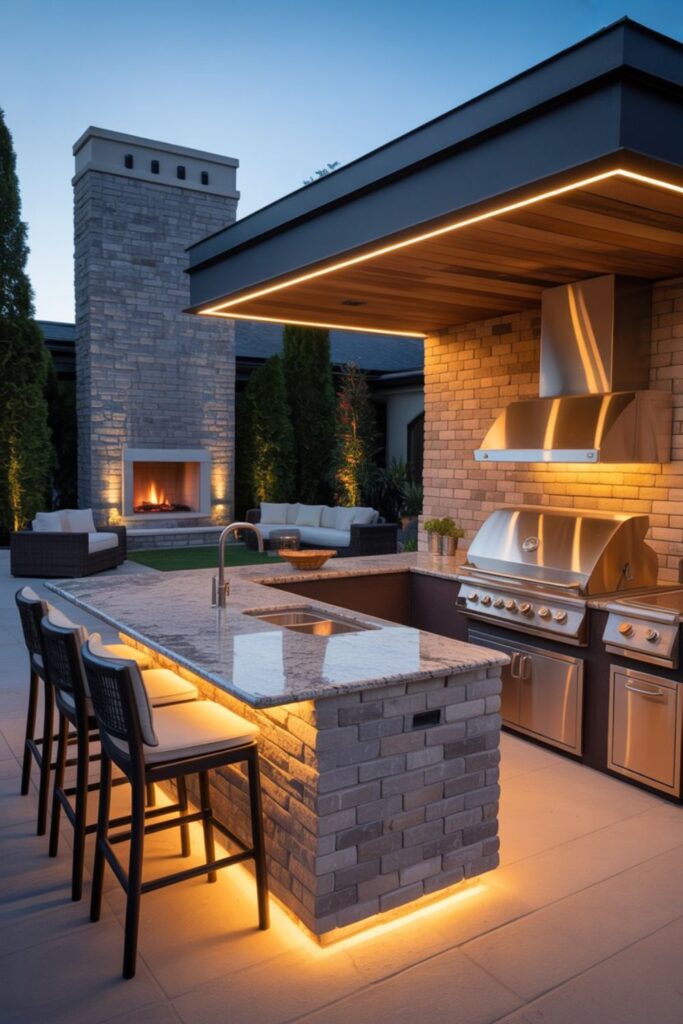
Integrated outdoor fireplace and outdoor kitchen designs create self-contained outdoor entertainment centers. Position the fireplace as one end of an L-shaped or U-shaped kitchen configuration, anchoring the space architecturally. The shared wall reduces construction costs compared to separate structures. Guests migrate naturally between cooking and fire zones, keeping cooks connected to conversation. Counter space between the fireplace and cooking area provides staging surfaces for food prep and service.
Pizza oven integration represents the most popular outdoor fireplace combination. Stack a traditional wood-fired pizza oven above or beside the main firebox, sharing the chimney system. Both elements benefit from the same fire, though serious pizza making requires separate dedicated fires. Dome temperatures for pizza (700-900°F) exceed comfortable fireplace levels (400-600°F). Position the pizza oven at counter height (36-40 inches) for comfortable access. A Connecticut family uses their combination unit year-round fireplace for cool evenings and pizza oven for weekend cooking from May through October.
Side burner and warming drawer additions transform fireplaces into complete cooking stations. Install a gas or charcoal grill in the countertop adjacent to the fireplace, creating multiple cooking methods. Warming drawers built into the fireplace base keep appetizers or side dishes hot during serving. One Arizona chef specified a rotisserie bracket inside her outdoor fireplace, noting that “vertical roasting on the fireplace creates completely different results than horizontal grilling the dripping fats self-baste and the radiant heat from coals creates incredible bark.”
Covered patio fireplace designs with pergola integration provide weather protection. Extend the pergola beams over both fireplace and adjacent kitchen zones, creating a cohesive covered outdoor room. The roof must sit at least 10-12 feet above the hearth for proper chimney function and code compliance. Include retractable screens or glass panels on open sides for weather protection without permanent enclosure. This configuration extends usability by 3-4 months annually in seasonal climates.
Read More About: 29+ Stunning Rose Garden Ideas to Boost Curb Appeal
Luxury Outdoor Fireplace Ideas with Premium Features
Double-sided fireplaces with separate firebox zones deliver versatility that justifies premium costs. Independent controls let you operate one side for intimate gatherings or both for large parties. Different fuel types on each side wood on one, gas on the other provide options based on mood and convenience. Glass viewing panels between sides create transparency while containing fires separately. These complex installations start at $25,000-40,000 but create stunning centerpieces for high-end properties.
Motorized screens and glass doors add convenience and safety to luxury installations. Touch a button and tempered glass panels glide into place, containing sparks while maintaining fire visibility. Retractable screens disappear into side pockets when not needed, preserving clean aesthetics. These systems cost $3,000-8,000 installed but eliminate manual screen handling. A Florida designer included motorized screens that activate automatically when wind speeds exceed 15 mph, protecting guests from smoke and sparks without manual intervention.
Water feature integration creates dramatic sensory combinations. Position fountains or waterfalls adjacent to the fireplace, creating fire-and-water juxtaposition. The contrasting elements (fire’s warmth and light, water’s coolness and movement) enhance both features. Shared wall construction between fountain and fireplace saves costs. LED lighting synchronized between water and fire creates spectacular evening effects. One Las Vegas property featured 8-foot water walls flanking a central fireplace, with programmable lighting that shifted colors throughout the evening.
Automated control systems bring smart home technology outdoors. Control fire ignition, flame height, gas flow, and integrated lighting through smartphone apps. Schedule fires to start before you arrive home from work. Monitor propane levels remotely. Link controls to weather stations that automatically shut down fires when high winds arrive. Voice control integration lets you adjust settings without leaving comfortable seating. These systems add $2,000-5,000 to project costs but deliver convenience that transforms usage patterns.
DIY Outdoor Fireplace Ideas on a Budget
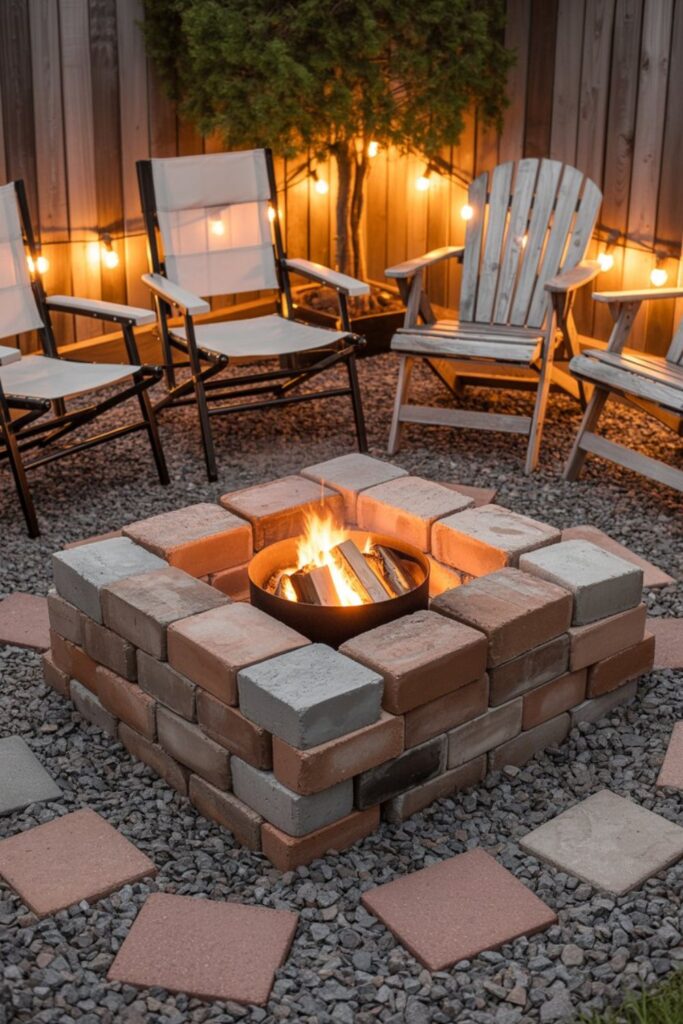
Concrete block cores with stone veneer facades offer the most budget-friendly DIY fireplace approach. Build the structural walls from standard concrete blocks ($2-3 each), creating a stable, fire-resistant core. Apply manufactured stone veneer ($6-12 per square foot) over the block exterior, hiding utilitarian construction beneath attractive finishes. This method costs 50-70% less than solid stone construction while achieving similar aesthetics. Total material costs for a basic 4×6 foot fireplace run $800-1,500 depending on stone selection.
Prefabricated fireplace kits eliminate complex masonry work while delivering authentic results. These include pre-engineered firebox and chimney components that you assemble following instructions. Surround the core components with your choice of facing materials: brick, stone veneer, or stucco. Quality kits from manufacturers like Isokern or Earthcore cost $2,000-4,000 but reduce installation complexity dramatically. One Oregon couple installed a 36-inch Isokern system over two weekends, noting that “the kit approach let us focus creativity on the facade design rather than worrying about chimney engineering.”
Repurposed materials reduce costs while adding character to DIY outdoor fireplace ideas. Salvaged brick from demolished buildings costs $0.50-1.00 per brick versus $0.75-2.00 for new. Reclaimed flagstone or stacked stone from Craigslist or Facebook Marketplace offers materials at 30-60% below retail. Old fireplace mantels, iron doors, and accessories from salvage yards provide authentic details. One Michigan DIYer built an entire fireplace for $650 using bricks from a demolished school, stone from a dismantled patio, and an iron door from an architectural salvage warehouse.
Simplified designs save money without sacrificing function. Skip elaborate mantel work, integrated seating, and complex chimney detailing that require advanced skills. Focus resources on proper firebox construction and basic aesthetics. Paint or stucco finishes over blocks or bricks cost less than stone but still look attractive. A basic rectangular design without curves or angles simplifies construction significantly. One Texas couple built a simple 4×4 foot fireplace with painted concrete block for $450 in materials, proving that functional outdoor fireplaces don’t require huge budgets.
Outdoor Fireplace Ideas by Architectural Style
Mediterranean and Spanish-style outdoor fireplace ideas feature stucco finishes in warm earth tones terracotta, ochre, cream, or salmon pink. Arched firebox openings echo the curves common in Mediterranean architecture. Decorative tile accents in vibrant blues, greens, or hand-painted patterns add authentic details. The hearth might extend as a low seating wall finished in matching tile. These fireplaces often sit under covered loggias or pergola structures that provide shade and weather protection. One Arizona designer used Talavera tiles from Mexico around the fireplace opening, creating “an authentic hacienda feeling that clients said reminded them of their honeymoon in Oaxaca.”
Craftsman-style homes pair perfectly with rustic outdoor fireplaces featuring natural stone or clinker brick. The emphasis on natural materials and visible craftsmanship aligns with Arts and Crafts principles. Exposed rafter tails on pergola covers echo interior details. Built-in benches with timber frames and stone bases provide seating that matches the fireplace construction. Copper accents like chimney caps or decorative strapping add authentic Craftsman details. These designs emphasize horizontal lines rather than vertical emphasis, keeping proportions low and grounded.
Colonial and Federal architecture demands traditional outdoor fireplace designs with classical proportions. Symmetrical layouts, formal hearth extensions, and refined brick detailing maintain period authenticity. Choose brick colors that match or complement the home’s exterior, often reds or darker oranges. Stone lintels over openings and limestone hearth caps add appropriate detailing. Avoid rustic or contemporary elements that clash with formal architecture. A Massachusetts designer replicated 18th-century proportions, specifying thinner mortar joints and Flemish bond patterns that “disappeared into the property’s architectural context rather than announcing themselves as new construction.”
Contemporary ranch and mid-century modern homes call for low-profile horizontal fireplaces. These feature long, linear firebox openings (4-8 feet wide) that emphasize horizontal lines matching the architectural style. Smooth concrete, steel panels, or painted masonry in period-appropriate colors (avocado, harvest gold, or neutral grays) maintain design integrity. Built-in benches with clean lines and minimal detailing provide seating without ornate elements. One Palm Springs restoration included a 7-foot-wide fireplace just 4 feet tall that “felt like it was specified by the original 1962 architect rather than added sixty years later.”
Creative Placement Ideas for Maximum Impact
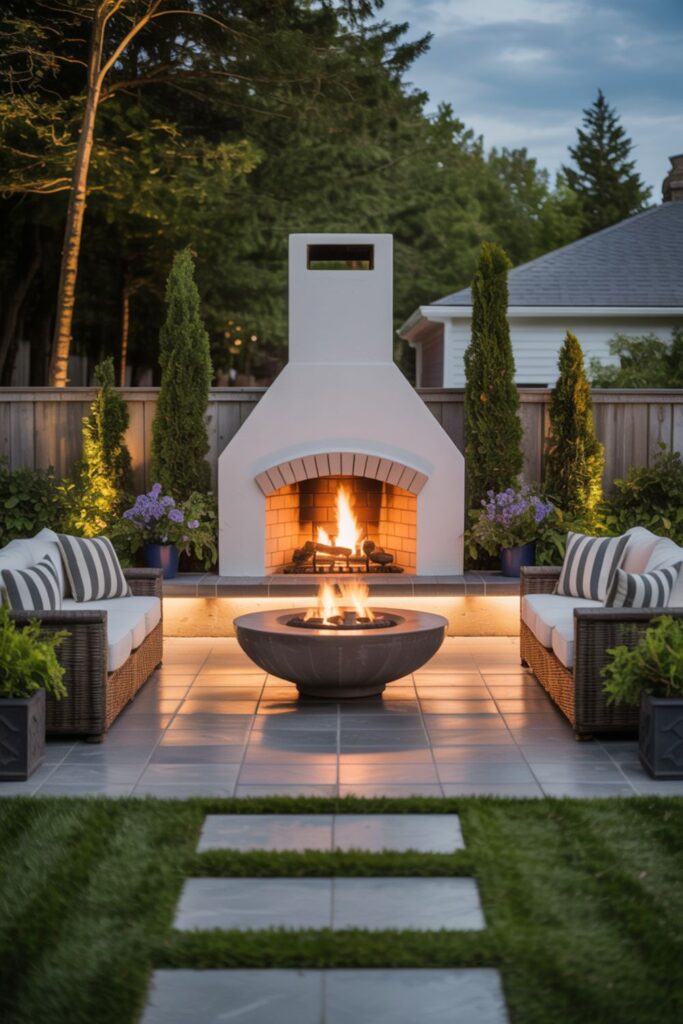
Island or freestanding outdoor fireplace ideas create dramatic focal points in large yards. Position the fireplace away from the house as a destination that draws people into the landscape. Build seating around all sides, creating a campfire-like gathering space. This placement works brilliantly in properties with multiple outdoor zones positioning the fireplace between pool and lawn areas, for example. Access from all sides requires careful planning for wood delivery and ash removal. A Colorado ranch installed a freestanding stone fireplace 40 feet from the house, transforming a previously unused lawn area into the property’s most popular gathering spot.
Courtyard fireplaces maximize intimacy in enclosed spaces. Position the fireplace as one wall of a three or four-sided courtyard defined by the house, fences, or landscape walls. The enclosed geometry traps heat effectively, making these spaces comfortable even on chilly evenings. Courtyard placement also provides wind protection that prevents smoke and spark issues common in exposed locations. One New Mexico home featured an interior courtyard with a fireplace as the fourth wall, creating “an outdoor living room that feels private and protected despite being fully open to the sky.”
Poolside outdoor fireplace designs extend the swimming season and create stunning visual effects. Position fireplaces 10-15 feet from the pool edge for safety while maintaining visual connection. The fire reflects in the water at night, doubling the visual impact. Combine with underwater pool lighting for spectacular evening ambiance. Include generous hearth extensions that prevent wet swimmers from tracking water directly into the fire area. A California designer positioned a fireplace with built-in storage for pool towels and toys, integrating function with aesthetics.
Entry focal point placement makes fireplaces visible from your home’s main entrance. Position the structure where arriving guests see it immediately upon entering through your gate or driveway. This creates a “wow moment” that sets expectations for the property’s outdoor amenities. The fireplace becomes an architectural statement visible from the street (where codes permit), potentially increasing curb appeal. One Virginia property featured a fireplace visible through a wrought-iron gate, with the fire feature framed perfectly when approaching from the street.
Lighting and Seating Layout Ideas
Built-in seating area arrangements create permanent, comfortable furniture that anchors your outdoor fireplace ideas. Stone or brick benches flanking the fireplace provide seating for 6-10 people depending on length. Top benches with cushions for comfort store weather-resistant cushions in nearby containers. The permanent seating defines your outdoor room layout clearly, eliminating furniture arrangement questions. Build benches 16-18 inches high (standard seating height) and at least 18 inches deep for comfort. One Wisconsin designer created L-shaped built-in benches that provided seating for 12 within a 16×20 foot patio, noting that “the fixed seating meant we could skip six chairs that would have cluttered the space.”
Movable furniture offers flexibility that built-in seating cannot match. Deep lounge chairs positioned 6-8 feet from the fire create comfortable conversation groupings for 4-8 people. Modular sectionals adapt to different guest counts and activities. Side tables within arm’s reach of each seat provide surfaces for drinks and plates. This approach costs more initially (quality outdoor furniture runs $2,000-5,000 for complete seating) but allows seasonal changes and easier cleaning. Storage during winter months protects investment.
Tiered seating levels add visual interest and accommodate larger groups. Position primary seating directly facing the fire at standard patio level. Add a second tier raised 8-12 inches behind the first row, providing stadium-style visibility. The elevation ensures everyone enjoys clear fire views without front-row guests blocking sight lines. Built-in planters or low walls can create the tier separation. A Colorado designer used this technique for a family of ten, creating three seating tiers that accommodated 20 guests during parties.
Overhead string lighting or pergola-mounted fixtures extend usability beyond fire-lit hours. Warm white bulbs (2700K) complement the firelight without competing. Space fixtures to provide even illumination across the entire seating area avoid spotlight effects that create harsh shadows. Dimmers or multiple switching zones let you adjust lighting intensity based on fire brightness and desired mood. Solar options eliminate wiring complexity for DIY installations. One North Carolina homeowner installed Edison-style string lights on a timer that automatically turned on at dusk, noting that “the lights created an inviting atmosphere that made us use the space even when we didn’t light a fire.”
How Do You Choose the Right Outdoor Fireplace Style?
Match your outdoor fireplace ideas to your home’s existing architecture first. Complementary design creates cohesion between house and landscape, making outdoor spaces feel like natural extensions rather than afterthoughts. A colonial brick home pairs beautifully with traditional brick fireplaces, while contemporary stucco exteriors call for modern concrete or smooth-finished designs. Dramatic style mismatches create visual confusion; a rustic stone fireplace looks out of place against ultra-modern architecture. Survey your home’s materials, colors, and proportions before committing to specific fireplace designs.
Consider maintenance preferences alongside aesthetics. Natural stone and exposed brick require periodic repointing and sealing but develop character through weathering. Painted or stucco finishes need refreshing every 5-10 years to maintain appearance. Smooth concrete shows stains and weathering more obviously than textured surfaces. Gas systems reduce maintenance compared to wood-burning units but sacrifice authentic ambiance. Balance your desire for specific looks against realistic maintenance commitment. One Maryland couple initially wanted natural fieldstone but switched to manufactured stone veneer after learning about extensive upkeep requirements for authentic stone.
Budget constraints should guide material and complexity decisions without dictating style entirely. You can achieve most aesthetic styles at different price points through smart material substitutions. Manufactured stone veneer mimics natural stone at half the cost. Concrete block cores with attractive facades cost less than solid masonry. Simple geometric designs reduce labor costs compared to complex curves or integrated features. Prioritize excellent execution of simple designs over mediocre attempts at complexity that exceeds your budget.
Think about long-term flexibility and property value. Classic, timeless designs appeal to broader audiences if you plan to sell eventually. Trendy styles that feel cutting-edge today may appear dated in 10-15 years. Neutral colors and traditional proportions typically offer better resale value than bold personal statements. However, if this is your forever home, prioritize designs that genuinely excite you over what hypothetical future buyers might prefer. Your daily enjoyment matters more than speculation about unknown preferences.
What Size Outdoor Fireplace Works Best?
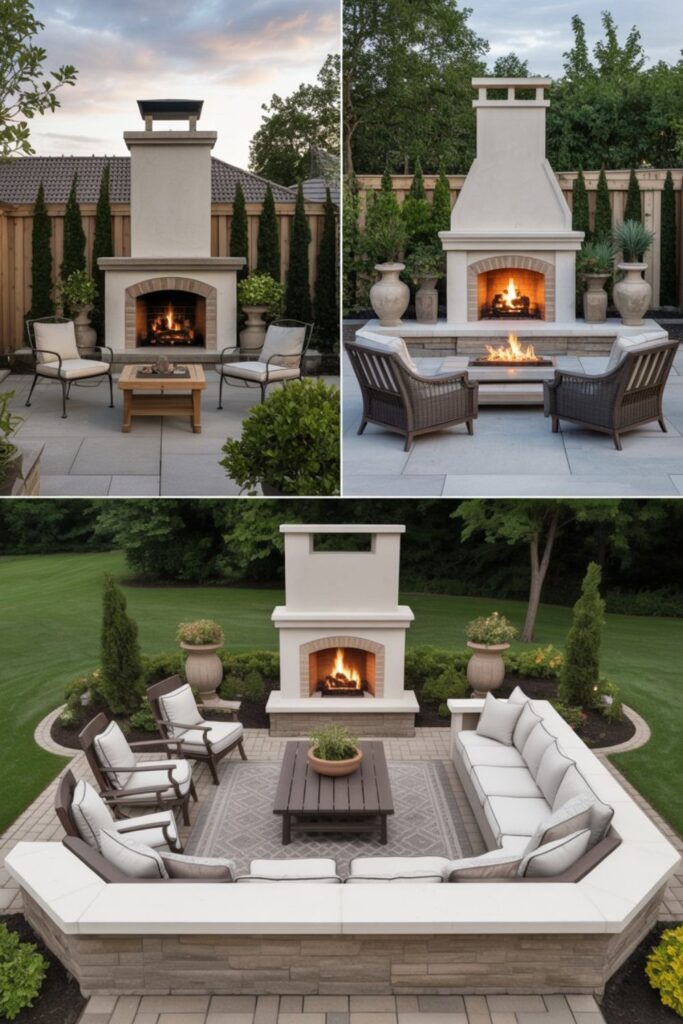
Scale fireplaces proportionally to your outdoor living space dimensions. In patio fireplace designs for areas 200-400 square feet, plan structures 4-6 feet wide and 8-10 feet tall. Larger backyards or outdoor entertainment spaces (400-800 square feet) can accommodate 6-10 foot wide fireplaces rising 10-14 feet. Undersized fireplaces disappear visually and fail to provide adequate warmth, while oversized structures overwhelm spaces and block circulation. One Seattle designer uses the “rule of thirds” : the fireplace should occupy roughly one-third of the main wall or viewshed where it’s positioned.
Firebox opening dimensions affect both aesthetics and function. Residential outdoor fireplaces typically feature openings 30-40 inches wide and 26-32 inches tall. These proportions provide adequate viewing area and heat output for typical seating areas. Wider openings (48-60 inches) suit larger spaces but require engineered lintels to span the opening safely. Taller openings improve fire visibility from a distance but may draw poorly if not proportioned correctly with chimney size. A 36×30 inch opening represents the versatile middle ground that works well for most applications.
Chimney height influences draft performance and visual balance. Plan for chimney tops at least 10-12 feet above the hearth. Taller chimneys (14-18 feet) improve draft reliability and create more dramatic silhouettes. The chimney width should be roughly 30-40% of the fireplace’s overall width to maintain pleasing proportions. A 6-foot-wide fireplace looks best with an 18-24 inch wide chimney at its narrowest point. Avoid excessively narrow chimneys that look spindly or overly wide sections that appear top-heavy.
Test proportions before building by mocking up the footprint and height with stakes and string. Stand in planned seating areas to verify sight lines and scale. Walk the space to ensure adequate circulation around the structure. Photograph the mockup from multiple angles to see how the fireplace relates to your home and landscape. This simple exercise prevents expensive mistakes from dimensional miscalculations. One Arizona contractor requires all clients to approve full-scale mockups before starting work, claiming this practice has “eliminated the scope changes and dissatisfaction that plagued my earlier projects.”
Read More About: Outdoor Fireplace Patio Ideas To Create Your Perfect Outdoor
Can You Build an Outdoor Fireplace Yourself?
DIY outdoor fireplace projects suit homeowners with basic masonry skills and proper tools. Successfully completing a simple fireplace requires understanding mortar mixing, laying courses level and plumb, and creating stable structures. Previous experience with retaining walls, patio pavers, or other masonry work provides helpful foundation skills. If you’ve never worked with brick, block, or stone, start with a smaller project like a fire pit or garden wall before attempting a full fireplace. The vertical height, chimney requirements, and fire safety considerations make fireplaces more complex than ground-level masonry.
Prefabricated fireplace kits dramatically reduce technical complexity while delivering professional results. These systems include pre-engineered firebox and chimney components that you assemble following manufacturer instructions. Your creativity focuses on the exterior facade rather than structural engineering. Quality kits cost $2,000-5,000 but include components that would be difficult to source separately. Success requires following instructions precisely improvising or substituting components voids warranties and may create safety issues. One California DIYer completed his kit installation in four weekends, noting that “the engineered core let me create a stone facade that looks like it cost $20,000 when my all-in investment was $6,500.”
Foundation work represents the most critical DIY phase. The concrete footing must extend below frost line depth in your climate and be reinforced with rebar. Improper footings lead to settling, cracking, and structural failure. Many DIYers hire concrete contractors for this phase ($500-1,500) while handling the rest themselves. This hybrid approach ensures critical foundation quality while preserving DIY savings on visible work. The small investment in professional footing work prevents catastrophic problems that would require complete rebuilds.
Building permits remain necessary regardless of DIY or contractor installation. Submit plans showing dimensions, setbacks, construction details, and materials before starting work. Inspections occur at foundation, structural, and final stages. Skipping permits risks fines, mandatory removal, or insurance complications if fire damage occurs. The permit process seems intimidating but mostly involves paperwork and scheduled inspections. Most building departments provide helpful guidance for DIY projects. Budget $100-500 for permits and any required engineering stamps depending on your location and project complexity.
FAQs
What is the most popular outdoor fireplace style right now?
Modern outdoor fireplace designs with clean lines and horizontal emphasis dominate current trends. Linear fireplaces stretching 5-8 feet wide with minimal ornamentation appeal to homeowners seeking contemporary aesthetics. Smooth concrete, painted stucco, or sleek stone veneer in neutral grays and blacks create the streamlined look.
How much does it typically cost to add an outdoor fireplace?
Outdoor fireplace ideas span a wide cost range based on size, materials, and complexity. Simple DIY fireplace projects using concrete block cores and stone veneer run $1,500-3,500 in materials. Contractor-built basic fireplaces start at $5,000-8,000 for straightforward brick or block designs.
Where should you position an outdoor fireplace for best results?
Place your outdoor fireplace ideas where they create focal points visible from indoor living spaces and primary outdoor seating areas. Most successful placements position fireplaces perpendicular to the house, defining one edge of your patio or outdoor room while leaving the view open. Avoid placing fireplaces directly against the house unless code-compliant clearances and fire-rated construction are used.
Do outdoor fireplaces work well in small backyards?
Compact outdoor fireplace ideas work beautifully in limited spaces when properly scaled and positioned. Corner placements maximize tight areas efficiently, while vertical emphasis (narrow width, greater height) creates impact without consuming floor space. Plan for minimum 10-foot clearance from the house and adequate seating circulation.
What outdoor fireplace features add the most value?
Built-in seating area features and outdoor kitchen integration provide the highest functional value for daily use and resale appeal. Gas operation increases convenience and usability frequency, making the investment pay dividends through regular enjoyment. Quality materials that match your home’s architecture create visual cohesion that elevates entire properties.
Conclusion
The right outdoor fireplace ideas transform unused yards into magnetic destinations that family and friends gravitate toward naturally. Whether you pursue sleek modern outdoor fireplace aesthetics, embrace rustic charm, or adapt DIY fireplace approaches to budget constraints, the key lies in matching designs to your specific situation. Your home’s architecture, available space, maintenance preferences, and honest budget assessment guide smart decisions that create lasting satisfaction. Begin your planning process by photographing your space from multiple angles and noting how you actually use your backyard. These practical insights matter more than abstract design preferences divorced from reality. Gather inspiration from these outdoor fireplace ideas but adapt concepts to your unique circumstances rather than forcing inappropriate templates. The fireplace that perfectly suits your neighbor’s property might completely miss the mark for yours. Thoughtful planning now prevents the expensive regrets that plague rushed projects while ensuring your outdoor living space becomes the year-round retreat