Potted Flower Garden Landscapes For Beautiful Container

Your outdoor space looks bare and uninviting despite having areas perfect for gardening. Limited yard space, poor soil quality, or rental restrictions prevent traditional in-ground planting, leaving patios, balconies, and entryways feeling lifeless and unwelcoming. You’ve tried scattered random pots before, but they looked disorganized rather than intentional mismatched containers, clashing colors, and awkward placement that diminished rather than enhanced your outdoor environment.
Walking through neighborhoods with stunning container displays makes the frustration grow. Professional-looking potted flower garden landscapes transform ordinary porches into magazine-worthy spaces bursting with coordinated colors and lush textures. Their arrangements appear effortlessly beautiful while your attempts feel chaotic and amateur. You’ve invested money in plants and containers only to watch them struggle, fade quickly, or simply fail to create the cohesive, polished look you envisioned. The gap between inspiration and execution feels insurmountable without understanding fundamental design principles that separate spectacular container landscapes from disappointing collections of random pots.
The solution lies in mastering container flower gardens through proven design strategies, proper plant selection, and maintenance techniques ensuring long-lasting beauty. Container gardening offers incredible advantages: instant gratification, flexibility for seasonal changes, mobility accommodating evolving designs, and control over soil quality regardless of ground conditions. You don’t need expensive landscape architects or years of horticultural training to create stunning flower pot arrangements rivaling professionally designed spaces. Understanding color theory, proportion principles, plant care fundamentals, and strategic placement transforms ordinary containers into extraordinary landscape features that deliver continuous impact from spring through fall while reflecting your personal style beautifully.
How to Design Cohesive Color Schemes for Container Flower Landscapes
Color coordination separates professional-looking potted flower garden landscapes from random plant collections, creating visual harmony that pleases the eye while strengthening overall impact. Thoughtful color choices dramatically influence mood, perceived space dimensions, and seasonal appropriateness throughout container displays, making them essential in well-designed potted flower garden landscapes.
Monochromatic schemes using single colors in varied shades create sophisticated, elegant potted flower garden landscapes that are nearly impossible to execute poorly. All-white gardens featuring petunias, alyssum, bacopa, and dusty miller deliver clean sophistication suited for formal settings and contemporary spaces. These pure palettes make small balconies and shaded areas appear larger and brighter, adding value to compact potted flower garden landscapes. Purple monochromatic combinations using lavender, salvia, petunias, and purple fountain grass create romantic, dreamy atmospheres, with depth achieved through value variations from pale lilac to deep eggplant. Single-color schemes never clash with architecture, outdoor furniture, or seasonal decorations, providing foolproof strategies for harmonious potted flower garden landscapes.
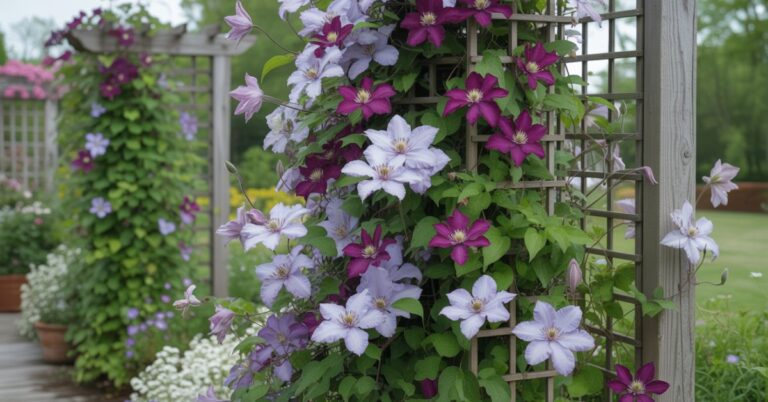
Analogous color combinations pair adjacent hues on the color wheel yellow-orange-red or blue-purple-pink creating naturally pleasing potted flower garden landscapes. Plant yellow marigolds with orange zinnias and red salvia for warm, energetic displays visible from a distance. Combine blue lobelia with purple petunias and pink geraniums for cool, calming arrangements perfect for relaxation spaces. These related colors blend seamlessly without jarring contrasts, making them ideal for cottage gardens, traditional landscapes, and conservative tastes seeking subtle sophistication in potted flower garden landscapes. The three-color limit prevents visual chaos while maintaining sufficient variety for interest. The Missouri Botanical Garden demonstrates mastery in analogous combinations, offering inspiration for well-curated potted flower garden landscapes.
Complementary color pairings combine opposite wheel hues orange with blue, yellow with purple, red with green creating bold, high-energy potted flower garden landscapes that demand attention. These striking schemes suit contemporary designs, creative personalities, and high-visibility areas like entryways where visual impact matters more than subtlety. Pair orange marigolds with blue lobelia, or yellow bidens with purple verbena for dramatic contrasts. Limiting complementary schemes to primary pairs plus neutral whites or greens prevents sensory overload, ensuring bold potted flower garden landscapes remain elegant rather than overwhelming. These dynamic combinations work best in full sun, where bright colors appear natural and harmonious.
Seasonal color progressions keep potted flower garden landscapes fresh and visually relevant throughout growing seasons. Spring welcomes pastel palettes, soft pinks, pale yellows, lavender, and white evoking renewal and delicate beauty. Summer shifts to saturated jewel tones, including hot pinks, brilliant oranges, deep purples, and vivid reds reflecting seasonal intensity. Fall introduces warm autumn hues burgundy, rust, gold, and bronze complementing changing foliage naturally. This intentional progression ensures potted flower garden landscapes feel current and thoughtfully curated rather than static. Phased plant purchases allow seasonal adjustments, maintaining optimal color relevance throughout the year.
Read More About: Best Garden Stones for Plant Displays
What Is the Thriller-Filler-Spiller Formula for Perfect Containers
The thriller-filler-spiller method provides a foolproof planting strategy for potted flower garden landscapes, ensuring balanced, professional container garden designs that consistently impress. Mastery of this three-component system eliminates guesswork while guaranteeing attractive results regardless of plant selections or container styles in your potted flower garden landscapes.
Thriller plants provide vertical drama and serve as focal points, commanding immediate attention in potted flower garden landscapes. These upright specimens typically reach 1.5 to 2 times the container height, creating proper proportions and visual impact. Popular thrillers include ornamental grasses like purple fountain grass or fiber optic grass, tropical cannas with bold foliage, architectural cordylines, flowering options like salvia and angelonia, and even small shrubs such as dwarf Alberta spruce. Position thrillers centrally in containers visible from all angles, or toward the back in arrangements placed against walls. Choose thrillers based on mature heights relative to container sizes; tall containers accommodate taller plants, while low bowls require compact thrillers to avoid top-heavy appearances. Thriller selection establishes the entire arrangement’s personality, making it critical in standout potted flower garden landscapes.
Filler plants create mass and substance around thrillers, adding color, texture, and volume without competing for attention, essential for lush potted flower garden landscapes. Medium-height specimens typically reach 8–14 inches, filling middle spaces with continuous blooms or interesting foliage. Excellent fillers include petunias, geraniums, zinnias, begonias, coleus, lantana, and calibrachoa depending on sun exposure. Plant fillers in odd numbers three to five depending on container dimensions spacing evenly around thrillers. Filler colors should complement rather than match thrillers exactly; contrast creates dynamic, eye-catching potted flower garden landscapes. Multiple filler varieties add interest but maintain cohesion through shared color families or similar growing requirements. The University of Illinois Extension recommends selecting fillers with similar water and fertilizer needs, simplifying maintenance in container arrangements.
Spiller plants cascade gracefully over container edges, softening rims and adding movement and elegance, completing professional potted flower garden landscapes. Trailing specimens prevent compositions from appearing rigid or top-heavy. Popular spillers include sweet potato vine, trailing petunias, bacopa, lobelia, ivy, trailing verbena, and dichondra. Position spillers along container perimeters, planting three to five depending on pot circumference. Mix varieties for added dimension combine colors like chartreuse and purple sweet potato vine or pair delicate bacopa with bold trailing petunias. Spillers grow vigorously throughout the season, often requiring pruning to prevent them from overwhelming central plants or blocking pathways, maintaining intentional design in your potted flower garden landscapes.
Container size dictates appropriate plant quantities within thriller-filler-spiller formulas for successful potted flower garden landscapes. Small 10–12 inch pots accommodate one thriller, two to three fillers, and up to two spillers without overcrowding. Medium 14–18 inch containers handle one thriller, three to five fillers, and three spillers comfortably. Large 20+ inch planters support one to two thrillers, five to seven fillers, and four to six spillers, creating full, lush arrangements. These guidelines prevent competition for resources while avoiding sparse or unfinished looks. When uncertain, slightly overcrowding is better than underplanting, as containers appear full immediately and pruning controls excessive growth more easily than waiting for sparse plantings to fill in slowly.
Creating Stunning Entrance Displays With Potted Flowers
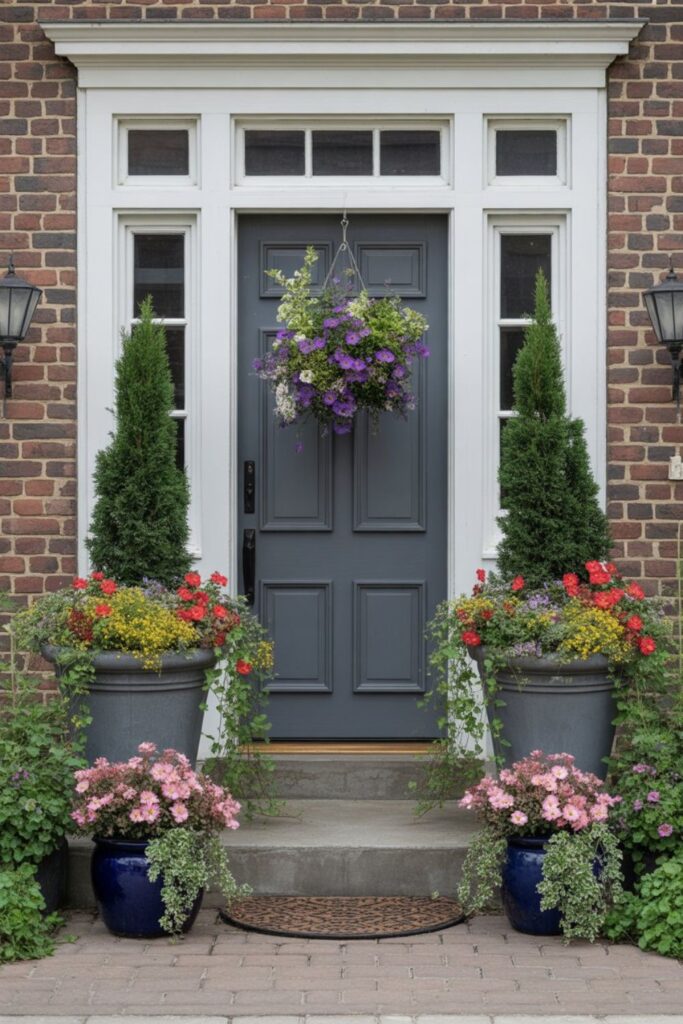
Entryway container displays are essential components of potted flower garden landscapes, creating crucial first impressions that significantly impact curb appeal and visitor perception. Strategic placement of containers at front doors welcomes guests while reflecting personal style and attention to detail, enhancing property value and neighborhood aesthetics through thoughtfully designed potted flower garden landscapes.
Symmetrical flanking arrangements deliver formal, traditional elegance, ideal for colonial, craftsman, and conventional architectural styles. Place matching containers with identical plantings on both sides of doors to create balanced, mirror-image compositions in your potted flower garden landscapes. This classic approach never goes out of style and can boost perceived property value, with the Container Gardening Forum reporting a 7–12% increase in home sale prices from enhanced curb appeal. Select substantial containers minimum 20–24 inches in diameter and height to ensure proper scale relative to doorways and architecture. Plant identical specimens in each pot to maintain perfect symmetry throughout seasons. Boxwood topiary standards, matching seasonal annuals, or evergreen shrubs work beautifully in paired configurations, adding timeless structure to your potted flower garden landscapes.
Asymmetrical groupings provide contemporary, relaxed alternatives to formal symmetry in potted flower garden landscapes. Position three or five containers in staggered arrangements near entrances, varying heights and sizes while maintaining cohesive color palettes and complementary plantings. This approach suits modern architecture, cottage-style homes, and creative personalities seeking dynamic compositions over rigid mirroring. Arrange containers in triangular patterns largest in back, medium forward-left, smallest forward-right to achieve visual stability through implied geometry rather than obvious symmetry. Repeat key colors or plant types throughout groupings to maintain unity despite asymmetry. While requiring more design confidence than symmetrical arrangements, this method delivers unique, personalized potted flower garden landscapes impossible with simple mirror arrangements.
Layered height variation adds dimensional interest to entryway potted flower garden landscapes. Combine tall containers reaching 30+ inches with medium 18–24 inch planters and low 10–12 inch bowls to create vertical diversity mimicking natural landscape layers. Place the tallest containers at the back or corners, stepping down toward fronts or sides depending on viewing angles. Use plant stands, inverted pots as risers, or containers of naturally varying heights to achieve desired elevations. This professional technique ensures all plants receive adequate visibility and light, preventing shorter specimens from disappearing behind taller neighbors. Layered arrangements work equally well in symmetrical paired setups or asymmetrical groupings, adding sophistication to any potted flower garden landscapes design.
Seasonal rotation keeps entrance displays fresh, relevant, and engaging throughout the year in potted flower garden landscapes. Spring welcomes tulips, daffodils, pansies, and primroses in pastel palettes. Summer highlights heat-tolerant annuals such as petunias, zinnias, and geraniums in vibrant colors. Fall transitions to mums, ornamental kale, and decorative grasses in warm autumn tones. Winter arrangements feature evergreen boughs, holly berries, and cold-hardy pansies in mild climates. Regular seasonal updates demonstrate attention to detail and pride in property appearance, which neighbors notice and appreciate. Store off-season containers in garages or sheds to maintain collections across years, rather than repurchasing entire setups seasonally, ensuring potted flower garden landscapes remain consistently attractive and inviting.
How to Design Large-Scale Container Landscapes for Patios
Container flower gardens transform patios into outdoor living rooms when designed thoughtfully with proper scale, strategic placement, and cohesive styling, creating striking potted flower garden landscapes. Your large-space approach defines functional zones, adds privacy screening, and establishes visual interest without consuming floor space needed for furniture and circulation, making patios both beautiful and practical for potted flower garden landscapes.
Corner mass plantings anchor patio edges with substantial visual weight while keeping central areas open for activities, forming dramatic focal points in potted flower garden landscapes. Group five to nine containers in two or three corners rather than scattering individual pots randomly. Layer heights and sizes within corner groupings: largest containers 24–30 inches against walls or railings, medium 16–20 inch pots mid-group, smallest 10–14 inch containers at fronts. This creates depth while ensuring all plants receive adequate light. Maintain cohesive container colors and styles within each grouping, treating corners as single design units rather than random assemblies. Use similar color schemes within corners while varying slightly between different corners to prevent monotonous repetition in potted flower garden landscapes.
Linear borders along railings or walls define space boundaries without permanent plantings, enhancing the structure of potted flower garden landscapes. Space containers consistently every 24–36 inches to establish rhythm and continuity. Use identical or complementary containers for cohesive themes rather than random assortments that appear haphazard. Alternate container heights occasionally, placing taller pots every third position to create gentle undulations instead of rigid straight lines. These organized arrangements suit both contemporary and traditional styles depending on container design and plant choices. Adding twinkle lights or solar lanterns between containers creates magical evening ambiance, extending enjoyment of potted flower garden landscapes beyond daylight hours.
Conversation area softening positions containers flanking seating groups, creating intimate, defined spaces within larger patios for potted flower garden landscapes. Place matching containers on either side of benches, beside lounge furniture, or flanking dining tables. These strategic placements frame activities while adding greenery and subtle privacy without walls. Fragrant plants like heliotrope, nicotiana, or sweet alyssum near seating areas engage multiple senses, enhancing relaxation. Avoid spiny or allergenic plants near high-traffic seating to prevent discomfort. Flanking containers should remain lower than seated sightlines typically 18–24 inches maximum to allow conversation across containers without obstructing views in potted flower garden landscapes.
Mobile container clusters on wheels provide ultimate flexibility for changing needs and seasonal adjustments, a practical feature for adaptable potted flower garden landscapes. Install heavy-duty casters or plant dollies beneath large containers, allowing easy repositioning for parties, cleaning, sun tracking, or winter storage. Mobility is invaluable for renters or homeowners desiring design flexibility without permanent changes. Roll containers together to form temporary privacy screens, then separate them for normal configurations. Reposition containers seasonally to follow sun patterns spring sun angles differ from summer positions maximizing light exposure. This flexibility supports experimentation, helping refine optimal arrangements for functional and visually appealing potted flower garden landscapes without permanent commitments.
Best Flowering Plants for Different Light Conditions
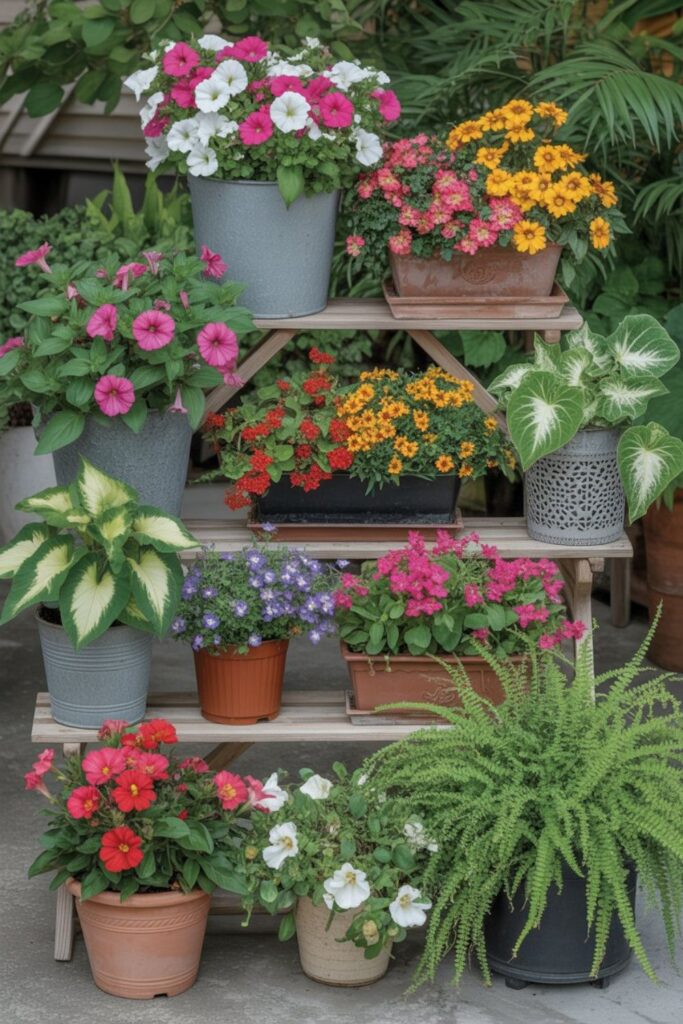
Successful potted flower garden landscapes depend on matching plant selections to available light conditions rather than forcing sun-loving plants into shade or shade-tolerant varieties into blazing sun. Understanding light requirements prevents struggling plants and disappointing displays while ensuring vibrant, healthy container gardens throughout the seasons in your potted flower garden landscapes.
Full sun flowers (6+ hours of direct sunlight) thrive in bright, intense conditions, ideal for sun-focused potted flower garden landscapes. Examples include petunias, geraniums, zinnias, marigolds, calibrachoa, portulaca, lantana, and pentas, which bloom prolifically when provided adequate water and regular fertilization to meet the energy demands of continuous flowering. Combine these sun-lovers with ornamental grasses such as purple fountain grass and heat-tolerant foliage like sun-tolerant coleus varieties to add texture. Full-sun containers dry quickly, often requiring daily watering during hot weather, so consider self-watering systems or grouping containers to reduce maintenance. Colors appear most vibrant in bright light; bold reds, hot pinks, vivid oranges, and pure whites create energetic potted flower garden landscapes that pop in sunny locations. The All-America Selections organization identifies superior sun-loving cultivars suitable for container performance annually.
Part sun flowers (4–6 hours of direct sunlight) provide flexibility for potted flower garden landscapes, thriving in moderate light typical of many residential settings. Plants such as begonias, New Guinea impatiens, lobelia, fuchsia, torenia, and coleus perform beautifully in dappled shade or morning sun with afternoon protection. Part-sun containers often sit near deciduous trees, east-facing patios, or areas shaded during peak afternoon sun. These versatile plants bridge gaps between extreme sun and shade, allowing you to design thriving potted flower garden landscapes even in mixed-light locations. Experimenting with both sun- and shade-tolerant varieties in part-sun settings helps determine which combinations succeed best in specific microclimates.
Shade flowers (less than 4 hours direct sunlight) suit potted flower garden landscapes in low-light locations. Impatiens, begonias (wax and tuberous), caladiums, shade coleus varieties, fuchsias, and ferns tolerate limited sun while delivering season-long interest. Many of these specimens focus on foliage rather than blooms, offering dynamic leaf colors for attractive container compositions. Shade containers require less frequent watering than sun-exposed counterparts due to slower evaporation. Use foliage contrasts to create visual impact lime-green sweet potato vine, burgundy coleus, and silvery dusty miller combine beautifully. White and light-colored blooms stand out in shade better than dark colors, maintaining visibility. Many shade plants naturally evolved as forest-floor dwellers, making them inherently suited for container culture in potted flower garden landscapes.
Succession planting extends flowering seasons in potted flower garden landscapes by replacing spent cool-season bloomers with heat-tolerant varieties, then transitioning back for fall displays. Start spring with pansies, violas, and snapdragons thriving in cooler weather. Swap to summer annuals like petunias and zinnias when temperatures consistently rise above 80°F. Finally, transition to fall selections such as ornamental kale, mums, and cool-season pansies lasting until hard freezes. This rotation maintains continuous seasonal interest, preventing gaps caused by exceeding plants’ heat or cold tolerances. While requiring more effort and investment than single-season planting, succession planting creates potted flower garden landscapes that remain vibrant and dynamic throughout the growing year.
Creating Year-Round Interest With Seasonal Container Rotations
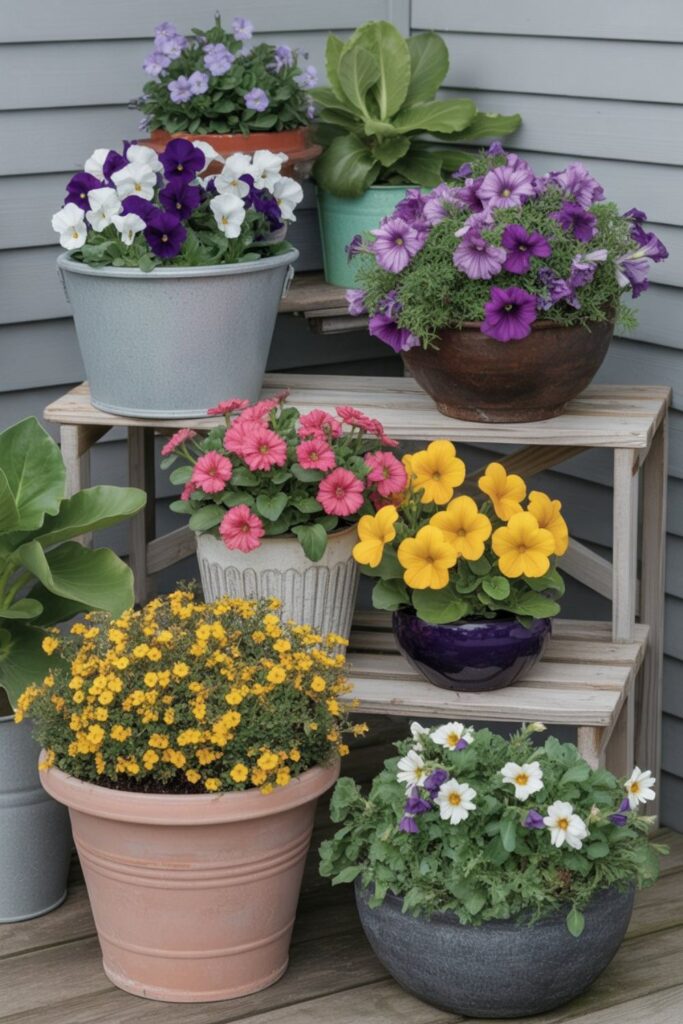
Strategic seasonal planning maintains fresh, relevant flower pot arrangements throughout years rather than single-season displays losing appeal as conditions change. Your rotation system ensures continuous beauty adapting to temperature fluctuations and daylight variations while preventing viewer fatigue from unchanging compositions.
Spring awakening celebrates renewal through pastel palettes and bulb-filled containers. Plant tulips, daffodils, hyacinths, and crocuses in fall for spring blooms, combining with cool-season annuals like pansies, violas, primroses, and stock. Pastel pinks, soft yellows, lavender, and white create optimistic displays signaling winter’s end. Include flowering branches like forsythia or cherry blossoms in large containers adding vertical interest and traditional spring symbolism. Add trailing ivy or variegated vinca providing foliage interest extending beyond brief bulb bloom periods. Cool-season plants tolerate late frosts and temperature fluctuations common in spring, lasting 8-12 weeks before hot weather necessitates replacement. The Chicago Botanic Garden maintains spectacular spring container displays demonstrating proper bulb-annual combinations achieving maximum impact during unpredictable spring conditions.
Summer abundance showcases heat-tolerant annuals delivering continuous color through intense weather from June through September. Petunias, zinnias, marigolds, geraniums, begonias, calibrachoa, and lantana thrive in summer heat while blooming prolifically. Incorporate tropical foliage like caladiums, elephant ears, or cannas adding bold textures complementing floral displays. Vibrant color combinations hot pinks with oranges, bold reds with yellows, or purple with chartreuse create energetic displays reflecting summer’s intensity. These high-maintenance containers require daily watering, regular deadheading, and bi-weekly fertilizing maintaining peak performance. Consider self-watering containers or drip irrigation systems for vacation periods or busy schedules struggling with daily attention demands.
Fall transitions introduce warm autumn tones through mums, ornamental kale, asters, celosia, and decorative grasses. Burgundy, rust, orange, gold, and bronze palettes complement changing foliage naturally while standing independently when trees remain green. Add mini pumpkins, gourds, or corn stalks for harvest themes without appearing cliché when combined with sophisticated plant selections. Incorporate cool-season annuals like pansies and snapdragons continuing blooming through light frosts. Fall plantings often last longer than summer displays since cooler temperatures slow growth and reduce water demands. Many fall container plants survive multiple frosts, providing color until hard freezes finally end their seasons.
Winter interest challenges gardeners in cold climates but remains achievable through evergreen cuttings, berries, and structural elements. Combine cut evergreen boughs pine, spruce, cedar with dogwood or winterberry stems in containers adding height and color. Plant cold-hardy pansies, ornamental kale, or cyclamen providing living interest in mild climates (zones 7+). Add decorative elements like birch branches, pinecones, ribbon, or seasonal ornaments without overwhelming natural beauty. In harsh climates, empty and store containers preventing freeze-thaw damage, then display evergreen arrangements in weatherproof vessels like metal urns or wooden crates. Winter displays require minimal maintenance since cold temperatures halt growth, making them perfect low-effort options during busy holiday seasons.
Essential Maintenance Tips for Thriving Container Flower Gardens
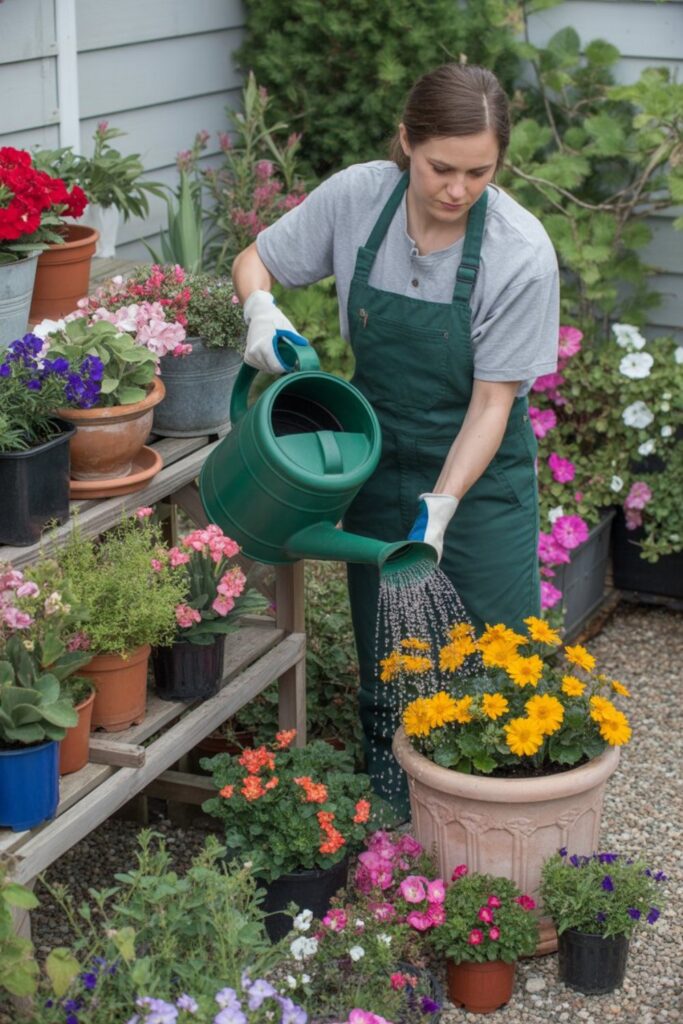
Ongoing care determines whether container flower gardens thrive or merely survive in pot-bound environments requiring more attention than ground plantings. Your maintenance routines directly impact bloom quantities, plant health, and overall display quality throughout growing seasons.
Watering frequency increases dramatically in containers compared to ground gardens since limited soil volumes dry rapidly. Check containers daily during hot weather, watering when the top inch feels dry to touch. Large pots may need daily watering while smaller containers often require twice-daily attention during heat waves. Install drip irrigation or self-watering container systems for vacation periods or schedules preventing daily monitoring. Water thoroughly until drainage appears from bottom holes, ensuring complete root zone hydration rather than superficial top-only watering leaving deeper roots dry. Morning irrigation reduces disease pressure by allowing foliage drying before nightfall when fungal problems develop. The Texas A&M AgriLife Extension warns that inconsistent watering alternating between bone-dry and waterlogged causes more plant problems than any other container gardening mistake.
Fertilizing supplements nutrients rapidly depleted from frequent watering leaching minerals through drainage holes. Apply liquid fertilizer every 7-14 days during active growth, following label dilution rates carefully. Slow-release granular fertilizers mixed into soil at planting reduce maintenance, feeding gradually over 3-6 months without additional applications. Container plants require substantially more nutrients than ground plants due to restricted root zones and aggressive watering schedules. Use balanced fertilizers with equal nitrogen-phosphorus-potassium ratios (like 10-10-10) for general purposes, or bloom-booster formulas with higher middle numbers (like 10-30-20) encouraging more flowers. Yellowing foliage, reduced flowering, and stunted growth signal nutrient deficiencies demanding immediate feeding regardless of schedules.
Deadheading removes spent flowers encouraging continued blooming rather than seed production. Pinch or cut faded flowers regularly daily for heavy bloomers like petunias and calibrachoa maintaining tidy appearances while redirecting plant energy toward new buds rather than seed development. This simple task extends bloom periods weeks or months depending on plant varieties. Simultaneously remove yellowing leaves and dead foliage preventing disease issues and maintaining attractive displays. Some varieties like impatiens and begonias “self-clean,” dropping spent blooms automatically without deadheading, while others like geraniums require manual removal maintaining performance. These grooming sessions take mere minutes per container but dramatically improve overall appearance and flowering longevity throughout seasons.
Pruning controls size and shape in containers where plants cannot spread freely like ground plantings. Trim aggressive growers like sweet potato vine preventing them from overwhelming companions or blocking pathways beneath containers. Pinch back petunias and calibrachoa mid-season if they become leggy, encouraging bushier regrowth and renewed flowering. Shape trailing plants directing growth over container edges rather than straight down. Cut back herbs like basil regularly encouraging bushy growth while harvesting for culinary use simultaneously. These strategic cuts maintain balanced compositions where no single plant dominates or disappears within mixed containers. Sharpen and sterilize pruning tools between plants preventing disease transmission throughout collections.
Budget-Friendly Strategies for Spectacular Container Landscapes
Beautiful potted flower garden landscapes don’t require substantial investments when embracing creative sourcing, DIY approaches, and strategic plant selections. Your budget constraints become opportunities for ingenuity rather than obstacles preventing impressive displays.
Propagating plants from cuttings dramatically reduces costs filling multiple containers. Root cuttings from existing plants like coleus, begonias, sweet potato vine, and impatiens in water or soil, creating dozens of new specimens from single parent plants. Share cuttings with neighbors and friends, exchanging plant varieties and expanding collections without purchases. Start propagating 6-8 weeks before planting season, allowing adequate rooting time. Many annual plants root easily without rooting hormones or special equipment simply place stem cuttings in water-filled jars on sunny windowsills, planting when roots reach 2-3 inches. This patient approach requires planning ahead but saves hundreds compared to purchasing established plants at nurseries. The Missouri Botanical Garden provides free propagation workshops teaching techniques creating new plants from existing specimens.
Repurposed containers offer unique character impossible with standard nursery pots while costing nothing. Transform galvanized buckets, vintage crates, retired wheelbarrows, ceramic colanders, or old boots into quirky planters after drilling drainage holes. Paint mismatched finds in coordinating colors creating cohesive collections from disparate pieces. Thrift stores, garage sales, flea markets, and your own basement provide treasure troves of potential containers requiring minimal investment beyond imagination. These one-of-a-kind vessels become conversation starters while demonstrating creativity and environmental consciousness. Ensure adequate drainage minimum three 1/2-inch holes per container preventing waterlogged soil regardless of container charm.
Seed starting saves 70-90% compared to purchasing transplants when starting annuals from seeds indoors 6-8 weeks before last frost dates. Zinnias, marigolds, cosmos, and nasturtiums germinate easily for beginners, while petunias and begonias require more patience and care. Initial investments in grow lights, seed-starting trays, and quality potting mix pay for themselves within single seasons when starting substantial quantities. Seed packets contain 25-100+ seeds costing $2-4, while equivalent transplants cost $3-6 each the savings multiply quickly when filling multiple containers. This approach requires advance planning and indoor space but delivers maximum plant quantities within minimal budgets while offering vastly broader variety selections than local nurseries stock.
End-of-season clearance shopping fills containers at 50-75% discounts when timing purchases strategically. Buy perennials marked down in late fall, overwintering in garages or protected areas, then dividing in spring for multiple containers. Purchase containers during end-of-season sales storing for following spring installations. Nurseries discount imperfect plants or overgrown specimens perfect for dividing and repotting. This opportunistic approach requires storage space and patience but creates impressive container landscapes at drastically reduced costs compared to spring premium pricing. Mark calendars for typical clearance periods late June for spring inventory, late August for summer stock, late October for fall items planning shopping trips maximizing savings.
Read More About: 27+ Stone In Garden Ideas for Stylish Outdoors
FAQs
How many flowers should I plant in one container?
Plant quantities depend on container size and mature plant dimensions. 10-12 inch pots accommodate 3-5 plants using thriller-filler-spiller formulas, while 18-20 inch containers handle 7-10 plants creating full, lush appearances immediately. Follow spacing recommendations on plant tags as guidelines but remember containers intentionally crowd plants more densely than garden spacing for instant fullness, though extreme overcrowding prevents adequate root development and causes competition issues.
What type of soil works best for container flower gardens?
Use commercial potting mix specifically formulated for containers rather than garden soil which compacts excessively restricting drainage and root growth regardless of quality in ground applications. Quality mixes contain peat moss or coconut coir for moisture retention, perlite or vermiculite for aeration, and often slow-release fertilizer for initial nutrition, creating ideal growing environments that regular topsoil cannot match in confined container spaces.
How often should I replace flowers in container gardens?
Cool-season flowers like pansies last 8-12 weeks until hot weather necessitates replacement with heat-tolerant varieties, summer annuals perform 12-16 weeks before declining in late summer when fall replacements should be installed, creating three-season rotation maintaining optimal appearances rather than forcing single plantings beyond their heat or cold tolerance limits.
Can I leave containers outside during winter?
Frost-proof containers including fiberglass, resin, certain ceramics, and concrete survive freezing when planted with cold-hardy evergreens or emptied completely, while terracotta and thin ceramic pots crack during freeze-thaw cycles requiring storage in protected areas like garages or sheds preventing expensive losses. Elevate containers on pot feet preventing ice accumulation underneath, and move tender tropical plants indoors before first frost dates protecting investments in premium specimens.
How do I prevent containers from looking sparse or unfinished?
Plant containers fuller than ground gardens, positioning plants closer together for immediate impact rather than waiting months for sparse plantings filling slowly, and combine plants with varying growth rates ensuring some provide instant fullness while others develop gradually maintaining interest as seasons progress. Choose trailing spillers cascading over edges quickly, add already-blooming transplants rather than starting from seeds, and don’t fear slight overcrowding which creates more impressive displays than conservative spacing.
Conclusion
Mastering potted flower garden landscapes transforms ordinary outdoor spaces into dynamic, colorful environments rivaling professionally designed gardens through strategic design principles, proper plant selection, and consistent maintenance commitment. Your success depends on understanding color theory creating cohesive palettes, applying thriller-filler-spiller formulas ensuring balanced compositions, matching plants to available light conditions, and implementing seasonal rotations maintaining year-round relevance and interest. Whether designing grand patio displays, intimate balcony gardens, or welcoming entrance arrangements, container flower gardens offer unmatched flexibility accommodating changing preferences, rental restrictions, and evolving skills while delivering immediate gratification impossible with permanent in-ground installations.
The key lies in treating containers as landscape architecture deserving thoughtful planning rather than afterthought accessories randomly positioned without consideration for scale, proportion, or visual relationships. Your outdoor spaces await transformation through strategic container garden design that reflects personality while enhancing property value and daily enjoyment. Begin by assessing current conditions including sun exposure, space limitations, and existing architectural styles, then develop cohesive plans addressing these factors through appropriate container selections and complementary plant combinations. Start with manageable numbers perfecting techniques before expanding collections, and commit to maintenance routines ensuring plants thrive rather than merely survive in containerized environments.