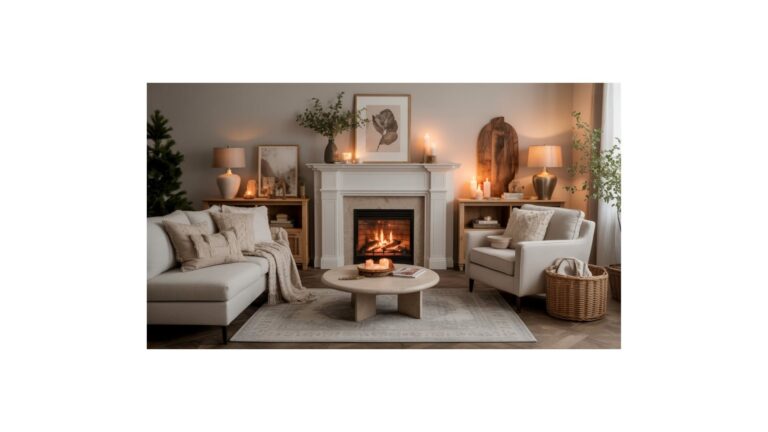
Small Living Room Ideas: Smart, Stylish Designs to Maximize Space

Living in a small space doesn’t mean living with less style. In fact, some of the most stunning living rooms in America are compact ones. The secret? Intentional design. Every choice matters from where you place your sofa to the color on your walls.
This guide walks you through everything you need to know about small living room design ideas that actually work. Whether you’re in a studio apartment in Chicago or a cozy condo in Miami, there’s a smarter way to live in your space.
Small Living Room Ideas & Designs
Small space living room inspiration is everywhere once you start looking. Think of a small living room like a well-written short story every element has to earn its place. Nothing is accidental. Nothing is wasted. The best modern small living room ideas don’t rely on square footage. They rely on intention, creativity, and a clear understanding of how you actually live.
The three principles that drive every great compact living room design are scale, proportion, and function. Scale means choosing furniture that fits the room not furniture that overwhelms it. Proportion means making sure each piece relates well to the others. Function means your room works for your real life, not just for photos. When all three align, even the tiniest room feels effortless.
| Design Principle | What It Means | Why It Matters |
| Scale | Furniture size matches room size | Prevents overcrowding |
| Proportion | Pieces relate well to each other | Creates visual harmony |
| Function | Room works for real daily use | Reduces frustration |
| Intentionality | Every item has a purpose | Keeps space feeling open |
Decorating a Small Living Room
Decorating a small living room starts with one honest conversation: what do you actually use this room for? Most people are trying to squeeze a TV lounge, reading nook, work corner, and guest space into one room. That’s not a problem, it’s a design brief. Once you know what the room needs to do, you can make smarter choices about furniture, layout, and decor.
The biggest mistake people make is pushing all the furniture against the walls. It feels logical. More floor space, right? Actually, it makes rooms feel hollow and disconnected. Furniture arrangement that floats pieces away from the walls even just a few inches creates a cozier, more intentional feel. It improves traffic flow and makes the room feel designed rather than assembled.
Implement A Cohesive Colour Palette
Color is one of the most powerful tools in small living room decor ideas. A neutral color palette doesn’t mean boring, it means cohesive. When your walls, furniture, and accents share the same color family, the eye travels smoothly around the room.
That smooth visual journey makes spaces feel larger. Sherwin-Williams Alabaster and Benjamin Moore White Dove are two of the most popular choices among US interior designers for small spaces right now.
The 60-30-10 rule is a simple framework that works every time. Sixty percent of the room should be your dominant color, usually walls and large furniture. Thirty percent goes to secondary colors rugs, curtains, accent chairs. Ten percent is your pop throw pillows, art, small decor.
A light color scheme following this rule creates visual balance without feeling bland. And if you’re feeling bold? A dark accent wall in navy or forest green can actually add depth and make a small room feel intentional and luxurious.
Read more About : Stylish Pergola Ideas on a Budget for a Beautiful Outdoor Living Space
Create A Speakeasy
Your cozy small living room ideas don’t have to mean beige and safe. The speakeasy concept is about creating a room with a vibe moody, layered, intimate. Think low amber lighting, velvet cushions, a deep jewel-tone sofa, and a rattan pendant light casting warm shadows. Its cozy home aesthetics are taken seriously.
This approach works brilliantly in urban US apartments where coziness is genuinely a feature. A dark, intimate living room in a Manhattan studio feels sophisticated, not cramped. Layered textures like a chunky knit throw over a boucle armchair, paired with a wool rug and silk cushions, add richness without adding clutter. It’s sensory, not just visual.
Decorate With Memories
Minimalist decor doesn’t mean cold or impersonal. It means curated. The most beautiful small living rooms feel lived-in without feeling cluttered and the secret is decorating with things that actually mean something to you. A gallery wall of uniform black frames filled with travel photos tells a story. A shelf styled with a vintage souvenir, a small plant, and one piece of art feels intentional rather than random.
Shelf styling ideas for small spaces work best when you follow the rule of three group objects in odd numbers, vary heights, and leave breathing room between groupings. Floating shelves are your best friend here. They add storage and display space without eating into your floor plan. Edit ruthlessly. If something doesn’t add beauty or meaning, it doesn’t get shelf space.
Use Multi-Functional Furniture
This is arguably the single most important category of small space solutions for US apartment dwellers. Multi-functional furniture pieces that serve two or more purposes is what separates a cramped room from a clever one.
A storage ottoman does triple duty as a coffee table, extra seating, and hidden storage. A lift-top coffee table becomes a work surface. A compact sofa with a pull-out bed handles overnight guests without a dedicated guest room.
Space-saving furniture doesn’t have to look utilitarian either. West Elm, Article, and IKEA all carry beautifully designed pieces that work hard without screaming “small apartment.” Dual-purpose furniture is an investment spent more on one great piece than on two cheap single-use items. Your future self will thank you every single day.
| Furniture Type | Primary Function | Secondary Function | Where to Buy |
| Storage ottoman | Seating / footrest | Hidden storage | Wayfair, Target |
| Lift-top coffee table | Coffee table | Work surface + storage | IKEA, Amazon |
| Sleeper sofa | Seating | Guest bed | Article, West Elm |
| Nesting tables | Side tables | Extra surface when needed | CB2, IKEA |
| Console-to-dining table | Entryway console | Dining table | Pottery Barn |
Find Window Seating
Window seating is one of those small space solutions that feels luxurious but is actually deeply practical. A built-in window bench gives you seating, storage underneath, and a cozy nook all without using any additional floor space. For renters, a DIY version using two IKEA Kallax units topped with a custom cushion achieves the same result for a few hundred dollars.
Maximize floor space by thinking of your window ledge as untapped real estate. Even a simple cushioned bench along a bay window frees up a sofa’s worth of seating while adding architectural charm. In US craftsman homes and brownstones, window seats are practically a rite of passage. In modern condos, they’re a design flex.
Embrace Curves
Curves are having a serious moment in modern interior style and for good reason. Sharp angles make small rooms feel boxy and rigid. Curves soften that tension. A rounded sofa, an arched mirror, a semicircular rug, or a curved coffee table all improve traffic flow naturally, because your eye and your body moves around them more easily.
The boucle curved sofa is arguably the most pinned piece of furniture on US Pinterest boards right now. And it works in small rooms because its rounded silhouette doesn’t create hard corners that chop up visual space. Scale and proportion matter here choose a curved piece that fits your room’s dimensions, not one that dominates them.
Add Stylish Demarcations
Zoning a small space is one of the most underrated small living room design ideas out there. In an open-plan living situation or a studio where the living room does five jobs, defining zones actually makes the space feel larger, not smaller. Why? Because it gives the room structure. A room with clear zones feels designed. A room without them feels chaotic.
Area rugs are the simplest zoning tool. Place one under your sofa and coffee table to define the living zone. Use a different rug under a desk chair to define a work zone. Bookshelf dividers, curtain panels, and different lighting per zone all reinforce the demarcation without requiring any construction. Functional layout thinking like this transforms how a room feels to live in daily.
Small Living Room Ideas for Apartments
Small apartment living room ideas come with a specific set of constraints you probably can’t paint, you definitely can’t knock down walls, and you need furniture that moves with you when the lease ends. But here’s the thing: renters in New York, San Francisco, Chicago, and Austin have been solving this puzzle for decades. There are more budget small living room ideas and renter-friendly solutions available today than ever before.
Removable peel-and-stick wallpaper has completely changed the game for renters. An accent wall that would have been impossible five years ago now takes an afternoon and a credit card. Freestanding shelving systems like IKEA’s BILLY or KALLAX provide wall-mounted storage without a single drill hole. And investing in furniture you love means your style travels with you, apartment to apartment.
| Renter Challenge | Smart Solution | Approximate Cost |
| No built-in storage | IKEA modular shelving | $150–$400 |
| Bland white walls | Removable peel-and-stick wallpaper | $50–$150 |
| No room divider | Curtain panel + ceiling-mount rod | $80–$200 |
| Dark, cramped feel | Strategic mirror placement | $30–$300 |
| Lack of natural light | Full-spectrum floor lamps | $60–$250 |
Indoor plants decor is another renter-friendly power move. A tall fiddle leaf fig in the corner of a living room adds vertical interest, life, and color without touching a single wall. Natural light optimization through sheer curtains instead of heavy drapes keeps small apartment living rooms feeling bright and open all day long.
Small Living Room Layout Ideas
Small living room layout ideas matter more than almost any other design decision you’ll make. Furniture placement determines how a room feels before you’ve added a single decorative accent. A well-planned functional layout makes even a 200-square-foot living room feel workable. A poorly planned one makes a 400-square-foot room feel impossible.
Room layout planning should always start with a floor plan, even a rough sketch on paper. Measure your room, note where the windows and doors are, and then figure out your furniture footprints before buying anything.
The “tape test” is a designer trick worth stealing: tape out the footprint of your intended furniture on the floor using painter’s tape. Live with it for a day. Walk around it. Sit in it. You’ll know immediately whether it works.
How to arrange furniture in a small living room comes down to four proven layout styles. The L-shape layout works brilliantly for corner sofas in square rooms. The floating island layout groups furniture centrally, away from all walls, and works in almost any room shape.
The single-wall layout lines key pieces along one wall ideal for very narrow rooms or studios. The angled layout places furniture diagonally, which adds dynamism and makes rooms feel less boxy.
Every layout needs a rug the right size. A rug that’s too small floats awkwardly in the center of the room and makes everything feel disconnected. At minimum, the front legs of your sofa and chairs should sit on the rug. Ideally, all four legs do. Maximize floor space by choosing a rug that defines the zone without overwhelming it.
Painting a Small Living Room
Everyone tells you to paint small rooms white. And while that advice isn’t wrong, it’s incomplete. How to make a small living room look bigger with paint isn’t just about going light it’s about consistency, finish, and strategic use of color. A room painted in a single cohesive color from floor to ceiling walls, trim, even ceiling feels dramatically more spacious than a room with contrasting trim and a stark white ceiling.
Paint finish matters more than most people realize. A matte finish absorbs light and creates a soft, sophisticated look. An eggshell finish reflects just enough light to open up the space without the clinical glare of semi-gloss. For small living room decor ideas in 2025, eggshell is the designer’s default. It’s durable, washable, and beautiful in natural light.
Top Paint Picks for Small US Living Rooms:
| Color Family | Paint Name | Brand | Best For |
| Soft white | Alabaster | Sherwin-Williams | Bright, airy rooms |
| Warm white | White Dove | Benjamin Moore | North-facing rooms |
| Warm neutral | Accessible Beige | Sherwin-Williams | Cozy, inviting feel |
| Greige | Pale Oak | Benjamin Moore | Modern + warm |
| Bold dark | Tricorn Black | Sherwin-Williams | Accent walls |
| Moody blue | Hale Navy | Benjamin Moore | Speakeasy vibes |
Dark colors can work in small rooms. The key is commitment. A half-hearted dark accent wall looks unfinished. But a room fully painted in Hale Navy with warm brass fixtures and linen furniture? That’s stylish small living room ideas executed with confidence.
Read More About : Best Backyard Gazebo Designs for a Beautiful and Relaxing Outdoor Space
The Challenge: Styling a Small Condo Living Room That’s Trying to Do Too Much
Meet a scenario that will sound very familiar. A 650-square-foot condo in Chicago. The living room, maybe 200 square feet, needs to function as a TV lounge, home office, reading corner, and occasional guest space. The furniture is a mix of hand-me-downs and fast-furniture impulse buys. Nothing matches. The layout kills traffic flow. The room feels like it’s shouting three different things at once.
This is the reality of small condo living room ideas for millions of Americans. The instinct is to buy more stuff, more storage bins, another bookcase, and a new rug. But the real solution is the opposite. Edit first. Then redesign. Clutter-free living isn’t a personality trait, it’s a design strategy. When you remove everything that doesn’t serve the room’s primary function, you suddenly see the space you actually have to work with.
Simple small living room ideas for this scenario start with identifying the room’s anchor, usually the sofa. Everything else is arranged in relation to that one piece. The TV, the coffee table, the accent chair, the rug all of them find their position relative to the sofa. Once that hierarchy is established, the room stops shouting and starts making sense.
Why Layout Matters in a Small Space and How We Mapped This Out During Our Call
A virtual interior design consultation for a small living room typically starts with questions, not furniture recommendations. How do you use the room? At what time of day do you spend the most time here? What’s genuinely not working? What do you love about space already? These questions reveal more about what a room needs than any floor plan ever could.
For the Chicago condo scenario, the answers were clear. The client spent evenings on the sofa. She worked from home three days a week. She hosted friends for dinner twice a month. She needed the room to feel like a lounge, not an office.
That clarity drove every layout decision that followed. How to maximize a small living room starts with understanding how the room is actually lived in, not how you imagine it should be used.
The layout solution chosen was a modified floating island. The sofa moved away from the wall by 18 inches, a small shift that transformed the entire feel of the room. A slim console table placed behind the sofa solved the work-from-home need without dedicating a permanent desk zone. Space optimization tips like this small physical changes with dramatic perceptual impact are what virtual design consultations specialize in.
New Furniture, New Flow Our Top Product Picks from the Consult
Every piece recommended in a small space consultation has to earn its spot. Space-saving furniture that looks beautiful and works hard is the non-negotiable standard. For the Chicago condo, six pieces made the cut. Each one solved a specific problem while adding to the overall aesthetic.
A small-scale modular seating sectional from Article replaced the oversized hand-me-down sofa. It’s lower to the ground which makes the ceiling feel higher and its L-shape configuration defines the living zone without dominating it. A lift-top coffee table from Wayfair solved the work-from-home problem neatly.
The nesting tables beside the accent chair replaced two bulky side tables. A tall, slim BILLY bookcase handled vertical space utilization for books and decor. An arched floor lamp for small rooms option from Amazon freed up every surface in the room. And a large area rug from Rugs USA tied it all together.
| Product | Problem It Solved | Retailer | Price Range |
|---|---|---|---|
| Small-scale modular sectional | Oversized sofa, poor layout | Article | $900–$1,800 |
| Lift-top coffee table | No work surface | Wayfair | $150–$400 |
| Nesting tables | Bulky side tables | IKEA | $60–$150 |
| Tall slim bookcase | No storage or display | IKEA BILLY | $80–$200 |
| Arched floor lamp | Cluttered surfaces | Amazon | $70–$200 |
| Large area rug | No zone definition | Rugs USA | $200–$600 |
Ambient lighting from the arched lamp completely changed the room’s evening feel. Layered lighting on the floor lamp, two small table lamps on the bookcase, and a dimmer on the overhead fixture replaced the harsh single ceiling light that had made the room feel like a waiting room at night.
The Final Look: Before-and-After of This Small Condo Living Room
Before: Oversized sofa pushed against the wall. A glass coffee table that was always in the way. Mismatched side tables. One harsh overhead light. No rug. A desk jammed into the corner that made the whole room feel like an office. Total investment in the original setup: approximately $3,200 in pieces that didn’t work together.
After: A cohesive, light-filled living room that felt twice the size. The sofa floated in the space. The rug anchored the zone. The arched lamp added warmth. The bookcase gave the room purpose and personality.
Wall art ideas three uniform prints in identical frames created a gallery wall that gave the blank wall beside the window a reason to exist. Total investment in the redesign: $2,100. Net result: a room the client actually wanted to spend time in.
“I walked in after everything was set up and genuinely didn’t recognize my own apartment. It felt like a completely different space but it’s the same square footage. I just can’t believe what a difference the layout made.”
Key changes that made the biggest visual impact:
Floating the sofa away from the wall was the single most transformative move. The rug grounded the zone and made the furniture feel intentional. Layered lighting replaced the single overhead fixture and changed the entire mood of the room after 6pm. Decluttering removing eight items that didn’t serve the room opened up more visual space than any furniture purchase could have.
Ready to Design a Living Room That Works for Your Life?
Here’s the truth about small living room ideas on a budget and beyond: you don’t need more square footage. You need a better plan. The living rooms that feel most spacious aren’t necessarily the largest ones, they’re the most intentional ones. Every choice was made on purpose. Nothing is accidental. That level of intentionality is achievable at any budget, in any size space.
How to decorate a small living room doesn’t require a design degree or a big renovation budget. It requires clarity about how you live, willingness to edit what isn’t working, and knowledge of the principles that make small spaces feel great. This guide has given you all three. The next step is yours to take.
Three steps to get started today:
Step 1 Book: Schedule a 60-minute virtual design consultation. Share your room photos, measurements, and wishlist.
Step 2 Consult: Work through your layout, palette, and furniture plan with a professional designer who specializes in small spaces.
Step 3 Transform: Receive your personalized mood board, floor plan, and shopping list. Shop at your own pace. Implement the plan.
Why Our Virtual Interior Design Service Works for Spaces Like This
Small spaces benefit more from professional design guidance than large ones. In a big room, a bad furniture choice is an inconvenience. In a small room, it’s a disaster. It kills traffic flow, dominates the visual field, and makes the whole space feel wrong. Getting it right the first time matters more when you’re working with limited square footage.
Virtual interior design is faster, more affordable, and more accessible than traditional in-person design services. There’s no geographic limitation; clients across all 50 US states have access to the same quality of design thinking.
The process is built around your photos, your measurements, and your lifestyle, not a one-size-fits-all template. Smart storage ideas, hidden storage solutions, dual-purpose furniture recommendations, and a complete neutral color palette all of it is tailored to your specific room, your specific life.
Decorating Your Bedroom? Our Ultimate Tips
The same principles that make simple small living room ideas work also apply to small bedrooms and in some ways, they matter even more. The bedroom is where you start and end every day. Getting the layout and feel right changes how you sleep, how you feel in the morning, and how much you enjoy your home overall.
Under-bed storage is the bedroom equivalent of a storage ottoman; it’s square footage you’re already paying for. Use it. Mirrors above the dresser serve the same light-enhancing function they do in the living room. Layered lighting with a ceiling fixture, two bedside lamps, and a reading light gives you full control over the room’s mood. Choose your headboard first; it’s the anchor piece that everything else relates to. And don’t underestimate bedding: texture and color set the entire emotional tone of a bedroom the moment you walk in.
FAQs
How to Decorate a Small Living Room?
Start with your layout always. Float your furniture away from the walls, anchor everything with a well-sized rug, and define a clear focal point (TV, fireplace, or window). Then choose a neutral color palette and stick to it.
Invest in multi-functional furniture storage ottomans, lift-top coffee tables, modular seating. Use floating shelves for storage and display. Layer your lighting. Add personality through curated decor things that mean something to you. Edit relentlessly. Every item in a small room needs to earn its place.
How to make a small living room look bigger?
Use mirrors to reflect light and create depth. Choose furniture with exposed legs. Go vertical with shelving. Stick to a cohesive color palette. Swap heavy curtains for sheer ones that let light through. Float your furniture. These aren’t tricks, they’re time-tested design principles that work every time.
What colors make a small living room look bigger?
Soft whites, warm neutrals, and light greiges consistently open up small spaces. Sherwin-Williams Alabaster, Benjamin Moore White Dove, and Benjamin Moore Pale Oak are three of the most reliable choices.
That said, don’t rule out dark colors. A fully committed dark room can feel luxurious and expansive if done right.
Can you have a sectional in a small living room?
Yes but choose carefully. Look for small-scale sectionals or L-shaped configurations with a low profile and exposed legs. Measure your room precisely before buying. The right sectional in the right room is a game-changer. The wrong one makes everything worse.
What is the best layout for a small living room?
The floating island layout works in almost every room shape furniture grouped centrally, away from all walls. For narrow rooms, the single-wall layout is most efficient.
For square rooms, an L-shape sectional configuration is often ideal. The best layout is always the one that serves how you actually use the room.
How do I arrange furniture in a small living room?
Start with the sofa; it’s your anchor. Position it relative to your focal point (TV, fireplace, or window). Float it away from the walls. Place your coffee table with at least 18 inches of clearance between it and the sofa.
Add your accent chair opposite or adjacent. Lay your rug so the front legs of all seating pieces sit on it. Build outward from there.
Conclusion
Small living room ideas are really about one thing: working smarter with what you have. Square footage is fixed. But how that square footage feels is entirely within your control. Layout, color, lighting, furniture scale, storage, and intentional decor these are the levers you pull to transform a cramped, frustrating room into a space you genuinely love.
The ideas in this guide from multi-functional furniture and vertical space utilization to layered lighting and zoning a small space aren’t abstract design theories. They’re practical, proven strategies used by real designers in real US homes every single day. Pick one idea. Implement it this weekend. Then pick another. Small changes compound into transformations.