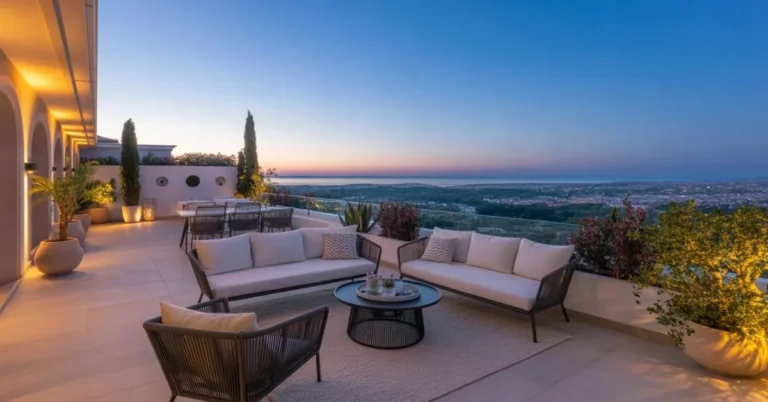
Timeless Patio Design Ideas for Enduring Outdoor Living

You scroll through patio designs online and feel overwhelmed by conflicting trends. Last year’s Pinterest darling those bright geometric tiles already looks dated. Your neighbor’s ultra-modern glass railings felt cutting-edge in 2020 but now scream “trying too hard.” Meanwhile, that Italian villa you visited ten years ago still takes your breath away with its simple stone terrace and weathered urns.
Timeless patio design doesn’t chase trends or demand constant updates. It embraces principles that have worked for centuries, creating outdoor spaces that look equally appropriate today and twenty years from now. You invest once in quality construction and natural materials, then enjoy decades of beauty without the nagging feeling that your space looks “so 2023.”
This guide reveals the design principles that separate fleeting fads from enduring outdoor design. You’ll discover which lasting patio materials deliver both beauty and durability, how neutral colors create sophisticated backdrops, and why classic patio style choices protect your investment value while elevating daily living. Whether you’re starting from scratch or renovating an existing space, these strategies ensure your elegant outdoor space ages gracefully rather than embarrassingly.
Why Timeless Design Matters More Than Trendy Styles
Timeless patio design protects your financial investment while eliminating renovation fatigue. Trendy choices require updates every 5-7 years as styles shift, costing thousands in materials and labor. Classic patio style approaches maintain relevance across decades, meaning your 2025 installation still impresses guests in 2045 without major overhauls.
The National Association of Realtors reports that outdoor living spaces return 50-80% of installation costs at resale, but only when executed in enduring outdoor design styles. Buyers discount properties with dated or overly personalized patios, seeing them as immediate renovation projects rather than move-in-ready amenities. Sophisticated outdoor living choices that emphasize quality construction and natural materials appeal across demographic groups and design preferences, maximizing your resale appeal regardless of when you sell.
Read More About: 40+ Backyard Patio Inspiration Ideas For Relaxing Outdoor Spaces
Foundation Principles of Timeless Patio Design
Timeless patio design rests on five core principles that have guided successful outdoor spaces for centuries. First, functional layout prioritizes how you actually use the space over how it photographs. Adequate circulation paths, proper furniture clearances, and logical activity zones create usability that never goes obsolete.
Second, natural materials age gracefully while synthetic products deteriorate visibly. Stone, wood, and clay improve with weathering, developing patina that adds character. Plastic composites, however, fade and crack within a decade. Third, neutral colors provide flexible backdrops that accommodate changing tastes in accessories and furniture without clashing. According to design historians at Architectural Digest, classic patio style spaces maintain 80% neutral tones with 20% accent colors that can rotate seasonally.
Fourth, quality construction matters more than square footage. Professional installation of premium materials outperforms DIY work with cheap supplies. Fifth, simplicity beats complexity. Elegant outdoor space designs incorporate fewer elements executed beautifully rather than numerous features competing for attention in your ageless patio features plan.
Selecting Lasting Patio Materials That Age Beautifully
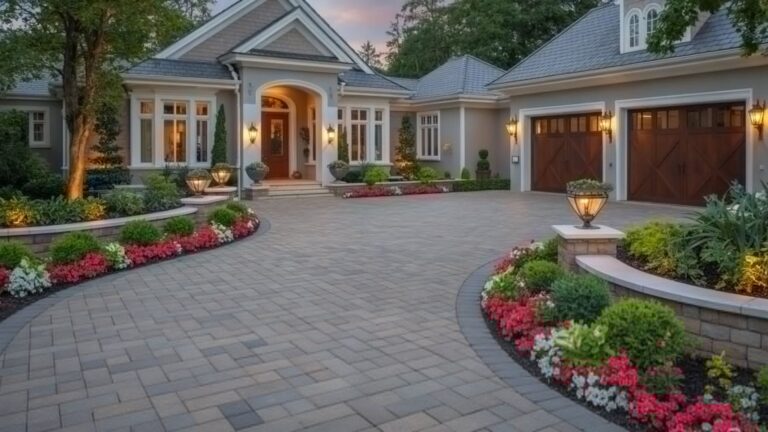
Natural materials form the foundation of timeless patio design. Stone pavers like bluestone, limestone, and travertine have served as outdoor flooring for millennia because they withstand weather while developing attractive patinas. Irregular flagstone creates organic appeal, while cut pavers offer geometric precision; both approaches remain relevant across design eras in classic patio style applications.
Brick represents another lasting patio material that transcends trends. Traditional clay brick in warm red or brown tones complements virtually any architectural style. Herringbone or basket-weave patterns add visual interest without dating your design. According to the Brick Industry Association, properly installed brick patios last 100+ years with minimal maintenance requirements.
Wood decking works beautifully when you choose species appropriate for outdoor exposure. Ipe, teak, and cedar naturally resist rot and insects while aging to distinguished silver-gray tones. Avoid exotic hardwoods with vivid unnatural colors or heavily treated lumber that looks artificial. For enduring outdoor design, let wood weather naturally rather than fighting its tendency to gray through constant staining in your sophisticated outdoor living space.
Material Longevity Comparison
| Material | Expected Lifespan | Maintenance Level | Timeless Appeal |
| Natural Stone | 50-100+ years | Low | Excellent |
| Clay Brick | 75-100+ years | Very Low | Excellent |
| Ipe/Teak Decking | 40-75 years | Low-Moderate | Excellent |
| Concrete Pavers | 25-50 years | Low | Good |
| Stamped Concrete | 15-25 years | Moderate | Poor |
| Composite Decking | 20-30 years | Low | Fair |
Neutral Colors That Create Sophisticated Foundations
Neutral colors dominate timeless patio design palettes because they complement rather than compete. Grays, tans, warm browns, and creamy whites create backdrops that showcase plants, furniture, and architectural elements without overwhelming sightlines. These shades work equally well with traditional and contemporary homes, ensuring your elegant outdoor space harmonizes with existing structures.
Earth tones drawn from natural materials feel inherently correct in outdoor settings. Sandstone beige, slate gray, and terracotta brown echo landscapes and architecture throughout history. Color psychologists note that these hues create psychological comfort because humans evolved in environments dominated by similar tones, making classic patio style choices feel instinctively “right.”
Avoid trendy color schemes that announce their era too clearly. The turquoise-and-coral combinations popular in 2015 now look painfully dated. Bright accent walls in jewel tones fade quickly and clash with changing garden color schemes. When you do incorporate color in your timeless patio design, add it through easily changeable elements like cushions, planters, and accessories rather than permanent installations. Reserve 80% of your palette for neutral colors, leaving 20% for personality touches that can evolve with your tastes.
Architectural Elements That Add Lasting Character
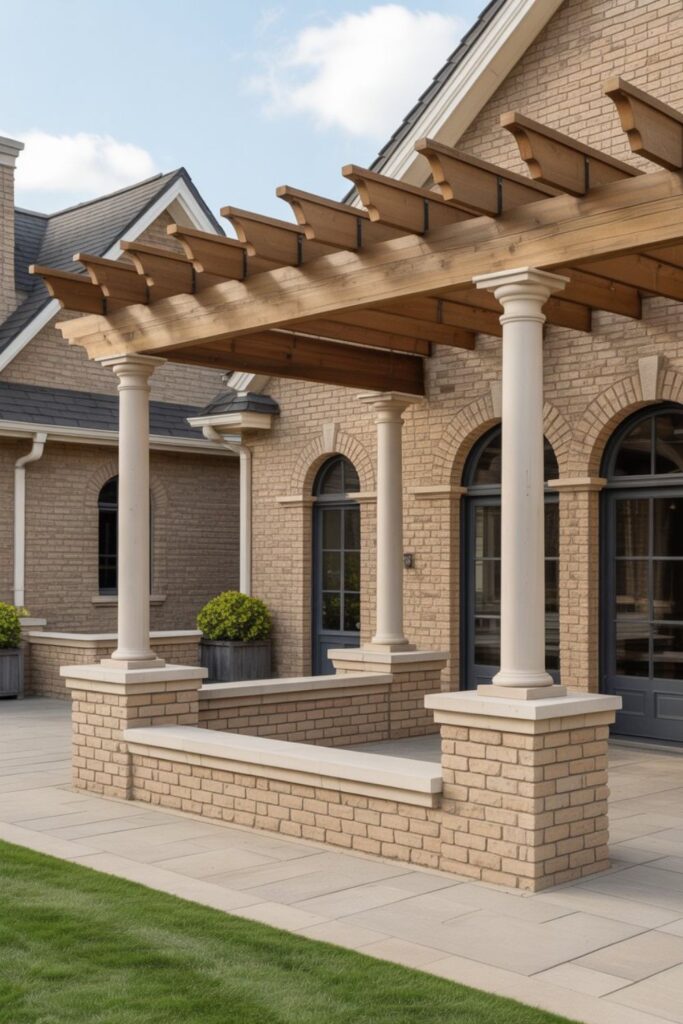
Architectural elements provide structure and interest that transcends temporary trends. Pergolas crafted from substantial timber beams create outdoor rooms while maintaining open, airy feelings. Choose classic post-and-beam construction with joinery details visible rather than hidden craftsmanship always reads as quality in enduring outdoor design approaches.
Columns and pillars borrowed from classical architecture add gravitas to sophisticated outdoor living spaces. Even simple square posts topped with chamfered caps or decorative finials elevate basic covered patios into distinguished outdoor rooms. According to landscape architects at the American Society of Landscape Architects, vertical architectural elements provide scale reference that helps large patios feel proportionate rather than overwhelming.
Built-in seating constructed from the same materials as your patio flooring creates cohesive timeless patio design. Low stone walls topped with cushions provide flexible seating that never looks dated. Planters built from brick or stone matching other hardscape elements unify the design while accommodating changing plant selections. These permanent features reduce furniture requirements while adding sculptural interest to your elegant outdoor space year-round, even during winter months when cushions are stored.
Functional Layout Principles for Enduring Use
Functional layout determines how well your patio serves daily life over decades. Position primary seating to capture pleasant views while avoiding harsh afternoon sun. Create circulation paths at least 36 inches wide so people move comfortably without navigating obstacle courses. Locate dining areas near kitchen doors to simplify meal service in your timeless patio design.
Define distinct activity zones through subtle level changes or material transitions rather than walls that fragment space. A cooking zone with built-in grill, a dining area with ample table space, and a lounging section with comfortable seating can coexist on one patio when properly organized. According to research from Cornell University, successful classic patio style layouts dedicate 40-50% of space to primary activities, 30-40% to secondary functions, and 10-20% to circulation.
Consider sun patterns throughout the day and seasons. That charming west-facing patio becomes unusable during summer afternoons without shade structures. Morning sun enthusiasts need east orientations. Enduring outdoor design accounts for solar geometry, prevailing winds, and privacy concerns from the outset rather than retrofitting solutions later. Test your planned layout with temporary furniture placements before committing to permanent installations in your sophisticated outdoor living project.
Quality Construction Methods That Ensure Longevity
Quality construction separates patios that last generations from those requiring replacement within a decade. Proper base preparation matters more than surface materials. A 6-8 inch gravel base topped with 1-2 inches of sand provides stability that prevents settling and heaving. Skimping on base work to save a few hundred dollars results in thousands in repair costs later in your timeless patio design.
Hire experienced contractors who understand lasting patio materials and proper installation techniques. Poorly laid stone pavers develop lippage (uneven heights) that creates trip hazards and looks unprofessional. Inadequate jointing allows sand to wash out and weeds to emerge. According to the Interlocking Concrete Pavement Institute, professional installation costs 30-50% more than DIY approaches but delivers 200-300% longer lifespan through superior quality construction methods.
Invest in proper drainage from the beginning. Patios need slight slopes (1-2% grade) directing water away from structures. Without adequate drainage, water pools cause deterioration of natural materials and ice hazards during freezing weather. Install French drains or channel drains in low spots where water naturally collects. These invisible infrastructure elements protect your investment value while preventing the cosmetic damage that ages patios prematurely in your elegant outdoor space.
Furniture Choices That Complement Timeless Designs
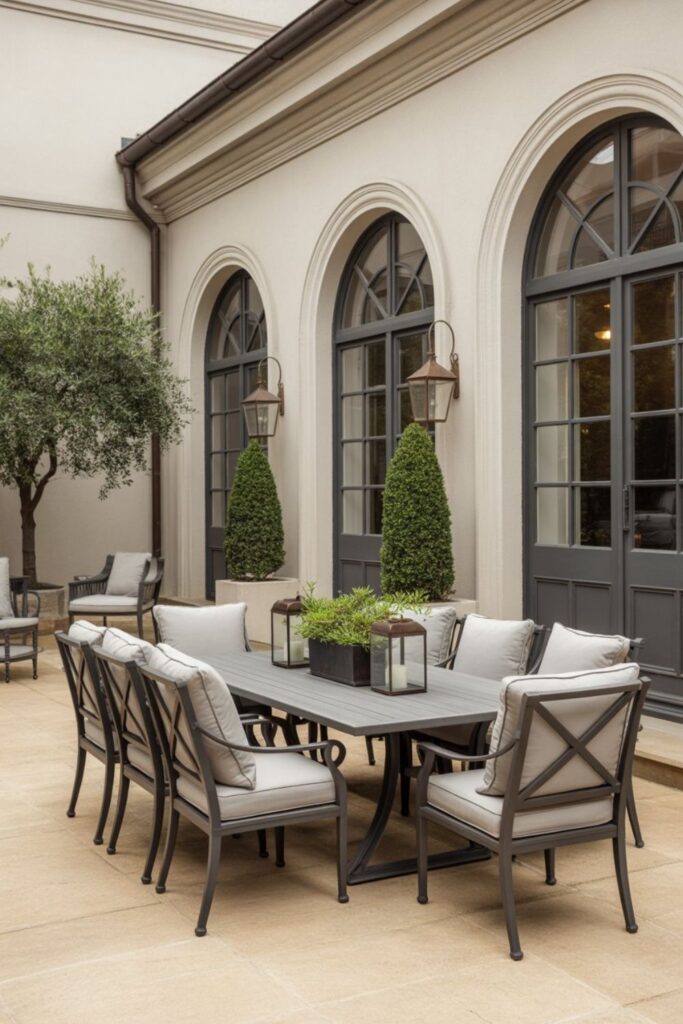
Furniture can either enhance or undermine timeless patio design. Classic materials like wrought iron, teak, and wicker maintain relevance across decades. Avoid plastic resin chairs or ultra-modern designs with exaggerated forms that announce their trend too loudly. Simple silhouettes with clean lines work in any era, while overly ornate or minimalist extremes date themselves quickly.
Teak furniture weathers to distinguish gray while remaining structurally sound for 30-40 years outdoors. Cast aluminum mimics wrought iron’s heft without rust concerns. Quality wicker made from weather-resistant resin offers traditional aesthetics with modern durability. According to furniture specialists at Design Within Reach, classic patio style seating features neutral upholstery that can be refreshed with new cushions as tastes change rather than built-in colors that can’t adapt.
Choose furniture proportionate to your space. Oversized sectionals overwhelm modest patios while tiny bistro sets look lost on expansive terraces. Mix seating heights and types of lounge chairs, dining chairs, benches to accommodate various activities. Avoid matching sets that look showroom-stale. Curated collections that share color palette and material themes while varying specific designs create sophisticated outdoor living environments that feel collected over time rather than bought in one shopping trip.
Lighting Design for Timeless Evening Ambiance
Timeless patio design lighting emphasizes subtlety over spectacle. Warm white LEDs (2700-3000K) mimic candlelight and incandescent bulbs that have illuminated evening gatherings for over a century. Avoid color-changing LED strips or spotlights with harsh blue tones that feel nightclub-esque rather than residential.
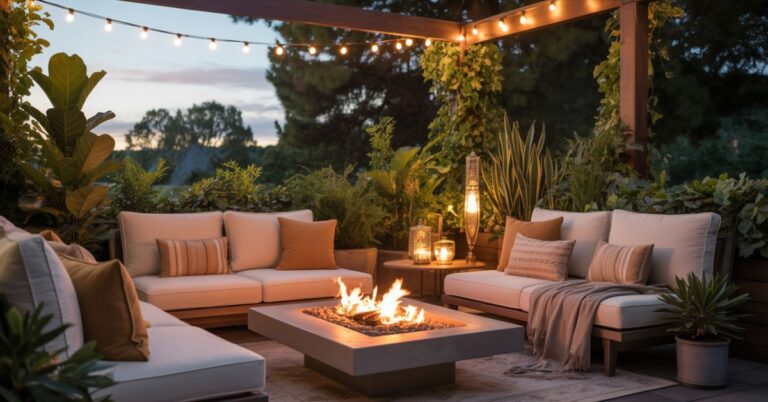
Layer three lighting types for flexibility. Ambient lighting from overhead fixtures or string lights provides general illumination. Task lighting near cooking and dining areas offers focused brightness where needed. Accent lighting highlights architectural elements, specimen plants, or water features that deserve evening attention. This three-tier approach appears in classic patio style designs from Mediterranean estates to American colonials, proving its enduring effectiveness for elegant outdoor space illumination.
Select fixtures with traditional materials and simple forms. Lantern-style pendants, coach lights, and path lights with metal or glass construction outlast trendy options. Hide LED technology inside classic fixture housings you get efficiency benefits without sacrificing timeless aesthetics. According to lighting designers at Kichler, visible bulbs in Edison-style fixtures crossed from trendy to timeless around 2018, offering enough history to feel established rather than fleeting in your enduring outdoor design.
Plant Selection for Year-Round Structure
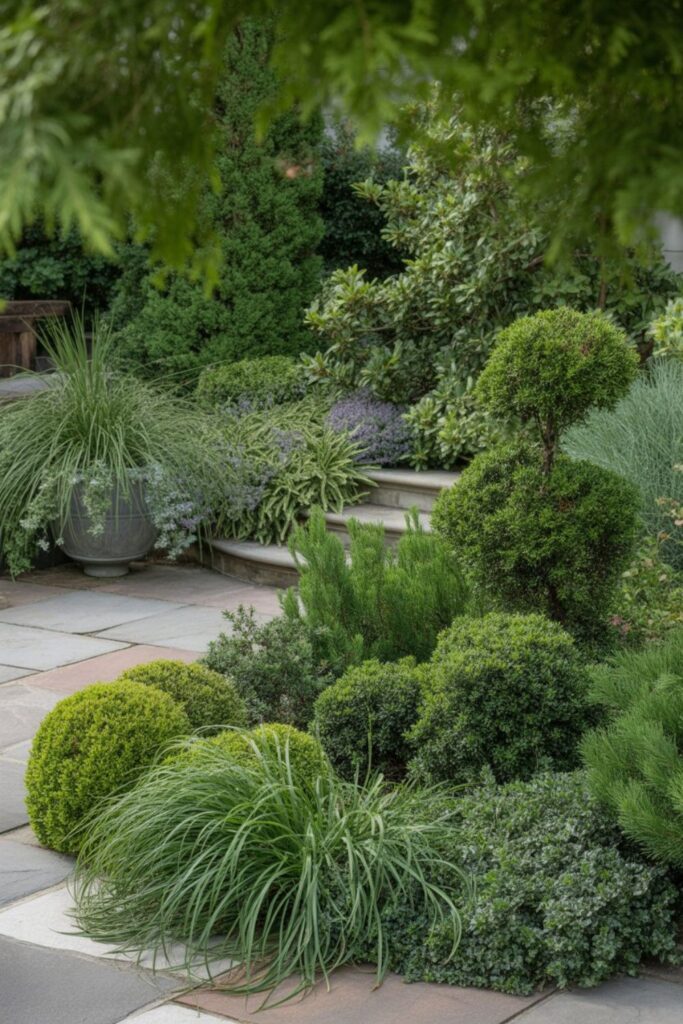
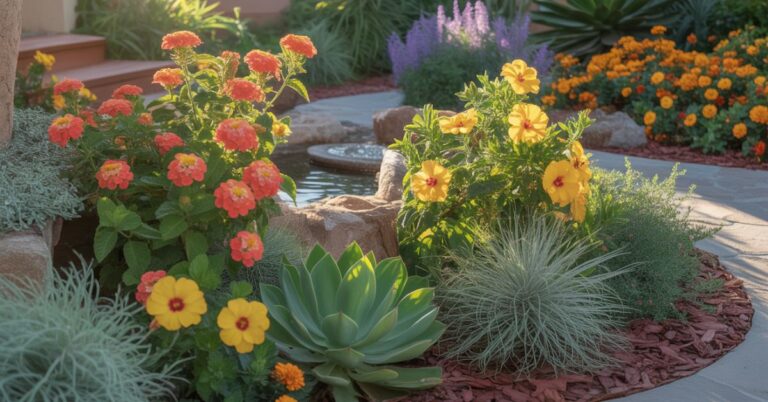
Plants can date a patio as quickly as wrong materials. Timeless patio design favors classic species with proven performance over trendy cultivars. Boxwood hedges have defined formal gardens for 400 years because their dense evergreen foliage provides year-round structure. Hydrangeas bloom reliably across decades without demanding attention. Japanese maples offer four-season interest that never feels gimmicky.
Focus on evergreen foundations that maintain presence during winter months when deciduous plants disappear. Holly, yew, and juniper provide backbones that work in classic patio style landscapes regardless of changing color schemes in annual plantings. Layer evergreens with a few carefully selected deciduous shrubs and perennials for seasonal interest without complete winter bareness in your sophisticated outdoor living environment.
Avoid monoculture planting or overly symmetrical arrangements that feel institutional. Plant in odd-numbered groupings with varied heights creating natural rhythms. According to horticulturists at the Royal Horticultural Society, successful enduring outdoor design landscapes use 60% evergreens for structure, 30% deciduous plants for seasonal interest, and 10% annuals for flexibility. This ratio ensures your patio garden remains attractive twelve months yearly across decades of ageless patio features development.
How to Avoid Trendy Details That Date Your Patio
Trendy details sneak into timeless patio design projects through accessories and accent features. Fire glass in bright colors, geometric metal privacy screens, or LED-lit water features with changing colors all scream their era too loudly. When in doubt, ask whether the element could have existed 50 years ago and will still look appropriate 50 years hence.
Limit novelty materials that lack proven track records. Rubber pavers, glass aggregates in concrete, or exotic composites may seem innovative but often age poorly or fall out of fashion. Stick with materials humans have used successfully for outdoor applications across centuries stone, wood, brick, steel, and copper possess demonstrated longevity in your lasting patio materials selection.
Avoid over-theming your space. Tiki bars, Moroccan tent vibes, or industrial warehouse aesthetics feel dated quickly compared to restrained approaches in classic patio style. You can nod toward influences without committing fully; a few Moroccan lanterns add interest without transforming your patio into a theme park. According to interior designers interviewed in Architectural Digest, the 80/20 rule applies: 80% timeless foundation with 20% personality that can evolve maintains freshness without risking obsolescence in elegant outdoor space design.
Investment Value: What Timeless Design Means for Resale
Timeless patio design choices directly impact resale appeal and property value. The National Association of Realtors’ Remodeling Impact Report shows that outdoor living spaces with classic patio style approaches recover 65-80% of costs at sale compared to just 30-40% for trendy installations. Buyers perceive well-executed traditional designs as move-in ready rather than requiring immediate renovation.
Quality construction using natural materials signals overall home maintenance standards to potential buyers. They assume homeowners who invested in bluestone patios and copper lighting fixtures probably maintained roofs, HVAC systems, and other critical components properly. This halo effect increases perceived value beyond the patio itself, boosting your investment value across the entire property.
Neutral palettes appeal to broader buyer demographics than personalized color schemes. That purple accent wall or lime-green furniture you loved alienates buyers who must mentally “undo” your choices. According to real estate agents surveyed by HomeAdvisor, homes with sophisticated outdoor living spaces featuring neutral colors and enduring outdoor design receive 15-30% more showing requests and sell 20% faster than comparable properties with dated outdoor spaces.
Maintenance Requirements That Preserve Timeless Beauty
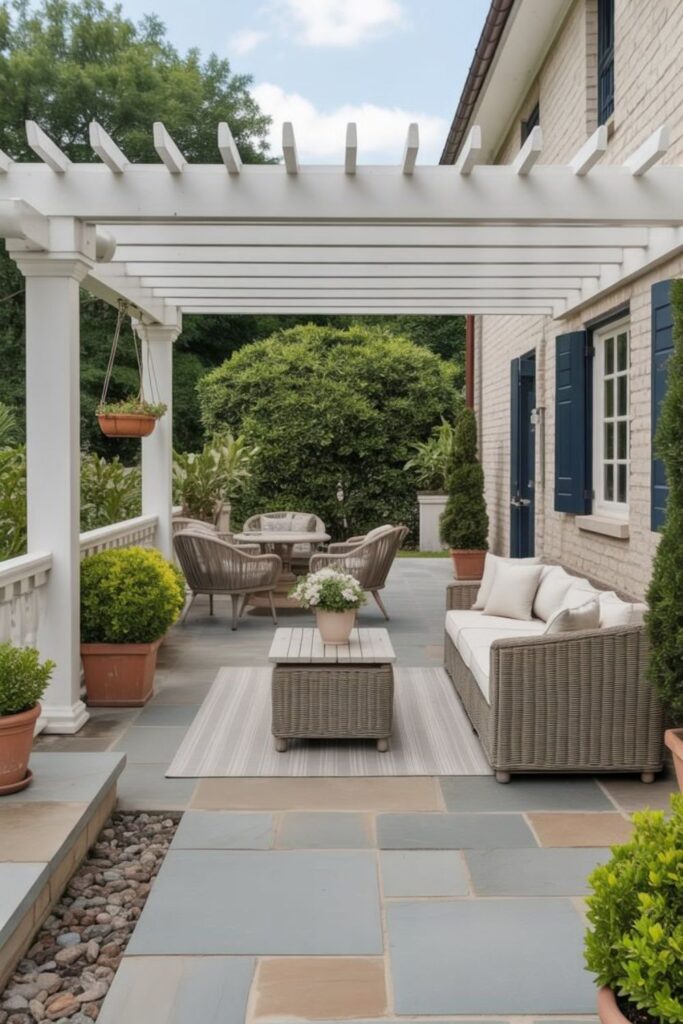
Timeless patio design doesn’t mean maintenance-free, but it does mean simpler long-term care. Natural materials like stone and wood require occasional cleaning and sealing rather than wholesale replacement. Sweep weekly to prevent debris accumulation. Power wash annually to remove grime and mildew. Reseal stone every 3-5 years to maintain stain resistance and color depth in your lasting patio materials.
Wood elements need more attention than stone but reward care with extended lifespans. Clean teak furniture annually with specialized teak cleaner if maintaining original color, or allow natural silvering for lower maintenance. Reapply sealant to decking every 2-3 years in high-traffic areas. According to wood care specialists at Sherwin-Williams, proper maintenance extends wood life by 50-100% compared to neglected installations in your classic patio style space.
Address repairs promptly before small issues become expensive problems. Replace cracked pavers immediately to prevent water infiltration that undermines adjacent stones. Tighten loose furniture hardware annually. Inspect and clean drainage systems twice yearly. These modest maintenance tasks preserve your quality construction investment while keeping your elegant outdoor space looking pristine across decades rather than showing its age prematurely.
What Makes a Patio Design Truly Timeless?
A timeless patio design balances simplicity with quality, prioritizes function alongside beauty, and embraces materials that improve with age rather than deteriorate. It avoids trend-driven choices in favor of proven approaches that have worked for generations. The space feels equally appropriate for casual family dinners and formal entertaining without requiring costume changes between uses.
Timeless patio design incorporates restraint knowing what to leave out matters as much as what to include. Every element serves purpose, whether functional or aesthetic. There are no “because it’s trendy” additions, no features included solely for Instagram appeal. According to design philosopher William Morris’s century-old principle, have nothing in your house you do not know to be useful or believe to be beautiful. This applies perfectly to enduring outdoor design where every choice impacts decades of use and enjoyment.
The most telling test: Can you imagine your patio in another era without it looking out of place? Classic patio style spaces transported to the 1950s would fit comfortably, and the same design placed in the 2050s would still function beautifully. This temporal flexibility defines truly ageless patio features that transcend specific moments in design history to achieve lasting relevance.
Regional Considerations for Timeless Outdoor Spaces
Timeless patio design adapts to regional climate and architectural context while maintaining core principles. Mediterranean climates embrace covered patios with tile flooring and stucco walls that have worked for centuries. Cold-weather regions incorporate fire features and windbreaks that extend season use. Humid climates prioritize drainage and mildew-resistant materials in your sophisticated outdoor living planning.
Match your patio to regional architectural traditions. Spanish Colonial homes pair naturally with terracotta tiles and white stucco walls. New England properties work beautifully with brick patios and painted wood pergolas. Southern estates embrace spacious covered porches with ceiling fans. Fighting regional conventions creates discord, while working within established vocabularies ensures your classic patio style harmonizes with surroundings.
Consider local material availability and traditional craftsmanship. Bluestone patios feel authentic in Mid-Atlantic states where quarries supply this native stone. Limestone works naturally in Texas and the Midwest where it’s locally abundant. Using regional lasting patio materials not only reduces costs but also ties your design to place, creating authenticity that imported exotic materials cannot match in enduring outdoor design applications.
How Much Should You Budget for a Timeless Patio?
Quality construction and natural materials require larger upfront investment than budget alternatives, but the long-term value proposition favors timeless patio design. Plan to spend $25-50 per square foot for professionally installed natural stone patios compared to $10-20 for basic concrete pavers. Premium teak furniture costs 3-4 times more than plastic resin but lasts 10 times longer, making the per-year cost dramatically lower.
A 300-square-foot elegant outdoor space with lasting patio materials typically costs $12,000-20,000 including professional installation, quality furniture, and essential amenities like lighting and planters. Budget-tier alternatives might cost $5,000-8,000 initially but require replacement or major renovation within 10-15 years. The investment value calculation becomes clear: spending $15,000 once beats spending $7,000 three times over 30 years in your sophisticated outdoor living project.
Allocate 60% of budget to hardscape and construction, 25% to furniture and accessories, and 15% to plants and landscaping. This distribution ensures quality construction and lasting patio materials form the foundation, with flexibility to update furnishings and plants as tastes evolve without requiring structural changes. According to cost estimators at HomeAdvisor, this allocation maximizes both immediate enjoyment and long-term resale appeal while maintaining timeless patio design principles.
Common Mistakes That Compromise Timeless Design
Mixing too many materials creates visual chaos rather than classic patio style coherence. Limit yourself to three primary materials perhaps bluestone flooring, cedar pergola, and brick accents. Additional materials fragment the design and feel busy rather than composed in your timeless patio design.
Undersizing the patio relative to house scale creates awkward proportions. A 3,000-square-foot home needs substantial outdoor living space to maintain visual balance. Tiny patios attached to large homes look like afterthoughts rather than intentional architectural elements. Conversely, oversized patios dwarf modest cottages. Aim for outdoor living areas representing 20-30% of home footprint for proportionate relationships.
Ignoring long-term maintenance realities undermines even the best designs. That white concrete patio looks stunning initially but shows every stain and requires constant cleaning. Light-colored cushions fade quickly under intense sun. High-maintenance choices create frustration that sours your relationship with the space. According to landscape maintenance specialists, successful enduring outdoor design balances aesthetic ideals with realistic upkeep commitment, choosing lasting patio materials that accommodate your actual maintenance capacity rather than aspirational goals.
Timeless Details: Hardware and Finishing Touches
Hardware quality reveals overall design commitment. Bronze or stainless steel hinges, latches, and fasteners maintain appearance for decades while cheap plated hardware corrodes within years. Gate hardware, lighting fixtures, and furniture connections all deserve investment-grade materials in timeless patio design projects.
Classic finishes like oil-rubbed bronze, brushed nickel, or aged copper work across design eras. Avoid trendy finishes like champagne bronze or matte black that announce specific moments. These “of-the-moment” choices date installations as clearly as clothing styles date photographs. Stick with finishes that have proven staying power across generations for your elegant outdoor space.
Joinery details matter tremendously in quality construction. Mortise-and-tenon connections in pergolas show craftsmanship that feels timeless. Exposed timber joinery creates visual interest while demonstrating structural integrity. According to traditional carpentry guilds, visible joinery that shows rather than hides how pieces connect always reads as quality, maintaining relevance regardless of shifting design trends in classic patio style applications.
Read More About: 30+ Small Yard Outdoor Living Space Ideas
Seasonal Flexibility in Timeless Design
Timeless patio design accommodates seasonal changes without requiring major reconfiguration. Built-in storage benches house cushions during winter months. Pergolas designed to accept removable shade fabric adapt from summer sun protection to open winter sky views. Planters sized for seasonal rotations allow spring bulbs to give way to summer annuals without permanent commitments in your ageless patio features.
Four-season thinking during planning prevents disappointment later. That beautiful wisteria-covered pergola provides summer shade but drops leaves messily in fall. Deciduous trees create similar issues. Balance seasonal performers with evergreen anchors that maintain presence year-round. According to landscape designers interviewed in Garden Design magazine, successful enduring outdoor design plans 18 months ahead, anticipating how spaces will look and function through all seasons rather than optimizing for a single moment.
Weatherproof storage integrated during construction protects investments without compromising aesthetics. Deck boxes that match decking material hide cushions, throws, and accessories during off-seasons. Built-in cabinets under counters store grilling accessories and entertainment supplies. These thoughtful inclusions maintain your sophisticated outdoor living space’s clean appearance while providing practical functionality that supports long-term use and enjoyment.
Creating Your Timeless Patio Design Action Plan
Start your timeless patio design journey by assessing what you genuinely need versus what looks appealing online. How do you actually use outdoor spaces? Frequent entertainers need substantial dining areas and prep space. Readers want quiet corners with comfortable seating and good lighting. Daily coffee enthusiasts need morning sun and protected spots for year-round use in your classic patio style planning.
Research lasting patio materials available in your region and climate. Visit stone yards to see options in person rather than selecting from online thumbnails. Touch materials, see actual colors and textures, and understand maintenance requirements before committing. According to building material suppliers interviewed by Builder magazine, customers who physically interact with materials before purchasing express 40% higher satisfaction with finished projects because expectations align with reality in enduring outdoor design selections.
Interview multiple contractors specifically about their experience with quality construction methods and natural materials. Ask for references from projects at least ten years old so you can evaluate aging and maintenance realities. The cheapest bid rarely delivers the best value in timeless patio design. Expect to pay premium rates for craftspeople who understand traditional techniques and material properties that produce sophisticated outdoor living spaces built to last generations rather than just until the next trend cycle arrives.
Frequently Asked Questions
How long does a timeless patio design remain current before needing updates?
A well-executed timeless patio design using quality construction and lasting patio materials remains attractive and functional for 30-50 years without major updates. Minor refreshes like new cushions, updated planters, or seasonal paint colors on accessories keep spaces feeling current without structural changes. The core hardscape, architectural elements, and built-in features maintain relevance indefinitely when based on classic patio style principles rather than trend-driven choices that require complete overhauls every decade.
Is it more expensive to build a timeless patio compared to trendy designs?
Initial costs for timeless patio design typically run 25-40% higher than budget trendy alternatives due to natural materials and quality construction requirements. However, life-cycle costs favor timeless approaches dramatically. Budget patios require replacement or major renovation within 10-15 years, while enduring outdoor design spaces last 30-50+ years. Over three decades, investment value calculations show timeless designs cost 40-60% less per year of use while maintaining superior resale appeal and daily enjoyment compared to cheap installations requiring frequent updates.
Can I mix modern elements with timeless design successfully?
Yes, when approached thoughtfully. The key is maintaining 80% timeless foundation with 20% modern accents in your sophisticated outdoor living space. Use contemporary furniture with clean lines against classic patio style stone flooring. Add modern lighting fixtures to traditional pergolas. Select abstract sculptures for neutral color spaces. This balance allows personal expression and current tastes while protecting against obsolescence. Avoid trendy structural elements or permanent installations in passing styles save experimentation for easily changeable accessories and furnishings in your elegant outdoor space.
Conclusion
Your timeless patio design represents more than aesthetic choices it reflects understanding that quality transcends trends and simplicity outlasts spectacle. Those natural materials you select today will develop character tomorrow and become heirlooms decades hence. The classic patio style principles you embrace create outdoor rooms that serve your family now and welcome future generations with equal grace and functionality.
Start with honest assessment of your needs, thoughtful material selection favoring lasting patio materials, and commitment to quality construction that honors traditional techniques. Your sophisticated outdoor living space becomes a retreat from constantly changing trends, a place where enduring outdoor design principles create comfort that never feels dated. The investment value extends beyond financial returns to encompass daily quality of life improvements that compound across years of morning coffees, evening dinners, and countless gatherings in your beautifully ageless patio features space.