24+ Outdoor Space Design Ideas to Add Value to Your Home
Your outdoor space design sits unused most of the year. You walk past it daily, imagining dinner parties under string lights or morning coffee surrounded by greenery. Yet somehow it remains a concrete slab with a couple of forgotten chairs. Here’s what most homeowners don’t realize: even the smallest outdoor space can transform into your favorite room in the house with the right approach. You don’t need a sprawling estate or unlimited budget.
An outdoor space represents more than square footage outside your walls. Research shows properties near quality green areas see value increases up to 20 percent. Your own patio, balcony, or backyard delivers similar benefits when designed thoughtfully. Whether you’re working with a 500-square-foot deck or a tiny apartment balcony, strategic choices in furniture, lighting, and layout create environments that extend your living area and boost your property’s worth. This guide walks you through everything from space planning to furniture selection, showing you how to maximize every inch of your outdoor living area.
What Makes an Outdoor Space Valuable?
An outdoor space is any area outside your home’s interior walls designed for recreation, relaxation, or entertainment. This includes patios, decks, balconies, porches, courtyards, and yards. The distinction between a valuable outdoor space Design and neglected square footage comes down to intentional design, proper furniture selection, and thoughtful integration with your home’s interior style.
Why Outdoor Spaces Matter More Than Ever
The shift toward remote work has homeowners reconsidering every inch of their property. An outdoor living area provides escape from indoor confinement without leaving home. Fresh air and natural light boost mood and productivity. Physical activity outdoors reduces stress and improves overall wellbeing according to health research.
Modern buyers increasingly view functional outdoor space Design as essential rather than optional. Properties offering well-designed patios or decks attract more interest and command higher prices. The outdoor area shapes first impressions before potential buyers even step inside your home.
Understanding Outdoor Space Types and Their Potential
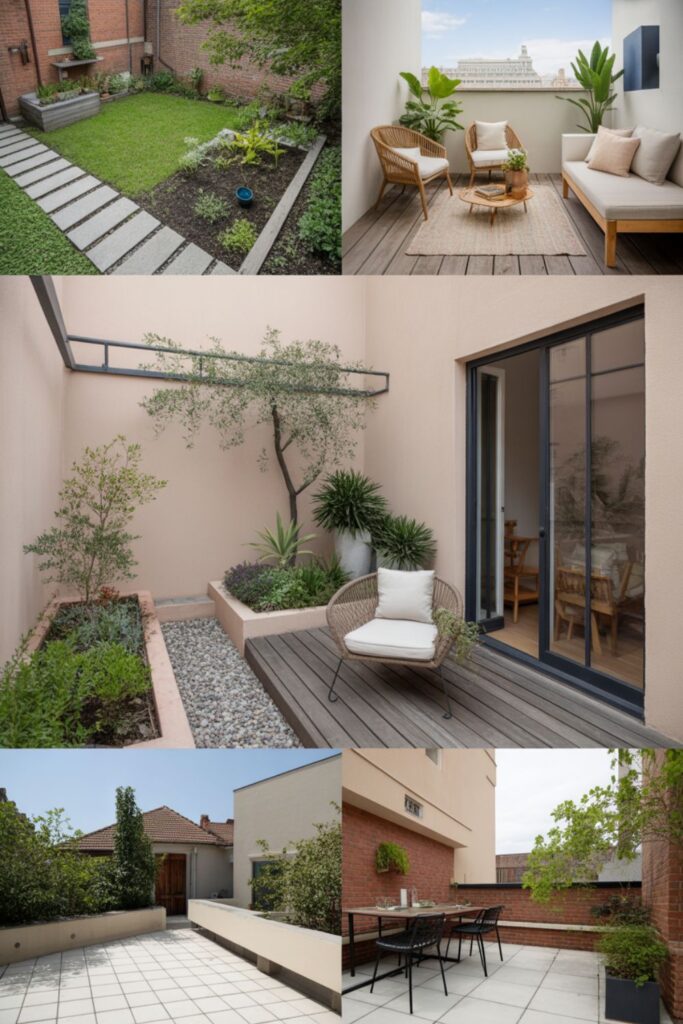
Different outdoor spaces design serve distinct purposes. Matching your space type to appropriate design strategies ensures maximum functionality and enjoyment.
Patios: Ground-Level Outdoor Living
Patios represent paved ground-level areas adjacent to your home. They typically feature concrete, stone pavers, brick, or decorative tiles as foundations. Patio design offers flexibility since you’re working with solid, permanent surfaces. Most patios measure between 100 and 400 square feet, providing ample room for multiple furniture groupings.
Ground contact makes patios ideal for heavy furniture pieces and permanent fixtures like fire pits or outdoor kitchens. You can section larger patios into distinct zones, dining areas near the grill, conversation spaces around a fireplace, and quiet reading nooks in corners. Material selection affects both aesthetics and maintenance requirements for years to come.
Decks: Elevated Outdoor Platforms
Decks attach to your home at an elevated height, typically constructed from wood or composite materials. They work particularly well for homes on sloped lots where ground-level patios prove impractical. Deck installation creates additional square footage that feels like an extension of interior rooms.
Elevated positioning offers advantages like improved views and natural separation from yard activities. However, decks require attention to weight distribution when selecting furniture. Built-in benches maximize seating without overwhelming the structure. Proper maintenance protects wood surfaces from weather damage and extends the deck’s lifespan.
Balconies: Small Space Urban Solutions
Apartment and condo balconies present unique challenges and opportunities. These compact outdoor space designs typically range from 30 to 100 square feet. Limited square footage demands smart furniture choices, folding chairs, wall-mounted tables, and vertical gardens maximize functionality without creating clutter.
Balcony design requires lightweight, weather-resistant pieces that won’t strain the structure. Hanging planters utilize vertical space while floor-standing containers would consume. Low-profile furniture maintains open sightlines, preventing the balcony from feeling cramped. Even tiny balconies become valuable extensions of apartment living with thoughtful planning.
Planning Your Outdoor Space Design
Successful outdoor space Design transformation begins with clear planning. Random furniture purchases lead to cluttered, dysfunctional areas that nobody uses. Strategic planning creates cohesive environments that enhance daily life.
Determine Your Primary Purpose
What will you actually do in this outdoor space ? Honest answers guide every subsequent decision. Families with young children need durable surfaces and open play areas. Entertainers require dining capacity and conversation seating. Solo dwellers might prioritize reading nooks or small meditation zones.
Your climate affects usage patterns significantly. Warm regions support year-round outdoor living, while colder climates concentrate activity in specific seasons. Considering shade requirements, direct sun exposure makes afternoon relaxation uncomfortable without protection. Morning coffee spots need east-facing positions. Evening entertaining benefits from west-facing areas that capture sunset light.
Measure and Map Your Space
Physical measurements prevent costly furniture mistakes. Outdoor space Design often appear larger than actual dimensions. Measure length, width, and any architectural features like doors, windows, or built-in elements. Note sun exposure patterns throughout the day and identify areas that receive full shade, partial shade, or constant sun.
Create a simple floor plan on graph paper or use free online design tools. Represent furniture pieces at scale to visualize traffic flow. Leaving adequate walking paths and narrow passages between furniture create bottlenecks and frustration. Most comfortable arrangements maintain 30 to 36 inches between pieces for easy movement.
Establish Your Budget Range
Outdoor space Design projects range from budget-friendly DIY efforts to high-end professional installations. Setting clear budget parameters narrows choices and prevents overspending. Basic improvements like paint, plants, and discount furniture might cost 500 to 1,500 dollars. Mid-range renovations including quality furniture and simple structures run 2,000 to 8,000 dollars. Complete transformations with built-in features and professional landscaping exceed 10,000 dollars.
Prioritize elements by impact and necessity. Comfortable seating delivers more value than decorative accessories. Adequate lighting extends usability into evening hours. Weather protection through umbrellas or covers preserves furniture investments. Allocate budget proportionally to these foundational elements before considering extras.
Choosing Outdoor Furniture That Works
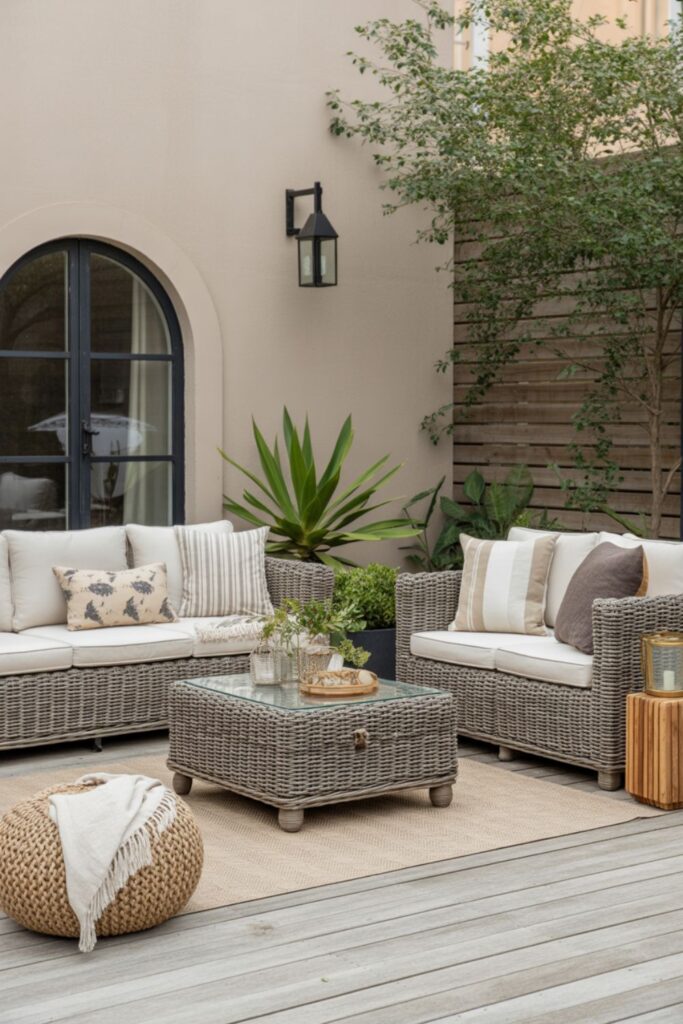
Furniture selection makes or breaks outdoor space Design functionality. The pieces you choose determine comfort levels, weather resistance, and how often you’ll actually use the area.
Scale Furniture to Your Space
Small outdoor space Design requires compact, multifunctional pieces. Bistro sets with two chairs and a small table provide dining for tight balconies or patios. Folding furniture stores away when not needed, freeing floor space for other activities. Nested pieces stack together efficiently.
Larger outdoor living areas accommodate sectional sofas, full dining sets, and multiple furniture groupings. However, bigger doesn’t always mean better. Oversized pieces in moderate spaces create crowded feelings and restrict movement. Test furniture scales by marking floor dimensions with painter’s tape before purchasing.
Select Weather-Resistant Materials
Outdoor furniture faces constant exposure to sun, rain, wind, and temperature fluctuations. Material durability directly impacts how long pieces last and how much maintenance they require. Poly lumber resists fading, cracking, and moisture damage for decades. Teak wood weathers beautifully, developing a silver-gray patina that many find attractive.
Wicker furniture offers classic aesthetics and lightweight portability. Modern synthetic wicker withstands weather better than natural versions. Metal frames in aluminum or powder-coated steel provide strength without rust concerns. Cushions and upholstery should feature quick-drying foam cores and fade-resistant outdoor fabrics.
Create Functional Furniture Zones
Divide larger outdoor spaces Design into distinct activity zones. A dining area near the house or grill facilitates meal service. Conversation groupings with sofas and chairs arranged facing each other encourage socializing. Quiet corners with single chairs and side tables offer retreat spaces for reading or solo relaxation.
Furniture placement affects usability significantly. Position dining tables to maintain clearance around all sides for chair movement. Angle seating to capture preferred views while avoiding harsh sun exposure. Place coffee tables within easy reach of surrounding seats. Leave clear pathways connecting different zones without forcing guests to squeeze through tight spots.
Maximizing Small Outdoor Spaces
Limited square footage doesn’t limit possibilities. Small outdoor space design like apartment balconies or narrow patios become highly functional with clever design strategies.
Utilize Vertical Space Effectively
When floor space runs short, look up. Wall-mounted shelves, hanging planters, and trellises with climbing plants add greenery and storage without consuming precious floor area. Railing planters hook over balcony edges, introducing color and nature while maintaining walking space below.
Vertical gardens transform blank walls into living focal points. Simple pocket planters filled with herbs or succulents create visual interest at multiple heights. This layered approach makes small outdoor space Design feel larger by drawing eyes upward and adding depth through varied plant positions.
Choose Multifunctional Furniture
Every piece in a small outdoor space should earn its position through multiple uses. Storage benches provide seating while hiding cushions, gardening tools, or outdoor accessories inside. Folding tables collapse when not needed, then expand for dining or work surfaces. Ottoman cubes function as seats, footrests, or side tables depending on current needs.
Lightweight furniture moves easily to reconfigure spaces for different activities. Aluminum folding chairs store flat against walls. Nesting tables separate when hosting guests, stack together for everyday use. This flexibility prevents small spaces from feeling locked into single purposes.
Read More About: Spring Wedding Ideas: Create Your Perfect Seasonal Celebration
Implement Smart Storage Solutions
Clutter destroys the appeal of small outdoor spaces faster than anything else. Outdoor-rated cabinets and shelving units keep gardening supplies, seasonal decorations, and maintenance items organized and protected. Look for weather-resistant options designed specifically for exterior use.
Built-in or tucked-away storage maintains clean appearances while providing necessary functionality. Corner shelves utilize awkward angles that don’t accommodate furniture well. Under-bench storage hides items beneath seating areas. The goal is eliminating visual clutter so the space feels larger and more inviting.
Designing Large Outdoor Living Areas
Expansive outdoor spaces present different challenges. Too much empty space feels cold and uninviting. Strategic design creates warmth and definition across large patios, decks, or yards.
Create Distinct Activity Zones
Large outdoor living areas benefit from clear zone definition. Separate spaces for dining, conversation, and relaxation prevent the sprawling feeling that makes big areas feel empty. Use furniture arrangement, area rugs, or changes in flooring materials to delineate different sections.
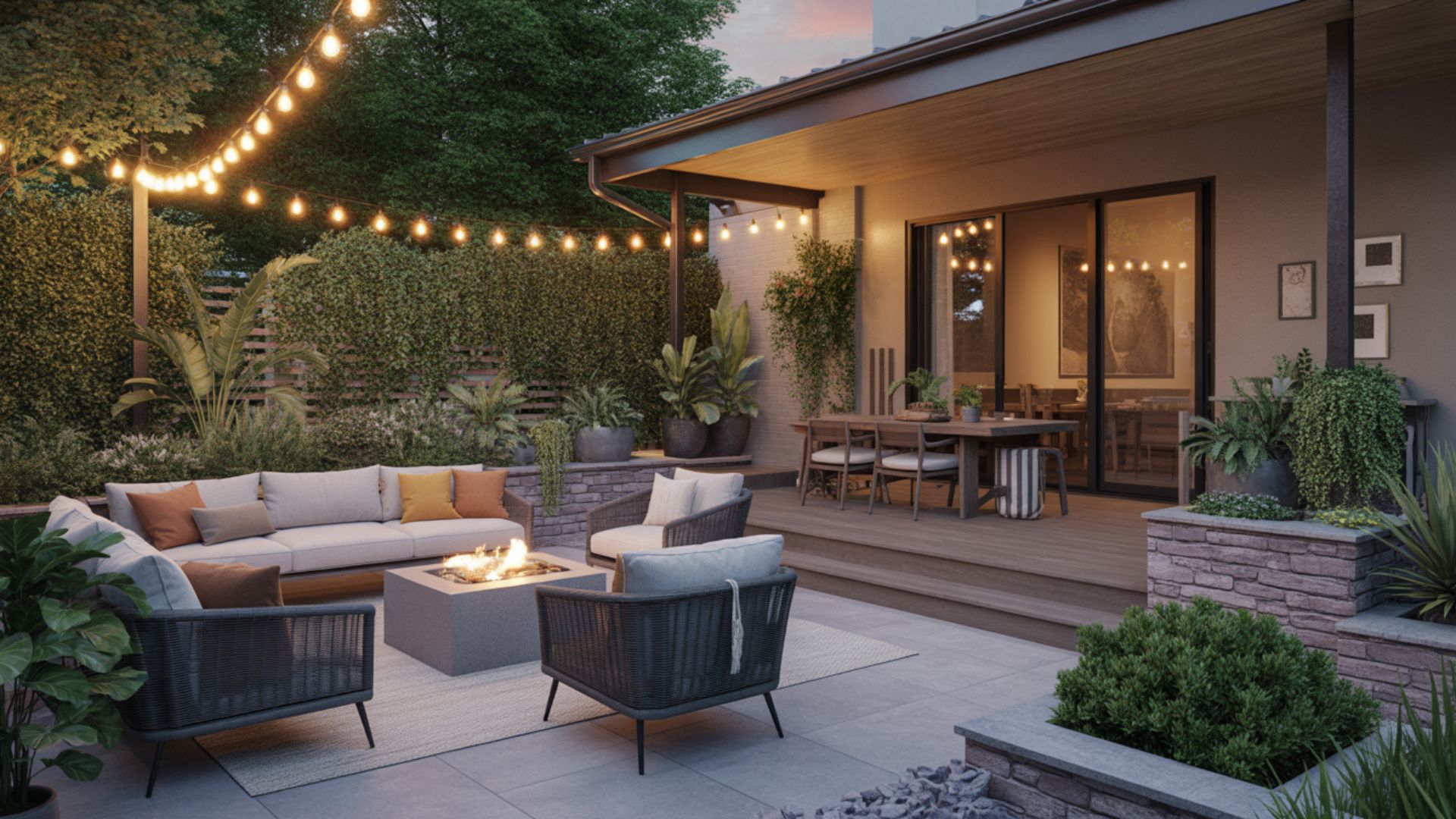
Position a dining table with surrounding chairs in one area for outdoor meals and entertaining. Create a lounge zone with sectional seating arranged around a coffee table or fire pit. Add a quiet corner with a single chair and side table for reading or morning coffee. These defined purposes give guests clear destinations rather than aimless wandering.
Balance Open and Furnished Spaces
Resist the urge to fill every inch with furniture and decorations. Open areas provide visual rest and practical space for activities like lawn games or children’s play. Well-designed outdoor spaces balance furnished zones with breathing room.
Think of negative space as purposeful design element rather than emptiness requiring filling. Lawn areas between patio sections, open pathways connecting zones, and unobstructed sight lines all contribute to comfortable, functional environments. Aim for roughly 40 to 60 percent coverage with furniture and structures, leaving the remainder open.
Add Architectural Interest
Large outdoor spaces need vertical elements to create intimacy and visual interest. Pergolas define overhead space without completely enclosing areas. Their slatted roofs provide partial shade while maintaining open-air feelings. Climbing vines trained over pergola beams add natural beauty and additional sun protection.
Outdoor fireplaces or fire pits serve as natural focal points that draw people together. Built-in seating around fire features maximizes capacity without adding furniture pieces. Privacy screens or partial walls section off areas while adding architectural dimension. These structural elements give large spaces the warmth and definition that furniture alone cannot achieve.
Lighting Your Outdoor Space
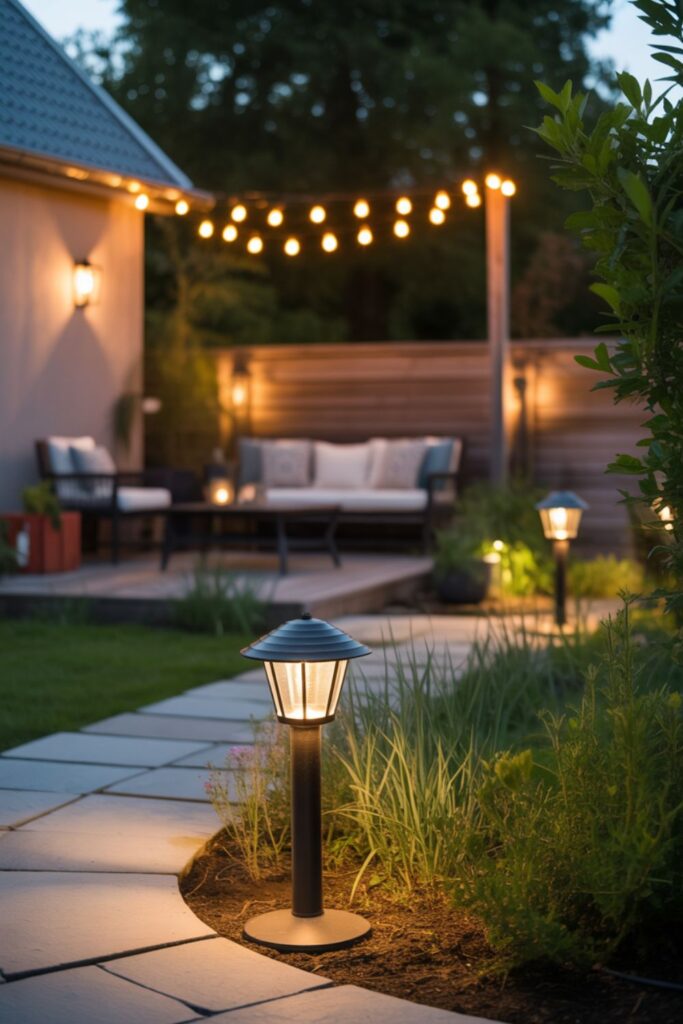
Proper lighting extends outdoor space usability well beyond daylight hours. Strategic illumination creates ambiance, ensures safety, and transforms atmospheres after sunset.
Layer Different Light Sources
Effective outdoor lighting combines multiple types rather than relying on single overhead fixtures. String lights create magical overhead glow perfect for entertaining. They install easily, cost little, and dramatically improve evening ambiance. Drape them across pergolas, along fences, or overhead between attachment points.
Path lighting illuminates walkways for safety while adding subtle ground-level glow. Solar-powered options eliminate wiring concerns and installation complexity. Lanterns and candles provide intimate table-level lighting for dining and conversation. Battery-operated LED candles deliver flickering ambiance without fire concerns or wind issues.
Consider Functional and Mood Lighting
Task lighting supports specific activities in your outdoor space. Directional spotlights illuminate grilling areas for safe food preparation after dark. Reading lights positioned near favorite seating spots enable evening relaxation with books or devices. Under-rail lighting along deck edges prevents trips while creating sophisticated underglow effects.
Mood lighting shapes emotional responses to your outdoor living area. Warm color temperatures (2700-3000K) create cozy, inviting feelings. Cool temperatures (4000K+) provide bright, energizing illumination. Dimmable systems offer flexibility to adjust intensity based on activities and desired atmosphere.
Install Smart Lighting Controls
Modern outdoor lighting technology brings convenience and efficiency. Smart bulbs and fixtures connect to home automation systems for voice or app control. Schedule lights to activate automatically at sunset, eliminating manual switching. Timers conserve energy by ensuring lights don’t run unnecessarily throughout entire nights.
Motion sensors activate lights when needed, providing security benefits alongside convenience. Solar-powered fixtures eliminate electrical costs and installation complexity while supporting sustainable practices. These technologies make outdoor spaces more usable while reducing maintenance and operational expenses.
Adding Weather Protection
Climate challenges limit outdoor space enjoyment across many regions. Strategic weather protection extends usable seasons and protects furniture investments.
Shade Structures and Coverings
Direct sun exposure creates uncomfortable heat and damages furniture finishes over time. Permanent shade structures like pergolas, gazebos, or covered porches provide architectural solutions. Their solid construction withstands wind and weather while adding property value.
Retractable awnings offer flexibility, extend them during hot afternoons, retract for stargazing evenings. Umbrellas provide portable shade that repositions easily as sun angles change throughout the day. Look for UV-resistant canopy fabrics rated for outdoor use. Wind vents in umbrella canopies prevent them from becoming sails during breezy conditions.
Rain and Wind Considerations
Outdoor furniture cushions and fabrics suffer damage from moisture exposure. Waterproof storage boxes keep cushions dry when not in use. Quick-drying fabrics designed for marine applications shed water effectively while remaining comfortable. Removable cushion covers allow easy cleaning and seasonal storage.
Wind protection makes outdoor spaces more comfortable and prevents furniture from blowing around. Privacy screens, strategic plantings, or partial walls block prevailing winds without completely enclosing areas. Heavier furniture pieces resist movement better than lightweight options in windy locations.
Heating Solutions for Cool Weather
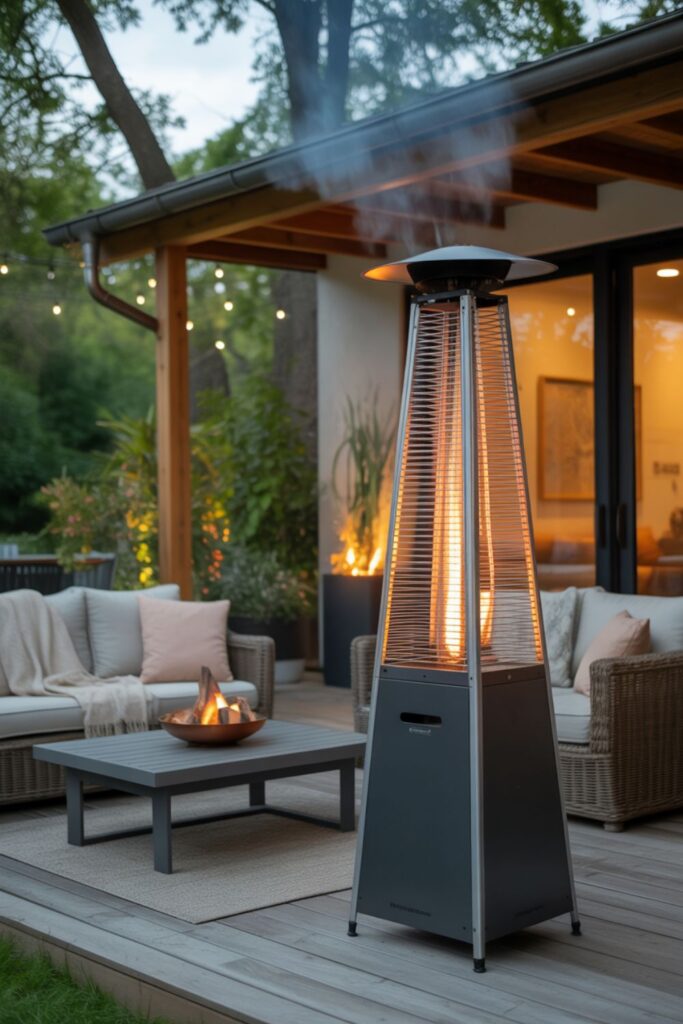
Extending outdoor space usage into cooler months requires supplemental heat. Fire pits and outdoor fireplaces provide warmth and ambiance while creating natural gathering spots. Propane patio heaters deliver adjustable heat to defined areas. Electric infrared heaters mount overhead, warming people and objects without heating surrounding air unnecessarily.
Covered patios or enclosed three-season porches trap heat more effectively than completely open spaces. Consider adding outdoor-rated ceiling fans with reversible motors; downward flow creates cooling breezes in summer, upward flow circulates warm air in cooler weather. These climate control features transform seasonal outdoor spaces into year-round assets.
What Are the Best Plants for Outdoor Spaces?
Plants transform sterile outdoor spaces into living environments that connect you with nature. Strategic greenery adds color, texture, privacy, and natural beauty.
Container Gardening Basics
Potted plants offer maximum flexibility in outdoor space design. Move them to adjust layouts, rotate for even sun exposure, or bring tender varieties indoors during cold weather. Container choices affect plant health and aesthetics equally ensure adequate drainage holes prevent root rot from standing water.
Select containers scaled appropriately to plant sizes. Small pots restrict root growth and require frequent watering. Oversized containers waste soil and create unbalanced appearances. Group containers in odd numbers (three, five, seven) for visually pleasing arrangements. Vary heights and textures by combining tall statement plants with trailing varieties and mid-height fillers.
Low-Maintenance Plant Selection
Choose plants matched to your outdoor space conditions and maintenance willingness. Succulents and cacti thrive with minimal water, perfect for busy homeowners or forgetful gardeners. Many varieties tolerate both full sun and partial shade, providing flexibility in placement.
Native plants adapted to local climates require less water, fertilizer, and pest control than exotic varieties. They support local wildlife and pollinators while reducing environmental impact. Perennials return year after year, eliminating annual replanting chores. Ornamental grasses add movement and texture with virtually zero maintenance requirements.
Creating Privacy with Plants
Strategic plantings screen unsightly views and create private retreats within your outdoor space. Tall grasses in large containers form living walls along balcony edges or patio boundaries. Climbing vines trained on trellises or lattice structures provide vertical privacy screens that take minimal floor space.
Bamboo grows quickly and densely, creating effective barriers in narrow planting areas. Choose clumping varieties rather than running types to prevent invasive spreading. Evergreen shrubs maintain privacy year-round rather than dropping leaves seasonally. Layer plants at different heights for comprehensive screening without creating fortress-like barriers that feel oppressive.
How Do Outdoor Spaces Increase Property Value?
Investing in your outdoor space delivers tangible financial returns alongside lifestyle improvements. Understanding value drivers helps prioritize upgrades for maximum impact.
The Numbers Behind Outdoor Space Value
Research consistently shows quality outdoor spaces boost property values significantly. Properties with professional landscaping can add 5 to 15 percent to overall worth. Deck installation typically returns 50 to 80 percent of costs upon sale. Well-designed patios and outdoor kitchens similarly deliver solid returns.
The value extends beyond direct dollar amounts. Homes with attractive outdoor living areas sell faster than comparable properties lacking these features. First impressions formed during curb appeal assessments heavily influence buyer interest. Buyers visualize themselves using these spaces, creating emotional connections that justify higher offers.
Most Valuable Outdoor Improvements
Professional landscaping ranks among the best returns on investment for outdoor space enhancements. Native plants, stone accents, and lush greenery create inviting first impressions that set positive tones before buyers enter homes. Pair landscaping with irrigation systems and outdoor lighting to showcase beauty day and night.
Deck or patio additions effectively increase home square footage at lower costs than interior additions. These spaces serve as outdoor rooms for dining, entertaining, and relaxation. Permanent structures like pergolas or gazebos add architectural interest while providing functional shade. Outdoor kitchens appeal to buyers who enjoy entertaining, though costs can be substantial.
Maximizing Your Outdoor Space Investment
Work with professional designers and contractors for major outdoor space projects. Expert guidance ensures designs flow naturally, serve intended purposes, and maximize property appeal. Professionals understand local building codes, proper drainage, and material selections appropriate for your climate.
Maintain your outdoor space meticulously. Regular cleaning, seasonal furniture care, and prompt repairs preserve appearances and protect investments. Dead plants, peeling paint, and broken fixtures signal neglect that diminishes rather than enhances value. Consistent upkeep ensures your outdoor space remains an asset rather than liability.
Read More About: 21+ Winter Garden Ideas for Continuous Harvest to enhance income
Creating Outdoor Entertainment Zones
Outdoor spaces shine brightest when hosting friends and family. Thoughtful entertainment zone design ensures comfortable, memorable gatherings.
Outdoor Dining Setup
Position dining areas near homes or outdoor kitchens for convenient food service. Tables should accommodate your typical guest count plus two extra seats for flexibility. Standard dining height tables (28-30 inches) work with traditional chairs. Counter-height tables (36 inches) suit bar stools and create casual atmospheres.
Protect dining surfaces from weather damage with table covers or storage during non-use periods. Ensure adequate lighting for evening meals overhead string lights or chandeliers provide ambiance while task lighting illuminates food and faces. Consider adding shade umbrellas that tilt or adjust to follow sun angles throughout meals.
Conversation and Lounge Areas
Arrange seating to facilitate easy conversation rather than forcing guests to crane necks or shout across distances. Face chairs and sofas toward each other rather than lining them along walls like waiting rooms. Coffee tables positioned within reach of all seats provide drink and snack placement without forcing anyone to stand repeatedly.
Sectional sofas work beautifully in larger outdoor spaces, defining seating areas while maximizing capacity. Add outdoor rugs beneath furniture groupings to visually anchor zones and add warmth. Throw pillows and blankets increase comfort while introducing color and texture. These details make outdoor living areas feel like natural extensions of interior rooms.
Entertainment Technology Integration
Modern outdoor entertainment often includes audio-visual elements. Weather-resistant outdoor televisions enable watching games or movies under stars. Mount them in covered areas to protect from direct exposure. Outdoor sound systems with Bluetooth connectivity stream music without running cables throughout the space.
Ensure adequate electrical outlets for devices and lighting without creating trip hazards from extension cords. Consider weatherproof outlet covers that protect connections from moisture. Solar-powered speakers eliminate wiring concerns while supporting sustainable practices. These technology integrations expand entertainment options while maintaining outdoor ambiance.
Budget-Friendly Outdoor Space Upgrades
Transforming your outdoor space doesn’t require massive budgets. Strategic, affordable improvements deliver significant impact.
DIY Projects That Make a Difference
Paint refreshes existing surfaces dramatically. Concrete patios transform with specialized porch paint available in numerous colors and patterns. Use painter’s tape to create geometric designs that mimic expensive tiles. Stain or paint wooden decks to restore weather-worn appearances and add years of life.
Build simple planter boxes from reclaimed wood or inexpensive lumber. These raised beds add dimension while providing growing space for flowers, herbs, or vegetables. Construct basic pergolas or shade structures from standard dimensional lumber countless free plans exist online for various skill levels.
Thrift Store and Secondhand Finds
Quality outdoor furniture appears regularly at thrift stores, estate sales, and online marketplaces. Metal frames clean up beautifully with wire brushes and fresh paint. Reupholster cushions using outdoor fabric for personalized styles at fraction of new costs. Vintage pieces often feature better construction than modern budget options.
Repurpose indoor items for outdoor use. Old ladder rungs become plant stands. Vintage crates stack to create storage and display surfaces. Mason jars transform into hanging lanterns or planters. Creative reuse adds character while stretching budgets significantly further than buying everything new.
Seasonal Updates for Fresh Looks
Rotate accessories and textiles seasonally to refresh your outdoor space without major investments. Swap cushion covers and throw pillows to reflect seasonal color palettes. Add autumn-themed planters in fall, winter greenery during holidays, spring flowers as weather warms. These simple changes keep spaces feeling current and intentional.
String lights cost little but transform evening ambiance dramatically. Add new varieties each season of traditional white bulbs, colorful party lights, or trendy Edison-style filaments. Outdoor rugs from discount retailers withstand weather while adding pattern and color. Replace them as they wear or your tastes evolve without significant expense.
Maintaining Your Outdoor Space Year-Round
Regular maintenance preserves your outdoor space investment and ensures it remains inviting and functional across seasons.
Seasonal Cleaning and Care
Spring cleaning removes winter’s accumulated debris and prepares outdoor spaces for active seasons. Power wash patios, decks, and furniture to eliminate mold, mildew, and grime. Inspect furniture for damage, tighten loose bolts, sand rough wood surfaces, touch up paint where needed. Clean cushions according to manufacturer instructions before returning them to service.
Fall maintenance prepares spaces for winter. Store removable cushions and fabrics indoors or in weather-protected storage. Cover furniture that remains outside with quality covers designed for purpose. Drain hoses and irrigation systems in freezing climates. Trim plants and remove dead material that accumulates moisture and breeds pests.
Furniture Care and Protection
Different outdoor furniture materials require specific care approaches. Wood furniture benefits from annual oiling or sealing to maintain moisture resistance and prevent cracking. Metal pieces need inspections for rust spots and touch up with appropriate paint immediately when discovered. Wicker furniture should be kept dry; moisture causes mildew and material breakdown.
Cushion care extends their lifespan significantly. Remove covers for regular washing throughout the seasons. Stand cushions on edge during rain to promote air circulation and faster drying. Apply fabric protector sprays annually to enhance water and stain resistance. Store cushions indoors during extended non-use periods to prevent weather damage.
Addressing Repairs Promptly
Small problems become major expenses when ignored. Cracked patio pavers allow moisture penetration that worsens damage through freeze-thaw cycles. Replace or repair them immediately. Loose deck boards create safety hazards and accelerate surrounding damage. Secure or replace them before someone gets injured.
Inspect lighting fixtures for moisture intrusion, corroded connections, or damaged wiring. Clean solar panels on solar-powered lights to maintain charging efficiency. Tighten wobbly furniture connections before they fail completely. Regular inspections catch problems early when repairs remain simple and inexpensive rather than waiting until replacement becomes necessary.
Frequently Asked Questions
How much does it cost to create an outdoor living space?
Basic outdoor space improvements including discount furniture, simple lighting, and container plants cost between 500 and 1,500 dollars. Mid-range projects with quality furniture, weather protection, and modest landscaping run 2,000 to 5,000 dollars. Complete transformations featuring permanent structures, professional landscaping, and built-in features like outdoor kitchens or fire pits typically exceed 10,000 dollars.
What is the best flooring for outdoor spaces?
The best flooring depends on your specific situation and budget. Concrete offers durability and affordability, especially when enhanced with stamped patterns or stain colors. Pavers provide classic appearance with easy replacement if individual pieces crack. Natural stone like flagstone or slate delivers premium aesthetics but costs more. Composite decking requires minimal maintenance and resists weather damage better than traditional wood. For balconies or renters, interlocking deck tiles snap together over existing surfaces without permanent installation.
How can I make my small balcony feel bigger?
Use vertical space with wall-mounted shelves and hanging planters instead of floor-standing options. Choose lightweight, low-profile furniture that doesn’t block sightlines or overwhelm the area. Folding pieces store away when not needed, freeing floor space. Mirrors mounted on walls create an illusion of depth and reflect light to brighten spaces. Stick to cohesive color palettes rather than busy patterns that create visual clutter. Keep balcony edges clear to maintain open feelings rather than lining perimeters with furniture and plants.
Do outdoor spaces really increase home value?
Yes, quality outdoor spaces demonstrably increase property values. Professional landscaping adds 5 to 15 percent to home worth according to real estate studies. Deck installation typically returns 50 to 80 percent of costs upon sale. Well-designed patios and outdoor living areas make homes sell faster by creating strong first impressions and emotional connections with buyers. The exact value increase depends on your local market, quality of improvements, and overall condition. Poorly maintained outdoor spaces can actually decrease value by signaling neglect.
What furniture materials work best for outdoor use?
Poly lumber resists moisture, fading, and cracking for 20-plus years with minimal maintenance. Teak wood naturally repels water and insects while developing attractive silver patina over time. Aluminum frames remain lightweight and rust-proof. Powder-coated steel provides strength and weather resistance. Synthetic wicker offers classic aesthetics without natural wicker’s weather vulnerabilities. For cushions, choose quick-drying foam cores wrapped in solution-dyed acrylic fabrics that resist fading and mildew. Avoid regular indoor upholstery fabrics that retain moisture and deteriorate rapidly outdoors.
Conclusion
Your outdoor space represents untapped potential waiting for transformation. The concrete slab, tiny balcony, or overgrown yard can become your favorite place to spend time with minimal investment and smart planning. Start by defining your space’s primary purpose and honestly assessing available square footage. Choose furniture scaled appropriately to dimensions while selecting weather-resistant materials that protect your investment. Add lighting to extend usability beyond daylight hours and incorporate plants to connect with nature. These foundational elements create functional outdoor living areas that enhance daily life while increasing property value.
The beauty of outdoor space design lies in its accessibility to everyone regardless of budget or square footage. Small balconies become peaceful retreats with folding chairs and vertical gardens. Modest patios transform into entertainment hubs with simple dining sets and string lights. Expansive yards develop into resort-like environments through strategic furniture zones and architectural features. Begin with one improvement that excites you most perhaps a bistro set for morning coffee or string lights for evening ambiance. Success with initial projects builds confidence and momentum for additional enhancements. Your outdoor space awaits transformation from forgotten square footage into an essential part of home life that delivers joy, relaxation, and measurable value for years ahead.